•
•
•
•
•
•
•
•
•
•
•
•
•
•
•
•
•
•
•
•
•
•
•
•
•
•
•
•
•
•
•
•
•


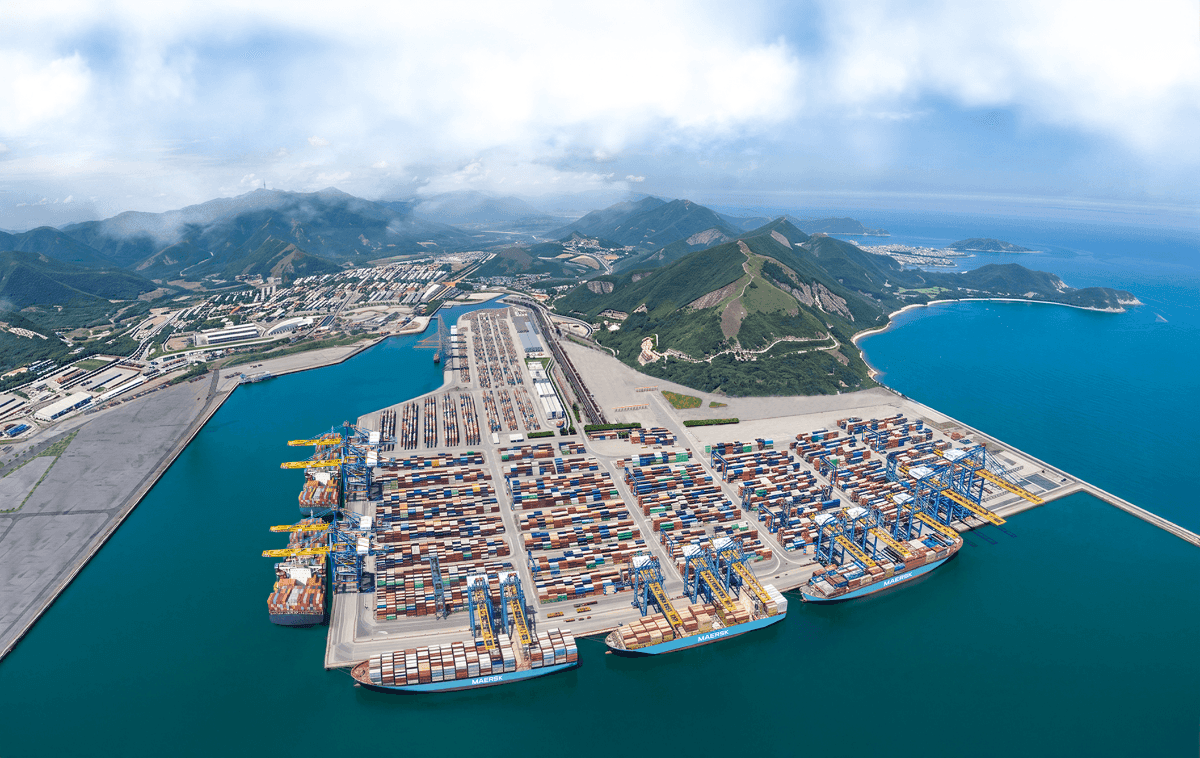
On the morning of April 25, 2026, the Đà Nẵng City People’s Committee, in collaboration with the investor consortium, held the groundbreaking ceremony for the Liên Chiểu Container Port project in Liên Chiểu Bay. The project is a major port infrastructure initiative and one of the largest in Vietnam’s Central region.
Attending the event were Deputy Prime Minister Phạm Gia Túc, Politburo member and Secretary of the Central Committee of the Communist Party, along with leaders of ministries and central agencies and Da Nang city. General Secretary–President Tô Lâm and Prime Minister Lê Minh Hưng sent flowers to congratulate, reflecting high-level attention to the strategic project.
The Liên Chiểu Container Port project has a total investment of about 45,268 billion VND, equivalent to nearly USD 2 billion. It is planned with an integrated layout to international standards.
In terms of design, the port will include 8 container berths with a total quay length of 2,750 meters. It is designed to accommodate ships of up to 18,000 TEU, and the planned capacity is about 5.7 million TEU per year, equivalent to about 74 million tons of goods. In the initial phase, after three years of operation, capacity is expected to reach 4 million TEU per year.
The project is intended not only as a port but also as a modern logistics ecosystem. It aims to integrate functions including barge terminals, warehouses, customs clearance, and container handling, along with an operations center and direct connection to the national rail network to form a multimodal transport chain.
Liên Chiểu Port will be developed as a green port and smart port, applying IoT technology, artificial intelligence and automation in operations management. The project also uses clean energy to reduce emissions and meet international environmental standards.
Located on international sea routes and serving as the terminus of the East–West Economic Corridor, the project is expected to act as a strategic link connecting Vietnam’s Central region and the Central Highlands to global supply chains.
For years, the Central region has faced high logistics costs and reliance on transshipment ports in the North and South. With the ability to handle large-container vessels, Liên Chiểu Port is expected to change the supply chain structure by enabling exports and imports from the Central region to connect directly to international routes, reducing transshipment costs and transit times.
Beyond cost reduction, the port is expected to support upgrading the value chain. As a large-scale logistics hub develops, high value-added services such as smart warehousing, distribution, logistics finance, and marine insurance are expected to expand. This would provide a basis for the Central region to shift from a “transshipment point” to a “processing and distribution center” within the regional supply chain.
The port is also positioned as an export–import gateway for the Central Highlands, southern Laos, and northeastern Thailand—areas with strong potential but limited maritime connectivity infrastructure—helping expand Da Nang’s economic space beyond its local scope.
For Da Nang, the Liên Chiểu port project is described as more than an infrastructure development. It is intended to serve as a pivot in the city’s growth model restructuring strategy.
With tourism approaching growth thresholds and urban land becoming increasingly constrained, developing the maritime economy and logistics is presented as a long-term strategic direction. The project is expected to relieve pressure on Tiên Sa port, enabling the area to transition toward high-quality tourism and services.
Speaking at the groundbreaking ceremony, Deputy Prime Minister Phạm Gia Túc emphasized the project’s importance not only for Da Nang but also for the national maritime infrastructure system.
On behalf of the Government, he called for three key tasks: first, investors to fulfill commitments, ensure progress and quality, and build a “green port, smart port” aligned with environmental protection; second, Da Nang to continue accompanying the project by removing obstacles and completing connecting infrastructure and the integrated logistics ecosystem; and third, central ministries and agencies to continue supporting mechanisms, policies, and resources to maximize the project’s effectiveness.
The Deputy Prime Minister highlighted the need to act with the spirit of “momentum” and “efficiency,” taking advantage of available conditions to bring the project into operation soon.
With its large investment scale, modern development orientation, and participation from domestic and international investors, Liên Chiểu Port is expected to become a new economic gateway for Central Vietnam in the coming decade. The article notes that the project’s ultimate effectiveness will depend on synchronized infrastructure implementation, governance quality, and the extent to which opportunities from global supply chains are leveraged.






Premium gym chains are entering a “golden era” that is ending or already in decline, as rising operating costs collide with shifting consumer preferences toward more flexible, community-based ways to exercise. Long-term memberships are shrinking, margins are pressured by higher rents and facility expenses, and competition from smaller, more personalized…



