•
•
•
•
•
•
•
•
•
•
•
•
•
•
•
•
•
•
•
•
•
•
•
•
•
•
•
•
•
•
•
•
•


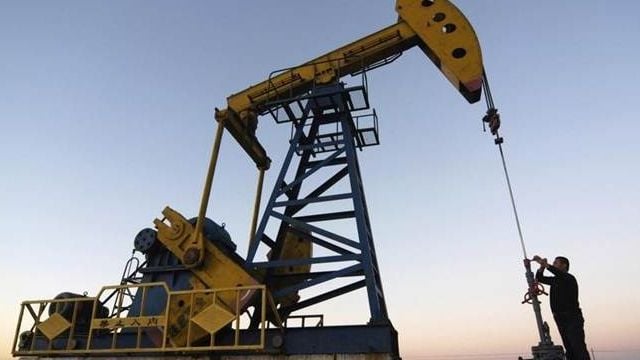
Gulfport Energy (NYSE: GPOR) reported a strong start to 2026, highlighting higher commodity pricing, continued capital returns and operational efficiency gains during its first-quarter earnings call.
Executives said the quarter included the completion of Gulfport’s discretionary acreage acquisition program and what CFO Michael Hodges described as a record quarter of share repurchase activity. Gulfport also announced that Domenic J. Dell'Osso, Jr. will join the company as president and chief executive officer on May 28, with participation expected on the next quarterly earnings call in August.
For the first quarter, Gulfport generated $264 million of adjusted EBITDA and $119 million of adjusted free cash flow. Hodges said the results were driven by strong commodity pricing and development of the company’s asset base.
Average production totaled 997 million cubic feet equivalent per day, which Hodges said was in line with February expectations. Gulfport reaffirmed full-year production guidance of 1.03 billion to 1.055 billion cubic feet equivalent per day.
Cash operating costs were $1.38 per million cubic feet equivalent for the quarter. Hodges said the level was consistent with expectations and similar to last year’s pattern, with the first quarter expected to be a quarterly high point. The company reaffirmed full-year per-unit operating cost guidance of $1.23 to $1.34 per Mcfe, including lease operating expense, midstream expenses and taxes other than income.
Capital spending related to drilling and completion activity totaled $118 million in the quarter, while maintenance, land and seismic investments totaled $4 million.
Hodges said Gulfport invested approximately $102 million over the past four quarters to add more than two years of high-quality inventory adjacent to its core positions in Belmont and Monroe counties in Ohio. He said the acquisitions were made at an average cost of just over $2 million per net location.
The company focused acreage efforts in the wet gas and dry gas windows of the Ohio Utica, which Hodges said generate some of the strongest returns in Gulfport’s portfolio and can be converted into producing assets relatively quickly.
Since 2022, Hodges said targeted discretionary acreage acquisitions have added more than 4.5 years of high-quality net locations. He said additional leasing opportunities remain a high priority for free cash flow allocation, while emphasizing the strategy is targeted rather than broad-based.
Gulfport repurchased 866,000 shares of common stock during the first quarter for approximately $172.8 million, which Hodges said was the highest quarterly investment in share repurchases in company history.
Since the start of the program, including a preferred redemption in 2025, Gulfport has repurchased approximately 8.2 million shares at an average price of just over $133 per share. Hodges said the company has returned nearly $1.1 billion to shareholders over the past four years.
Over the past two quarters, Gulfport allocated more than $300 million to share repurchases, retiring nearly 10% of shares outstanding, according to Hodges. He said repurchases are expected to remain an attractive capital allocation priority in 2026, supported by adjusted free cash flow and revolver capacity, while maintaining leverage at or below one turn.
The company exited the quarter with trailing 12-month net leverage of approximately 0.9 times. Gulfport also completed its spring borrowing base redetermination, increasing elected bank commitments by 10% while reaffirming its borrowing base at $1.1 billion. Pro forma for the increase, liquidity at the end of the quarter totaled $872 million, including $2.9 million of cash and $869.3 million of borrowing capacity under its revolver.
Matthew Rucker, Gulfport’s executive vice president and chief operating officer, said the company completed drilling eight gross wells during the quarter: two Utica wet gas wells, four Marcellus wells and two SCOOP Woodford wells.
Gulfport entered the year with three drilling rigs operating. As planned, the company released its SCOOP rig at the end of the first quarter and currently has two rigs drilling in Ohio. Rucker said Gulfport plans to release one rig at the end of the second quarter, moving to a one-rig program in Ohio for the remainder of 2026.
On the completions side, Gulfport brought five gross Utica dry gas wells online during the quarter, including its first two Utica development wells. Rucker said the wells are performing in line with recently developed straight lateral offsets and have unlocked approximately one year of additional high-quality inventory for future development planning.
Rucker said approximately two-thirds of Gulfport’s remaining 2026 turn-in-lines are expected to include a significant liquids component. Hodges later said the company expects to become more liquids-weighted in the back half of the year, moving toward a low-teens liquids percentage, while noting Gulfport remains primarily a gas company.
Rucker also highlighted safety and efficiency results, saying Gulfport recorded zero recordable incidents or spills during the quarter. He said the company maintained its record all-in footage per day in the Utica from 2025, improved average tophole drilling days by 8% compared with full-year 2025, and set a new company record for the fastest Utica tophole drilled at 5.4 days.
In the Marcellus, Rucker said Gulfport delivered a 20% improvement in footage drilled per day compared with the company’s prior two operated pads in the area. In the SCOOP, he said the Hero pad averaged approximately 40 days from spud to rig release per well, beating the company’s internal expectation of 55 days.
During the question-and-answer session, Hodges said Gulfport does not see constraints on its ability to market additional gas, citing a firm transportation portfolio that provides access to the Gulf Coast, Midwest and local markets. He said the company continues to prioritize maximizing free cash flow and has so far viewed relatively flat production as the appropriate strategy.
Hodges said Gulfport remains “bullish” on gas heading into 2027 while keeping flexibility in its hedging program. He said the company typically prefers to enter a year with hedge coverage in the 30% to 70% range and is currently near the lower end for 2027.
Asked about service cost inflation, Rucker said Gulfport is seeing pressure around diesel, including fuel prices and related logistics and trucking costs. He said the company is not changing capital guidance and that efficiency gains have helped offset recent impacts.
Executives also discussed future development opportunities in the Marcellus North area and the SCOOP. Rucker said Gulfport plans a two-well approach in the Marcellus North to confirm assumptions about liquids content and composition before broader midstream and processing negotiations. On the SCOOP, he said recent drilling improvements increase confidence, though the asset remains capital-intensive and Gulfport wants to see consistent repeatability before making major changes to capital allocation.
Hodges closed the call by saying Gulfport remains focused on disciplined execution, capital allocation and shareholder returns as Dell'Osso prepares to join the company as CEO.
Premium gym chains are entering a “golden era” that is ending or already in decline, as rising operating costs collide with shifting consumer preferences toward more flexible, community-based ways to exercise. Long-term memberships are shrinking, margins are pressured by higher rents and facility expenses, and competition from smaller, more personalized…