•
•
•
•
•
•
•
•
•
•
•
•
•
•
•
•
•
•
•
•
•
•
•
•
•
•
•
•
•
•
•
•
•


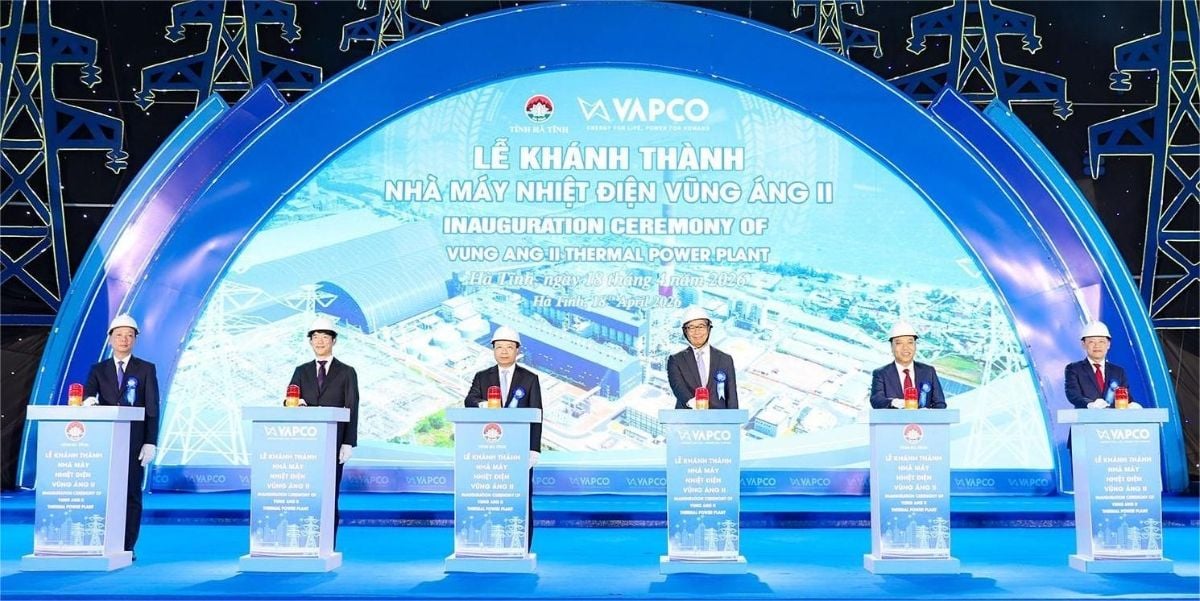
On April 18, Ha Tinh Province, in cooperation with Vung Ang 2 Thermal Power Plant Limited, held a ceremony to inaugurate the Vung Ang 2 Thermal Power Plant – a nationally significant energy project with a total investment of $2.2 billion, contributing to energy security and promoting regional economic development. The plant was financed under a BOT arrangement with a total investment of about $2.2 billion. It is a large-scale international cooperation project between Japan and South Korea, with Japanese companies led by Mitsubishi Holdings owning 60% of the equity, and the remaining 40% held by Korea Electric Power Corporation. The EPC contractor consortium led by Doosan Enerbility (Korea) handles all aspects of design, equipment supply, and construction. The turbine and generator systems are supplied by Toshiba (Japan). Project funding was arranged from major financial institutions such as JBIC, KEXIM, and Japanese commercial banks, reflecting strong international confidence in Vietnam’s energy sector. Starting from 2021, during construction the project employed more than 18,600 workers from the locality and surrounding areas, contributing to jobs and income. Once in operation, the plant will employ more than 250 staff on a regular basis and is expected to contribute about 600 billion VND per year to the budget. With substantial electricity output, Vung Ang 2 has the capacity to meet about 3.3% of the country’s total electricity demand, playing an important role in ensuring stable electricity supply and helping to reduce grid stress in the Northern region. At the inauguration, Ito Naoki, the Ambassador of Japan to Vietnam, together with representatives of Vung Ang 2 and investors, expressed confidence that the project will make a tangible contribution to Ha Tinh’s socio-economic development by enhancing energy infrastructure, creating jobs, contributing to the budget, and fostering international cooperation. Deputy Minister of Industry and Trade Nguyen Hoang Long stressed that this is a project of special national significance included in the portfolio of national energy projects. Throughout implementation, the Ministry of Industry and Trade has worked closely with investors and local authorities to address obstacles and ensure progress. In the coming period, the ministry will continue to support operation to ensure safety, stability, and efficiency, thereby reinforcing national energy security. Locally, Ha Tinh’s Chairman Phan Thien Dinh emphasized that completion and operation of Vung Ang 2 marks an important milestone, affirming a new phase in industrial development and reinforcing the energy hub role of the Vung Ang Economic Zone. The province aims to develop Ha Tinh into a modern industrial and energy center by 2050, a growth pole for the North-Central region and the country. In that strategy, the Vung Ang Economic Zone holds particular importance with its North–South connectivity and East–West Economic Corridor, and serves as the nation’s center for industry, energy and deep-water port. Operation of the plant not only adds a significant electricity source but also completes the industrial-energy ecosystem in the region, creating momentum for broader regional economic development. Provincial leaders thanked the government, ministries, and international partners for the attention and support to ensure the project is implemented on schedule. They also acknowledged the efforts of the investor, involved units, experts, engineers, and workers who overcame many challenges to complete the project with quality and safety. Notably, the province appreciated the consensus of local residents in the project area, especially regarding site clearance, relocation, and resettlement, which facilitated construction.


Premium gym chains are entering a “golden era” that is ending or already in decline, as rising operating costs collide with shifting consumer preferences toward more flexible, community-based ways to exercise. Long-term memberships are shrinking, margins are pressured by higher rents and facility expenses, and competition from smaller, more personalized…




