•
•
•
•
•
•
•
•
•
•
•
•
•
•
•
•
•
•
•
•
•
•
•
•
•
•
•
•
•
•
•
•
•


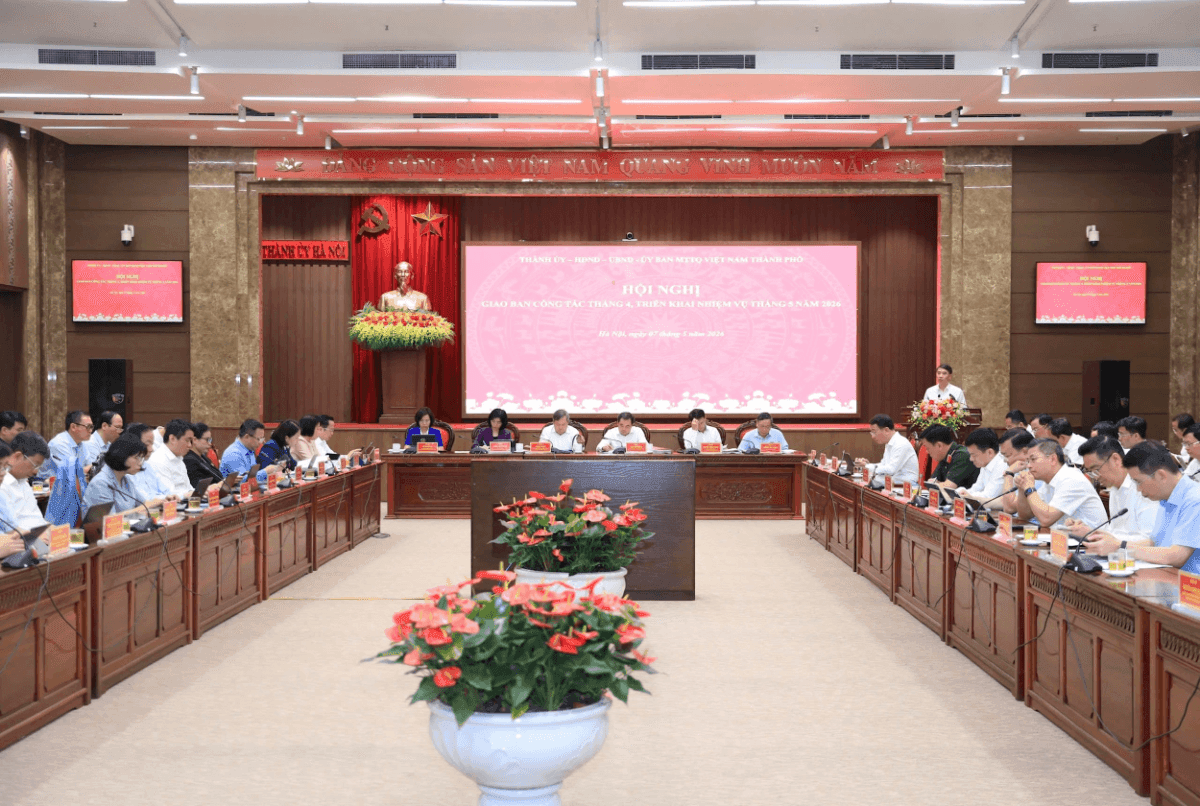
Hanoi Vice Chairman Nguyen Xuan Luu has urged intensified land clearance at key projects to accelerate the disbursement of public investment capital in the remaining months of 2026, calling it a pivotal step to remove bottlenecks in project implementation.
At an April meeting on the city’s work for May 2026, Vice Chairman Luu outlined solutions to promote disbursement and address delayed projects within and outside the city budget. He said 2026 is a particularly important year as the first year of the 2026–2030 period implementing the mid-term economic-social development plans, financial plans, and medium-term public investment.
With Hanoi targeting two-digit growth, public investment is described as the main driving force and a key policy lever to stimulate growth. The City Party Committee and the People’s Committee have issued directives to accelerate disbursement, emphasizing full use of time and early implementation from the start of the year.
As of 28 April 2026, Hanoi had disbursed VND 32,250.556 billion of public investment capital, equivalent to 26.88% of the Prime Minister’s plan (excluding the 5% reserve for the Hanoi–Lao Cai–Hai Phong railway) and 20.67% of the city’s plan. This represents an increase of VND 8,080.107 billion compared with the end of March 2026.
Disbursement performance varied by level:
Several major infrastructure projects—such as Belt 2.5, Belt 1, and multiple river-crossing bridges—are being advanced through land clearance and intensive construction. While Hanoi’s April 2026 disbursement results were higher than the national average of 14.2%, they still did not meet the planned target.
To meet the growth target for the second quarter, Hanoi needs to disburse about VND 13,800 billion in May and June 2026. To remain on track, the city needs to disburse about VND 41,900 billion over the same period.
Vice Chairman Luu said land clearance remains the biggest bottleneck slowing disbursement progress. He also cited other constraints, including tight construction material supply with fluctuating prices, slow investment procedures, lengthy negotiations and adjustments of ODA loan agreements, and cases where some localities have not fully allocated their capital plans.
To push disbursement in the near term, Vice Chairman Luu urged departments and sectors to finalize documents for implementing new policies under the 2026 Capital Law, speed up land clearance, and prioritize strategically important projects such as ring roads, large river-crossing bridges, and regional connectivity corridors.
For ODA and urban rail projects, he called on investors to review and accelerate construction and disbursement. The Department of Construction was tasked with addressing construction material shortages, while the Department of Finance should continue advising on flexible capital operations and strengthen supervision.
At the project level, investors and local authorities were asked to develop detailed plans covering disbursement, land clearance, and construction progress for each project; accelerate investment procedures; set up a “Disbursement Command Team” led by the chair of the commune-level People’s Committee; and develop plans to manage and exploit public assets after investment.
Hanoi also aims to promote cooperation with Japan on urban rail and green development.
Premium gym chains are entering a “golden era” that is ending or already in decline, as rising operating costs collide with shifting consumer preferences toward more flexible, community-based ways to exercise. Long-term memberships are shrinking, margins are pressured by higher rents and facility expenses, and competition from smaller, more personalized…