•
•
•
•
•
•
•
•
•
•
•
•
•
•
•
•
•
•
•
•
•
•
•
•
•
•
•
•
•
•
•
•
•


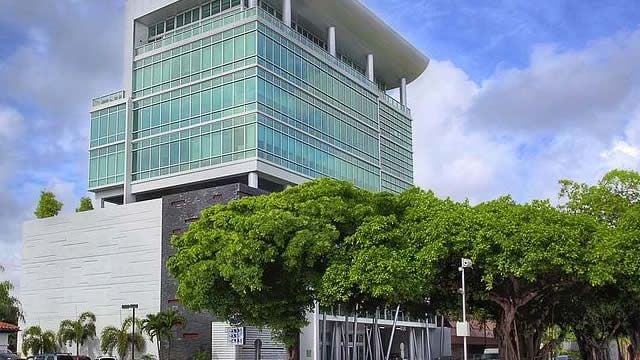
Healthpeak Properties reported first-quarter 2026 adjusted funds from operations (FFO) of $0.45 per share and raised its full-year adjusted FFO guidance after completing several major capital allocation moves, including the IPO of its senior housing business, a joint venture recapitalization with Blackstone, and a $100 million stock repurchase.
President and Chief Executive Officer Scott Brinker said the quarter reflected “excellence and execution,” citing activity across life science, outpatient medical, and senior housing. Chief Financial Officer Kelvin Moses said Healthpeak ended the quarter with net debt to EBITDA of 5.4 times and is now guiding for 2026 adjusted FFO of $1.71 to $1.75 per share.
A central focus of the call was Healthpeak’s March IPO of Janus Living, its senior housing business. Brinker described the transaction as “unique and creative,” saying the $240 million of current-year FFO from the senior housing portfolio is being valued at a multiple roughly 20 turns higher than Healthpeak’s own valuation.
Healthpeak sold about 18% of the business in the IPO. Brinker said the company’s senior housing exposure is “essentially unchanged” from Dec. 31 because it completed more than $700 million of acquisitions on its balance sheet before the IPO. He said the timing was intended to capture “multiple arbitrage” for shareholders.
Healthpeak’s outpatient medical segment continued to show strength in the first quarter. Moses said the company executed nearly 1.1 million square feet of leases, including large renewals with Baylor Scott & White, Norton Health, and HCA.
On renewal performance, Healthpeak reported 5.4% cash re-leasing spreads, 79% tenant retention, and 91% total occupancy at quarter-end. Average annual escalators were 3%, consistent with the company’s average since its Physicians Realty merger, Moses said.
Brinker said Healthpeak has signed more than 10 million square feet of outpatient medical renewals since closing the merger, with cash releasing spreads of positive 5.8%. He also emphasized that leasing costs remain below peers, noting that half of renewals were completed in-house during the quarter, saving $5 million in leasing commissions.
Moses highlighted the Baylor Cancer Center in Dallas as an example of execution, saying Healthpeak completed 10-year lease renewals across the entire 458,000-square-foot campus over the last two quarters with leasing costs “minimal at just over $1 per square foot per year.”
Healthpeak also reported 318,000 square feet of outpatient medical leases executed since April and approximately 700,000 square feet under letter of intent at the time of the call.
Management pointed to improving conditions in the life science portfolio. Total occupancy increased sequentially to 77.7% in the first quarter, and Moses said Healthpeak expects year-end 2026 total occupancy to rise by at least 100 basis points versus year-end 2025.
During the quarter, Healthpeak executed 141,000 square feet of lab leases, with 92% representing new leasing. The company also had approximately 355,000 square feet under letter of intent, with about 80% tied to new leasing and roughly 75% associated with currently vacant space.
Brinker said the leasing pipeline is broad-based, including venture-backed biotech and large-cap pharmaceutical tenants, and that while traditional wet lab demand accounts for most of the pipeline, Healthpeak has flexibility to accommodate alternative users when appropriate.
On specific campuses, Brinker said the Gateway campus in South San Francisco, acquired in early January, is already ahead of schedule relative to initial underwriting. He said the campus has 62,000 square feet of signed leases and letters of intent, plus 113,000 square feet of active proposals and tours. Brinker added that rents being signed are “at or above underwriting,” though he said the earnings contribution is more likely to appear in 2027 and 2028 rather than 2026.
Chief Development Officer and Head of Lab Scott Bohn said demand remains strongest in South San Francisco and that Boston is still working through a supply-demand imbalance. He said West Cambridge has shown progress, including a lease with a large-cap pharmaceutical company during the quarter.
Healthpeak also discussed its March joint venture recapitalization with Blackstone involving a fully occupied outpatient medical portfolio at a 6.1% cash capitalization rate. Brinker said the deal raised $170 million in proceeds and created a template for future recapitalizations and acquisitions with Blackstone.
Brinker said the company is progressing additional transactions that could generate $700 million or more in proceeds at cap rates about 200 basis points inside what is implied by Healthpeak’s current stock price.
In April, Healthpeak repurchased $100 million of stock at an implied FFO yield above 10%. Moses said the repurchase was accretive to earnings and supported the increase in full-year guidance. Brinker said the company will continue evaluating leverage-neutral stock buybacks when they drive earnings and value accretion.
The company also repaid $103 million of secured mortgages on two senior housing properties in January and closed on a new $400 million senior unsecured delayed-draw term loan in March, which remains undrawn. Moses said Healthpeak has until December 2026 to draw on the term loan.
Brinker said Healthpeak’s senior housing performance was “outstanding,” its outpatient platform is being validated by private-market interest, and its life science business has “massive upside” as market conditions improve.
He also noted that Healthpeak paid more than $200 million in dividends to shareholders in the first quarter, which he said equates to a 7.5% annualized dividend yield, while emphasizing the company’s payout ratio.
On earnings cadence, Moses said the first quarter was somewhat elevated due to senior housing acquisitions completed on balance sheet before the Janus Living IPO. He said that based on the midpoint of full-year guidance, investors should think about a run-rate average of roughly $0.43 per share of FFO, plus or minus $0.01 each quarter, with refinancing and capital recycling activity affecting the back half of the year.
Premium gym chains are entering a “golden era” that is ending or already in decline, as rising operating costs collide with shifting consumer preferences toward more flexible, community-based ways to exercise. Long-term memberships are shrinking, margins are pressured by higher rents and facility expenses, and competition from smaller, more personalized…