•
•
•
•
•
•
•
•
•
•
•
•
•
•
•
•
•
•
•
•
•
•
•
•
•
•
•
•
•
•
•
•
•


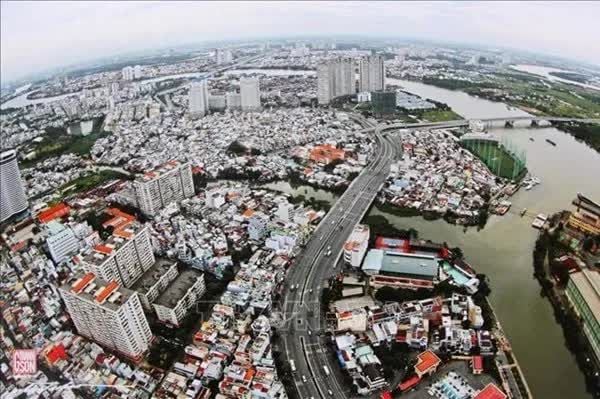
Public investment has been identified as a key driver for Ho Chi Minh City to achieve double-digit economic growth in 2026. The city has been allocated a public investment capital plan of 147,599 billion dong for 2026, up 22.6% from 2025 and equivalent to about 14.6% of the country’s total public investment. With the city targeting double-digit growth, public investment is expected to remain a major engine for expansion.
Despite the large allocation, disbursement progress after the first four months of the year reached only 10.5% of the plan. City authorities are urging departments, agencies, and localities to remove bottlenecks in land clearance, procedures, and construction to achieve the 100% disbursement target for 2026.
Hoang Vu Thanh, Director of the Ho Chi Minh City Department of Finance, said the main reason for slow disbursement is the restructuring of the public investment management apparatus. This includes reassigning responsibilities of project owners and project management boards and establishing new social-level project management boards, which has delayed the handover of files and data.
City leaders said many of the constraints have been addressed since April to accelerate disbursement in the remaining quarters. At the May 8 socioeconomic conference, Vice Chairman Hoang Nguyen Dinh urged units to adjust their investment management approach, emphasizing “disbursement of 100% of the capital plan” rather than “striving to disburse 100%.” The city argues that if public investment enters the economy on schedule, it will have broad spillover effects on growth, production, and employment.
To meet the target, Ho Chi Minh City is calling for faster consolidation of social-level project management boards and stronger accountability for leaders. Localities and project owners that fail to meet disbursement schedules will be held responsible in year-end evaluations. The Finance Department also urged coordinated measures across departments, agencies, localities, and project owners to speed up capital allocation and disbursement, with a target of 30–35% in Q2 and 100% for the full year.
Implementation is to follow the “6 clear” principle: clear people, clear tasks, clear responsibilities, clear authority, clear time, and clear results. The city will increase on-site inspections and focus on resolving bottlenecks in planning, design, bidding, contractor selection, and land clearance.
The largest constraints continue to be land clearance and construction materials. In 2026, the city allocated 33,685 billion dong for compensation for 165 projects. As of now, about 8,614 billion dong has been disbursed (roughly 25%). While this is higher than the city’s overall disbursement rate, it has not met expectations because new projects are receiving funds this year and because procedures for land acquisition, surveying, measurement, and legal documentation are ongoing under the 2024 Land Law.
The city plans to complete compensation and resettlement arrangements in Q3 to accelerate disbursement. It is also coordinating to issue city-level guidelines and strengthen steering/working groups for resettlement to address on-site issues quickly.
In addition, 168 communes, wards, and special administrative areas have been asked to review obstacles related to compensation and land clearance and proactively resolve issues within their authority to prevent delays from inter-agency handoffs.
Beyond procedural hurdles, priority public projects are facing cost pressure from volatility in construction material prices. Recent fuel price increases have raised costs for extraction, transportation of sand and stone, and equipment operation, affecting contractors. The Beltway 3 project, a major southern infrastructure project, is currently expected to fall about six months behind the original schedule.
According to the project’s managing board, overall progress is around 76%, with 83% completion in the Thủ Đức area (formerly a district) and about 68% in Cu Chi, Hoc Mon, and Bình Chánh. The main difficulties include fuel price volatility linked to Middle East tensions and shortages of imported asphalt and asphalt concrete.
Investors and contractors are coordinating with mining operators to increase material supply and are urging timely updates to material prices to reduce cost pressures for contractors.
With the largest public investment funding scale in history, disbursement pressure for 2026 is expected to be substantial. However, city authorities say that if bottlenecks in land clearance, investment procedures, and material supply are addressed promptly, public investment is expected to continue supporting Ho Chi Minh City’s economic growth.
Source: Hứa Chung, VTV

Premium gym chains are entering a “golden era” that is ending or already in decline, as rising operating costs collide with shifting consumer preferences toward more flexible, community-based ways to exercise. Long-term memberships are shrinking, margins are pressured by higher rents and facility expenses, and competition from smaller, more personalized…