•
•
•
•
•
•
•
•
•
•
•
•
•
•
•
•
•
•
•
•
•
•
•
•
•
•
•
•
•
•
•
•
•


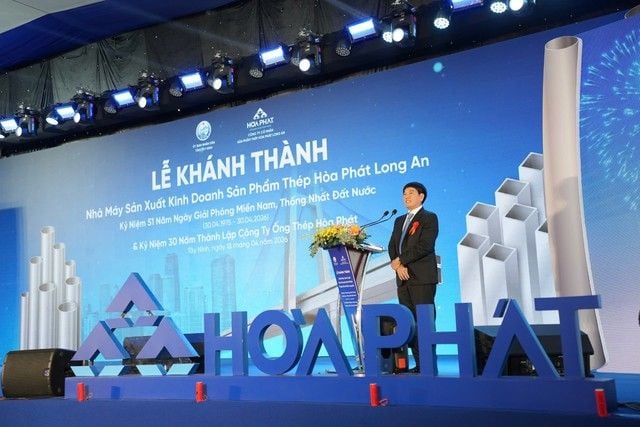
On the morning of April 18, Hoa Phat Group inaugurated a steel pipe plant in Tay Ninh with a total investment of 2 trillion VND, raising the group’s total system capacity to 1.2 million tons per year to serve the southern market and for export.
The new plant covers 15 hectares and includes production lines imported from G7 countries, with a design capacity of 400,000 tons per year. Once operational, the project is expected to lift Hoa Phat’s steel pipe segment capacity to 1.2 million tons per year.
Industry data cited at the event indicate the company currently holds about 35% of the domestic steel pipe market.
The Tay Ninh facility focuses on black steel pipes, galvanized pipes, hot-dip galvanized pipes, and large-diameter pipes. The product specifications are stated to meet international standards including ASTM, BS EN and JIS, supporting infrastructure projects and export demand.
Hoa Phat’s products have previously been supplied to major projects such as Long Thanh Airport and the T3 Terminal at Tan Son Nhat.
The ceremony was attended by Chairman Tran Dinh Long of Hoa Phat Group, along with Tay Ninh leaders and partners. The project is part of the company’s plan to upgrade its production infrastructure to approach key southern markets and neighboring regions.
Hoa Phat’s Long An steel pipe plant has a capacity of 400,000 tons and includes a rooftop solar power system with 10 MW, which is stated to meet more than half of the plant’s electricity needs. The facility is located at the gateway linking Ho Chi Minh City and the Mekong Delta.
Local authorities said the Thuận Đạo Expanded Industrial Park project was completed on schedule.
In Q1 2026, steel pipe sales reached over 241,000 tons, up 30% year-on-year. Of this total, 90,000 tons were sold in the Southern region. In March, output in the region reached 37,600 tons, the highest on record.
The operation of the new Tay Ninh plant is expected to reduce logistics costs and strengthen supply to international markets.


Premium gym chains are entering a “golden era” that is ending or already in decline, as rising operating costs collide with shifting consumer preferences toward more flexible, community-based ways to exercise. Long-term memberships are shrinking, margins are pressured by higher rents and facility expenses, and competition from smaller, more personalized…




