•
•
•
•
•
•
•
•
•
•
•
•
•
•
•
•
•
•
•
•
•
•
•
•
•
•
•
•
•
•
•
•
•


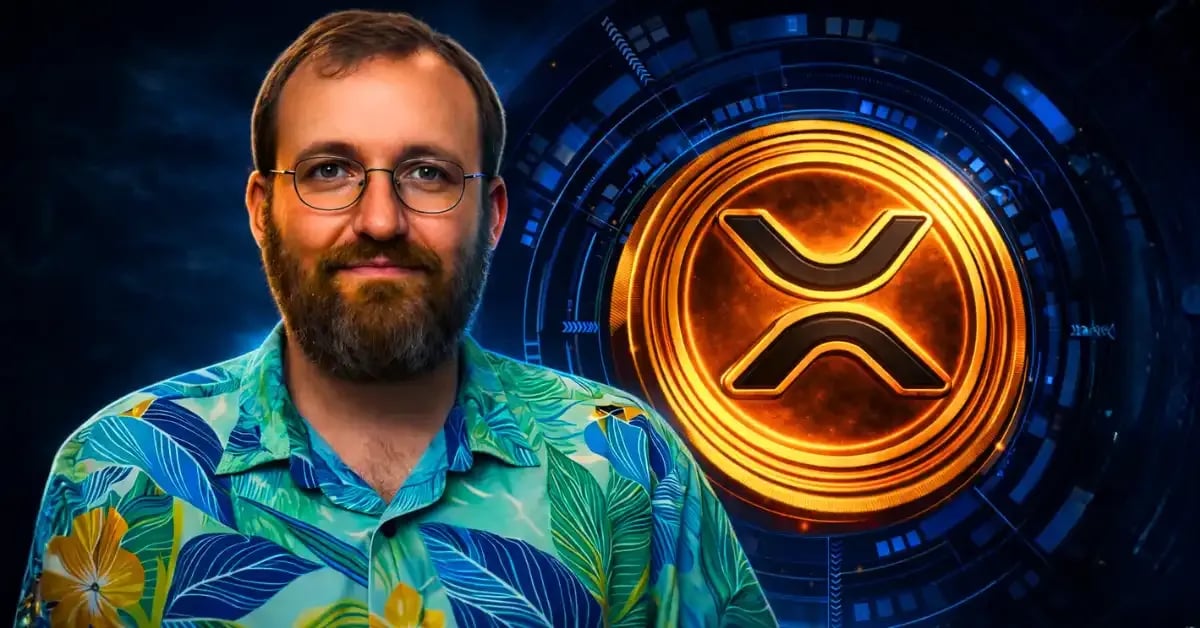
Charles Hoskinson was asked whether XRP holders still benefit if Ripple retains the business value it generates, particularly when market headlines lift the token’s price during a bull market.
Hoskinson’s response focused on Ripple’s control over supply and the legal relationship between XRP holders and the assets Ripple builds. He said Ripple “gave themselves somewhere between 70 to 80% of the supply,” and described a strategy centered on driving attention, raising the token price, selling XRP to other market participants, and then using the proceeds to buy assets.
Hoskinson argued that XRP holders do not have legal ownership of the assets Ripple acquires or builds using funds raised from selling XRP. He said the custody business, treasury management platform, and acquisitions belong to Ripple as a private company with independent investors and shareholders.
“XRP holders have no legal ownership of those assets,” he said. “They go to a centralised company. The XRP token doesn’t really have much to say or do with that. There are no staking rewards or other things connected to it.”
He compared the arrangement to Tether, saying that in his view one company captures the value while holders receive an instrument and network access without direct linkage to price appreciation.
Hoskinson contrasted Ripple’s approach with what he described as a properly structured tokenomic model. He cited Midnight and Hyperliquid as examples where network activity creates direct buy demand for the underlying token, arguing that increased usage translates into demand and value flowing back to holders.
“There is nothing in the Ripple network that creates buy demand for the XRP token. Nothing,” he said. “Whereas you can do that with Hyperliquid and absolutely can do it in the app chain model.”
As a historical precedent, he referenced EOS. He said Block One raised $4 billion to build the EOS network, stated it had no fiduciary obligation to the ecosystem, retained the capital, and that EOS holders were left with a token that “went nowhere” while the company’s treasury compounded.
The question also acknowledged the short-term dynamic: in a bull market, headlines can drive prices, and holders can profit when the token rises regardless of underlying structure.
Hoskinson did not dispute that price can rise in such periods, but said his argument concerns longer-term structure rather than short-term price action. He pointed to ongoing XRP sales by Ripple, describing them as “hundreds of millions to billions of dollars worth of XRP every year,” referencing SEC filings that he said formed the basis of the lawsuit.
He said the cash from sales goes to Ripple the company rather than back into XRP, and added that when Ripple generates revenue and profit, there is no buyback. “The Ripple company is not going and buying back XRP. They sell the XRP,” he said.
Premium gym chains are entering a “golden era” that is ending or already in decline, as rising operating costs collide with shifting consumer preferences toward more flexible, community-based ways to exercise. Long-term memberships are shrinking, margins are pressured by higher rents and facility expenses, and competition from smaller, more personalized…