•
•
•
•
•
•
•
•
•
•
•
•
•
•
•
•
•
•
•
•
•
•
•
•
•
•
•
•
•
•
•
•
•


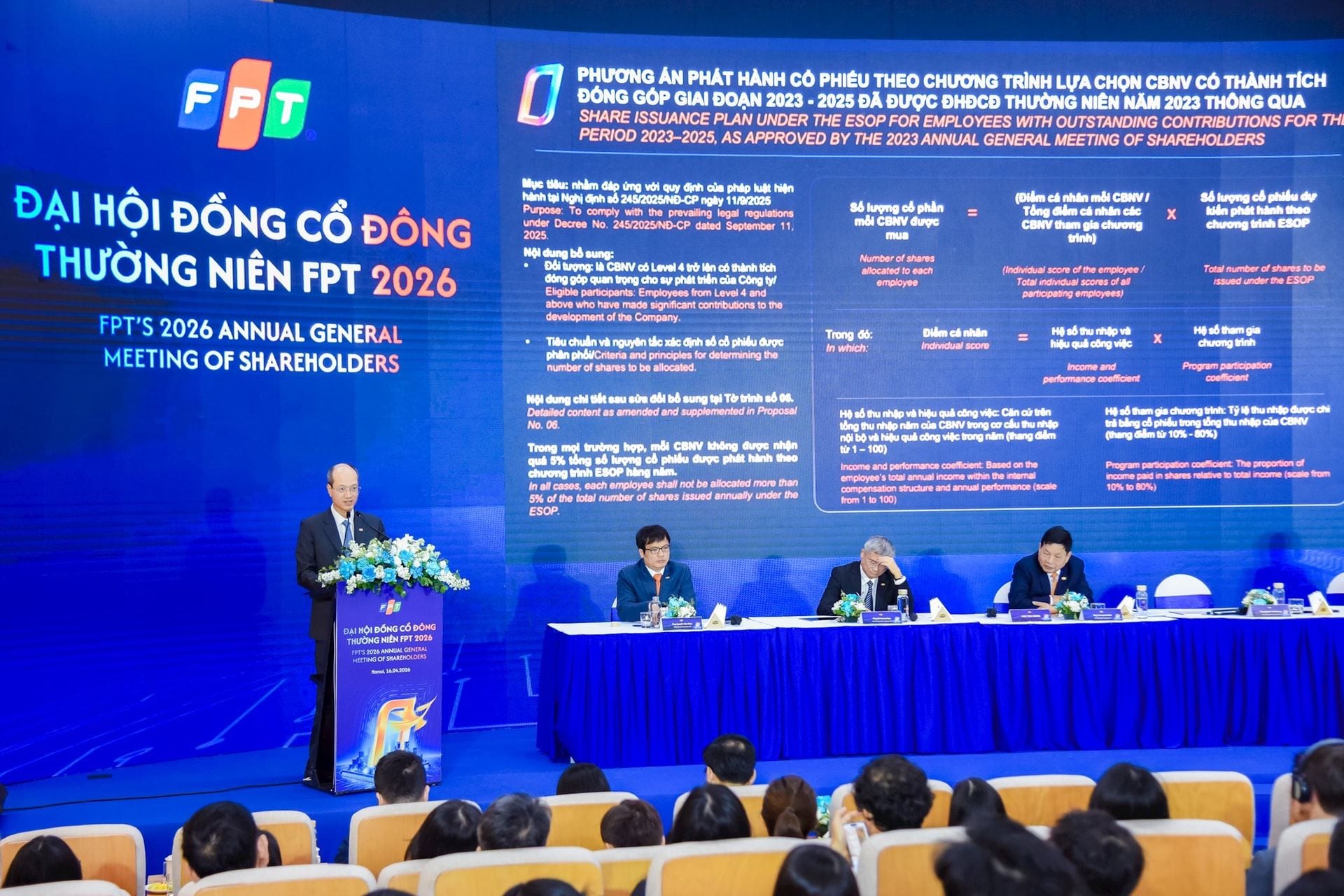
At the 2026 Annual General Meeting of FPT Joint Stock Company (stock symbol: FPT), management addressed questions about the planned transfer of FPT Telecom’s portion to the state, specifically the Public Security Ministry, and how the change would affect the Group.
Deputy General Director Nguyen The Phuong said that moving from full consolidation to equity consolidation would change how financial results are presented. “When shifting from full consolidation to equity consolidation, we will no longer consolidate revenue and costs but will still consolidate profits. Therefore, the parent company's shareholders’ profits essentially remain the same.”
He added that the value for FPT shareholders would be reflected in the governance structure. The Public Security Ministry’s role, he said, has so far mainly involved participating at the governance level by appointing representatives to the Board of Directors and the Supervisory Board, while day-to-day operations remain delegated to FPT Telecom’s management team.
This approach, according to FPT leadership, reflects trust in FPT Telecom’s governance capabilities, which they said are supported by the management style and governance culture characteristic of FPT. The leadership indicated this is expected to help generate more sustainable and effective value for the business.
Management also pointed to growth opportunities for FPT Telecom. It said that when the Public Security Ministry is assigned many important government tasks—especially those related to national infrastructure and digital transformation—related enterprises are expected to benefit.
FPT Telecom is currently participating in a project to provide fire alarm services for businesses and households under the Police Ministry’s program. FPT leadership said these projects are expected to open new growth levers and contribute to the company’s business results in the near future.
In summary, FPT leadership said it is confident that governance will continue “in your way,” while workload and growth opportunities are expected to increase, providing a basis for anticipating positive growth in the future.






Premium gym chains are entering a “golden era” that is ending or already in decline, as rising operating costs collide with shifting consumer preferences toward more flexible, community-based ways to exercise. Long-term memberships are shrinking, margins are pressured by higher rents and facility expenses, and competition from smaller, more personalized…