•
•
•
•
•
•
•
•
•
•
•
•
•
•
•
•
•
•
•
•
•
•
•
•
•
•
•
•
•
•
•
•
•


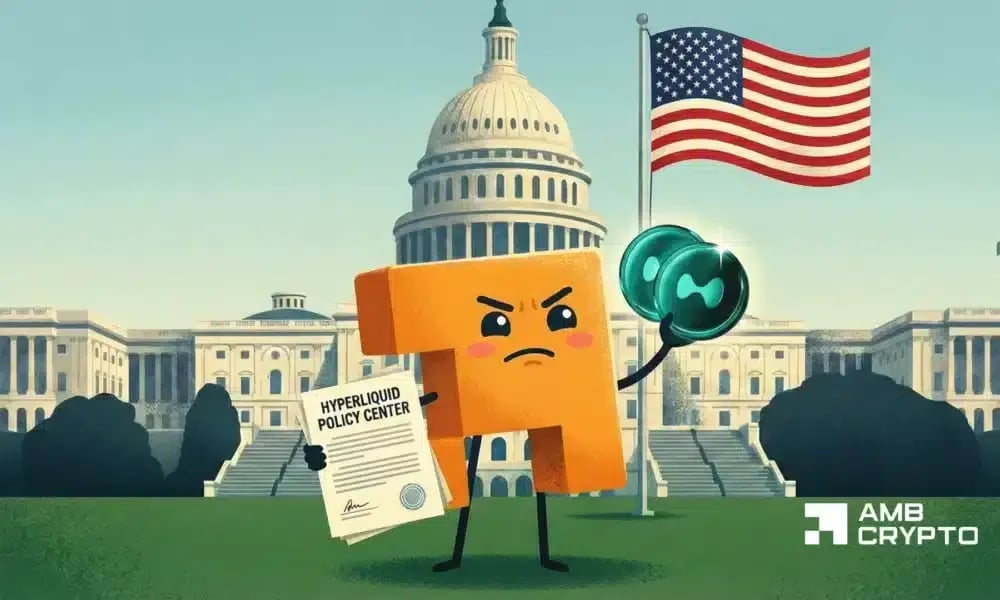
Hyperliquid, a perpetual decentralized exchange (DEX), has launched a lobbying group ahead of the U.S. elections, aiming to influence policy for perpetual derivatives and decentralized finance (DeFi) markets.
In a statement, the Hyperliquid Policy Center (HPC) said it intends to “answer toughest policy questions facing perpetual derivatives and decentralized financial (DeFi) markets.” The group added that it will “bridge the gap between law and next-generation market infrastructure.”
To fund the advocacy effort, Hyperliquid said it will unstake 1 million HYPE tokens. As of press time, the company estimated this would translate to approximately $29 million.
Long-time pro-cryptocurrency lawyer and DeFi advocate Jake Chervinsky will lead HPC. Hyperliquid founder Jeff Yan said the initiative reflects a broader goal of user and builder protection through education and advocacy.
Yan said: “Democratizing finance requires education and advocacy for laws that protect users and builders alike.” He added: “Global financial regulation will be shaped in the United States, and we must work to ensure that these new policies thoughtfully embrace the potential of the new financial system enabled by Hyperliquid.”
Hyperliquid has been live for about three years and, according to the article, has expanded faster than incumbents such as Binance and Coinbase in crypto perpetual markets and other metrics. The platform has also expanded into non-crypto assets, which now account for more than 30% of overall trading volume.
The article cites cumulative revenue of over $1 billion and nearly $4 trillion in perpetual volumes.
Despite the growth, the article notes speculation that some traders may be engaging in regulatory arbitrage for tax evasion or bypassing sanctions. Supporters and critics alike described regulatory scrutiny as a key risk factor for the platform.
For critics, allegations could become a regulatory risk if the U.S. Department of Justice (DoJ) or the U.S. Treasury investigates. The article also says that supporters agreed Hyperliquid’s growth could be derailed by either a DoJ probe or a security breach.
It further states that the market is pricing an increasing chance that Democrats could retake control of Congress in the 2026 midterms. If that occurs, the article says the prior anti-crypto push may return, potentially increasing Hyperliquid’s regulatory risk—an element it suggests may help explain the lobbying move.
Ryan Scott, a trader and analyst, said: “It is clear why. Hyperliquid is not regulated or attached to any regulated entity. They are prepping for the Dems to come in and cause havoc.”
It remains to be seen whether the lobbying effort will reduce the perceived regulatory risk facing Hyperliquid.





Premium gym chains are entering a “golden era” that is ending or already in decline, as rising operating costs collide with shifting consumer preferences toward more flexible, community-based ways to exercise. Long-term memberships are shrinking, margins are pressured by higher rents and facility expenses, and competition from smaller, more personalized…