•
•
•
•
•
•
•
•
•
•
•
•
•
•
•
•
•
•
•
•
•
•
•
•
•
•
•
•
•
•
•
•
•


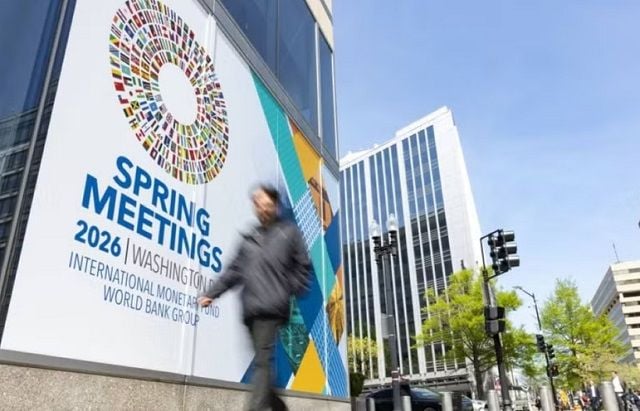
Geopolitical upheavals have pushed the global financial community into crisis-management mode, even as delegates acknowledged that the world economy faces deep structural fractures. A bleak growth outlook dominated discussions, with agreement that the era of unlimited globalization and cost-optimization has ended. Economic policy-making is increasingly shaped by national security concerns rather than market efficiency alone, while fragmentation of global supply chains is expected to cause systemic harms that ordinary market adjustments cannot easily fix.
At the meeting, the IMF’s World Economic Outlook for April 2026 downgraded global growth to 3.1% for the year. The IMF also noted that, absent conflict in the Middle East, global growth could have been as high as 3.4%, supported by AI-driven productivity. In the worst case, growth could be reduced by about 1.3 percentage points, pushing the world economy toward the brink of a recession.
The reduced forecast is also expected to translate into trillions of dollars of lost output and to complicate debt-reduction efforts pursued after the COVID-19 pandemic. Global public debt has reached about $100 trillion, roughly 93% of global GDP.
Inflation was described as a broad risk, with energy and fertilizer prices expected to stay high for an extended period. Even if shipping through the Hormuz strait is fully restored, persistent bottlenecks and higher risk premia are expected to keep price pressures elevated, potentially lifting food costs by around 6%.
The burden is expected to fall hardest on low-income countries, where food spending accounts for a significant share of household budgets.
Alongside inflation, global debt was highlighted as a system-wide risk. IMF, World Bank, and IEA warnings emphasized that fiscal burdens will constrain future policy space.
Borrowers’ Platform, announced at the conference with support from Africa’s AU, aims to provide a dedicated space for indebted nations to coordinate positions and push for a fairer global financial architecture.
Leaders from emerging markets including Ghana, Pakistan, and Bangladesh used the forum to call for:
Analyses from the Global Development Center warned that many governments in low- and middle-income countries in Africa currently allocate up to 20% of fiscal revenue to debt service. This, the analyses said, threatens essential investments in health, education, and longer-term structural transformation.
Throughout the conference, a tacit acknowledgement emerged that cost-optimizing globalization has closed, giving way to geo-economic fragmentation and a stronger focus on security. To navigate these challenges, financial institutions urged reforms aimed at strengthening macroeconomic frameworks and social safety nets rather than relying on broad-based subsidies.
Accelerating digital transformation and investing in renewable energy were also presented as critical steps to reduce exposure to fossil-fuel bottlenecks and support a more resilient global economy.


Premium gym chains are entering a “golden era” that is ending or already in decline, as rising operating costs collide with shifting consumer preferences toward more flexible, community-based ways to exercise. Long-term memberships are shrinking, margins are pressured by higher rents and facility expenses, and competition from smaller, more personalized…




