•
•
•
•
•
•
•
•
•
•
•
•
•
•
•
•
•
•
•
•
•
•
•
•
•
•
•
•
•
•
•
•
•


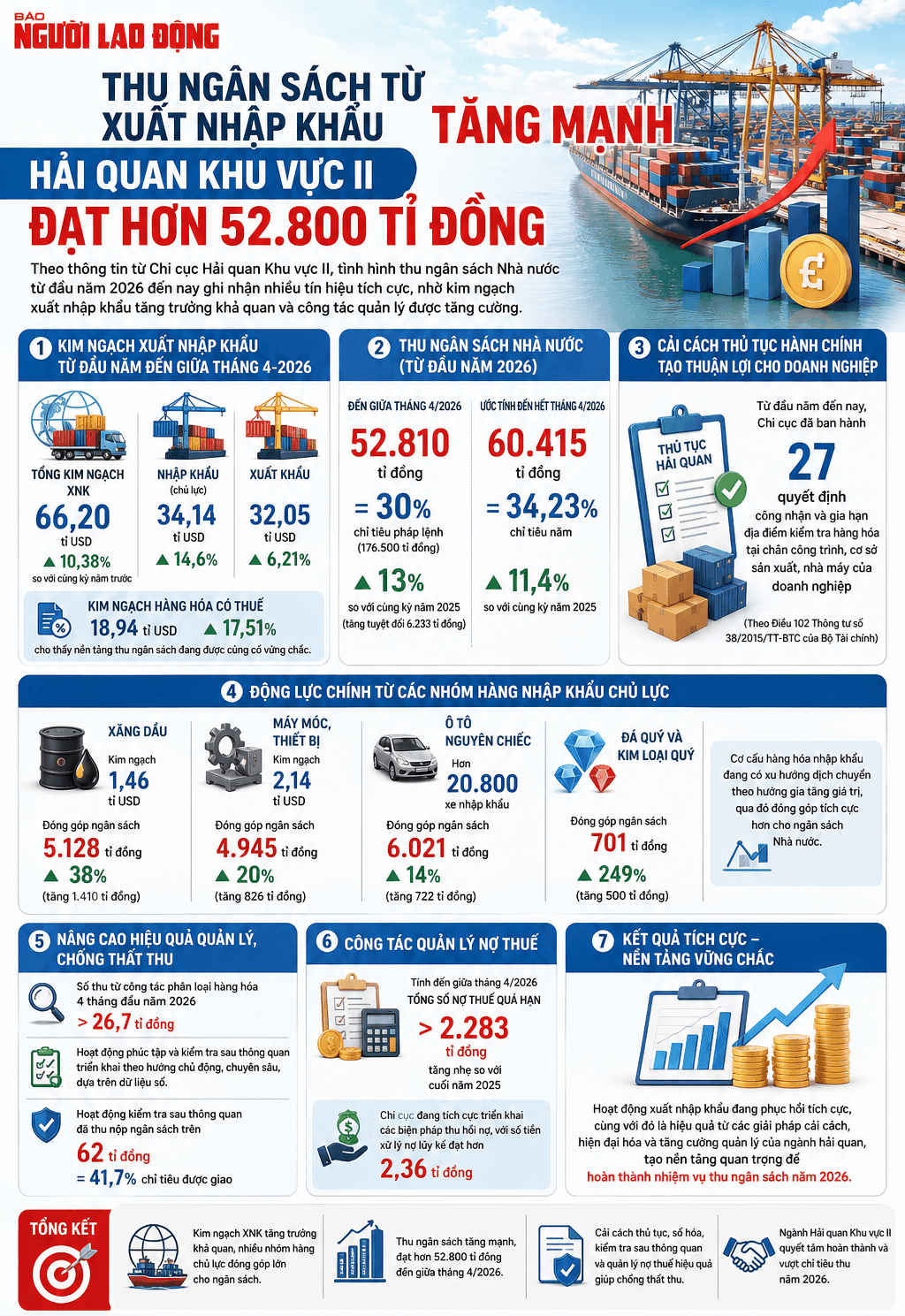
From the beginning of 2026 to mid-April, the Regional Customs Sub-Department II (covering ports in Ho Chi Minh City) processed customs clearance for import-export goods with a total value of 66.20 billion USD, up 10.38% year-on-year. The unit said state budget collection signals have been positive since the start of the year, supported by favorable growth in imports and exports and strengthened management.
Imports continued to account for the largest share of activity, reaching 34.14 billion USD, up 14.6%. Exports reached 32.05 billion USD, up 6.21%.
Among the cleared shipments, turnover of tax-bearing goods totaled 18.94 billion USD, up 17.51%, indicating a strengthening foundation for tax revenue.
Alongside customs clearance, the Regional Customs Sub-Department II implemented administrative reform to facilitate business operations. From the start of the year to date, it issued 27 decisions recognizing and extending the location for goods inspection at construction sites, production facilities, and enterprises’ factories under Article 102 of Circular 38/2015/TT-BTC of the Ministry of Finance.
The unit also emphasized improving management effectiveness, particularly in classifying goods to minimize potential tax revenue losses. In the first four months of 2026, revenue from classification activities reached more than 26.7 billion dong.
Post-customs inspection and revenue audit work has been carried out proactively, using data-driven approaches to improve anti-tax evasion efforts and reduce pressure on the clearance process while enhancing compliance.
Specifically, post-clearance checks collected more than 62 billion dong into the budget, equivalent to 41.7% of the target.
Regarding tax debt management, as of mid-April 2026, total overdue tax debt stood at more than 2,283 billion dong, a slight increase compared with the end of 2025. The customs sub-department said it is actively applying debt collection measures, with cumulative debt settlements totaling more than 2.36 trillion dong.






Premium gym chains are entering a “golden era” that is ending or already in decline, as rising operating costs collide with shifting consumer preferences toward more flexible, community-based ways to exercise. Long-term memberships are shrinking, margins are pressured by higher rents and facility expenses, and competition from smaller, more personalized…