•
•
•
•
•
•
•
•
•
•
•
•
•
•
•
•
•
•
•
•
•
•
•
•
•
•
•
•
•
•
•
•
•


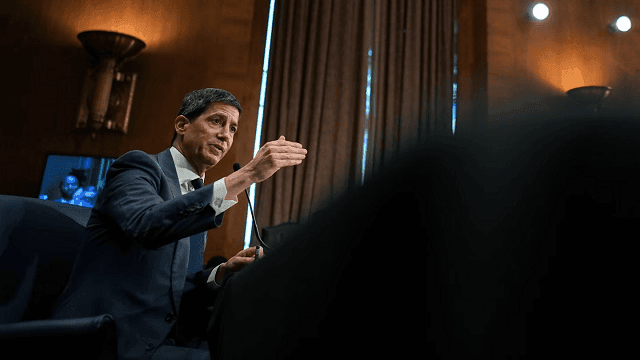
Incoming Federal Reserve chair Kevin Warsh is expected to face a policy dilemma as he takes the helm of the U.S. central bank amid competing pressures: inflation risks from a surge in energy prices linked to the Middle East conflict and growing calls from President Donald Trump for rate cuts to support growth.
Warsh, 56, is set to be confirmed by the U.S. Senate this week and would assume the role at a particularly sensitive time. The Fed is divided over how to respond to an energy-price shock tied to the Iran conflict. The inflation measure the Fed prefers is around 3.5%, above its 2% target, while Trump and senior economic officials have pressed the Fed to lower rates.
At the most recent Federal Open Market Committee (FOMC) meeting, the Fed left rates unchanged for the third consecutive month. The decision reflected the largest internal split among policymakers since 1992, with three regional Fed presidents opposing a rate-cut path.
Many economists said the division reflects increasing concern about the energy-price shock after Iran-related developments that closed the Hormuz Strait. They also said the split signals to Warsh that officials may resist cutting rates too soon. The only official reported as supporting a rate cut was Governor Stephen Miran, a Trump ally, whom Warsh is expected to replace on the Fed’s board.
Observers expect resistance to rate cuts could intensify if the Hormuz Strait remains closed in May and into early June. Mary Daly, president of the San Francisco Fed, warned at the Hoover Institution that supply-chain bottlenecks could keep inflation above target longer than expected.
Austan Goolsbee, president of the Federal Reserve Bank of Chicago, rejected Warsh’s view that artificial intelligence would lift productivity enough to justify room for rate cuts. He said that wealth effects from consumer spending may be occurring in sectors beyond AI, citing investment in data centers and rising costs for land, electricians, and computer chips. Goolsbee added that the pattern could indicate productivity growth is pushing the neutral rate higher rather than lower.
Beyond inflation and rates, Warsh’s challenge includes managing the relationship with the White House. David Wilcox, a former Fed economist at the Peterson Institute, said Warsh is “caught between a President pushing for rate cuts and a high-inflation environment with risk,” adding that the “real challenge is managing the relationship with Trump,” who has been sharply critical of the Fed.
Another factor is a Supreme Court case considering whether the President has authority to fire Fed Governor Lisa Cook. The case could set a major precedent for Fed independence. The Supreme Court currently allows Cook to remain at the Fed while the matter is considered. Cook previously faced mortgage fraud allegations, which she denied.
Wilcox also noted that Warsh could persuade Fed officials more easily than he could manage the political relationship with Trump. Observers at the Hoover conference said long-standing support for Warsh’s approach includes re-emphasizing the Fed’s rate tool as the core instrument for controlling inflation and maximizing employment, alongside shrinking the Fed’s balance sheet built up after the 2008 financial crisis and the COVID-19 pandemic.
Marvin Barth of Thematic Markets argued the Fed should acknowledge that the post-pandemic inflation surge enabled Trump to attack the central bank, and said criticisms of Fed independence partly reflect policy failures the Fed continues to deny. “In a democracy, whether right or wrong, everyone must answer to the people,” Barth said.
John Cochrane of the Hoover Institution said Warsh’s “first task” would be to unify the FOMC around his vision for the Fed. Cochrane added that the continued presence of former chair Jerome Powell would not make the situation easier.
Powell, who was previously investigated by the Justice Department during the Trump era, broke a near-80-year norm by staying as a Fed governor after stepping down as chair, citing political pressure on the Fed to cut rates.
Premium gym chains are entering a “golden era” that is ending or already in decline, as rising operating costs collide with shifting consumer preferences toward more flexible, community-based ways to exercise. Long-term memberships are shrinking, margins are pressured by higher rents and facility expenses, and competition from smaller, more personalized…