•
•
•
•
•
•
•
•
•
•
•
•
•
•
•
•
•
•
•
•
•
•
•
•
•
•
•
•
•
•
•
•
•


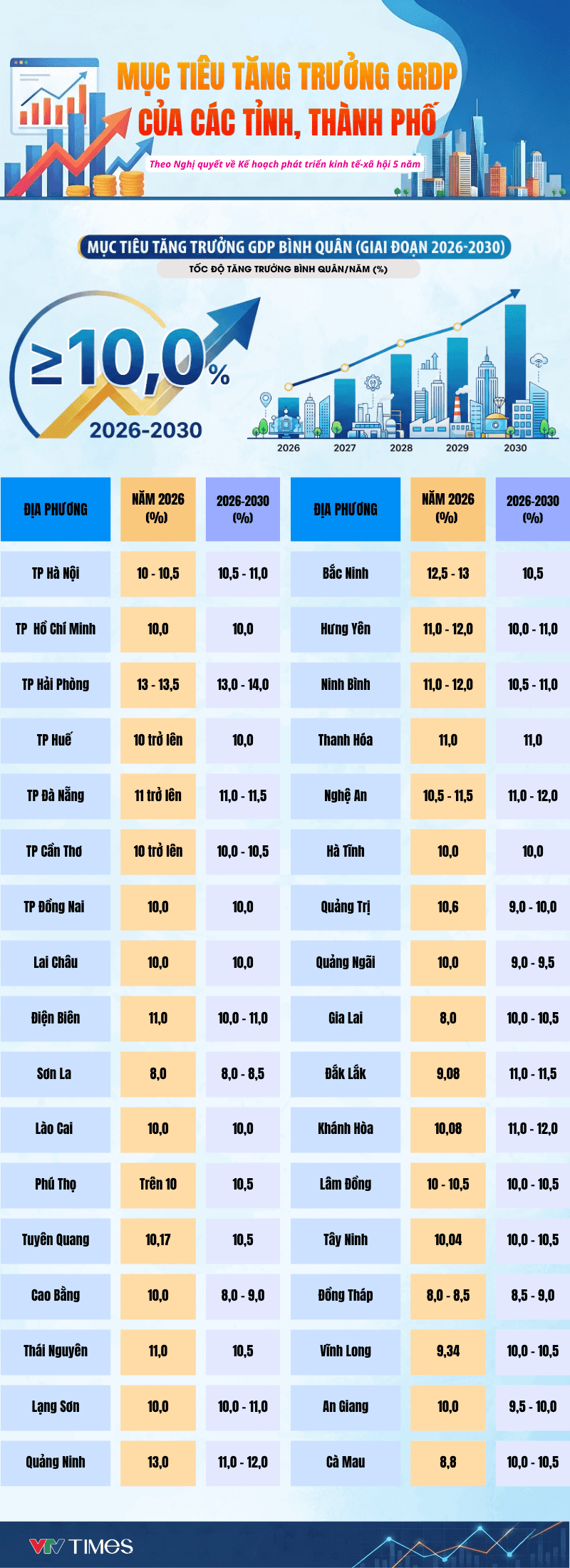
Infographic: GRDP growth targets for 34 provinces and cities for the 2026-2030 period By Ngoc Hien — Sunday, 26/04/2026, 10:00 Listen to article 1:42 The morning of April 24, the National Assembly approved the Resolution on the five-year socio-economic development plan for 2026-2030, with the central objective of achieving an average GDP growth of at least 10% per year. Along with the high growth target, the National Assembly set the per-capita GDP in 2030 at about USD 8,500; aiming to make Vietnam a developing country with modern industry, a high middle income, and among the world’s 30 largest economies by GDP size, linked to macroeconomic stability, inflation control, and ensuring major macroeconomic balances. Notably, this is the first time the National Assembly has assigned concrete GRDP growth targets to each locality within the five-year socio-economic development plan. [Infographic] GRDP growth targets for 34 provinces and cities for the 2026-2030 period. Design: Ngoc Hien Accordingly, localities are grouped with different growth levels, with many localities assigned two-digit growth targets. Haiphong has the highest target, with GRDP in 2026 at 13-13.5% and an average over 2026-2030 of 13-14%. Localities such as Quang Ninh, Bac Ninh, Ninh Binh, Hung Yen, Thanh Hoa, Nghe An, Khanh Hoa… are assigned growth targets from about 10% to above 13% depending on the phase. Hanoi and Ho Chi Minh City are given targets around 10% or higher, while some provinces such as Gia Lai and Son La are around 8%. The National Assembly emphasizes that assigning concrete targets to each locality will enhance initiative and responsibility, while creating momentum for development evenly across regions and localities, linked to the reform of the growth model. By Ngoc Hien [According to VTV] 04/26/2026 06:00 (GMT+7) Link to original: https://vtv.vn/infographic-muc-tieu-tang-truong-grdp-cua-34-tinh-thanh-giai-doan-2026-2030-100260425182041652.htm

Premium gym chains are entering a “golden era” that is ending or already in decline, as rising operating costs collide with shifting consumer preferences toward more flexible, community-based ways to exercise. Long-term memberships are shrinking, margins are pressured by higher rents and facility expenses, and competition from smaller, more personalized…