•
•
•
•
•
•
•
•
•
•
•
•
•
•
•
•
•
•
•
•
•
•
•
•
•
•
•
•
•
•
•
•
•


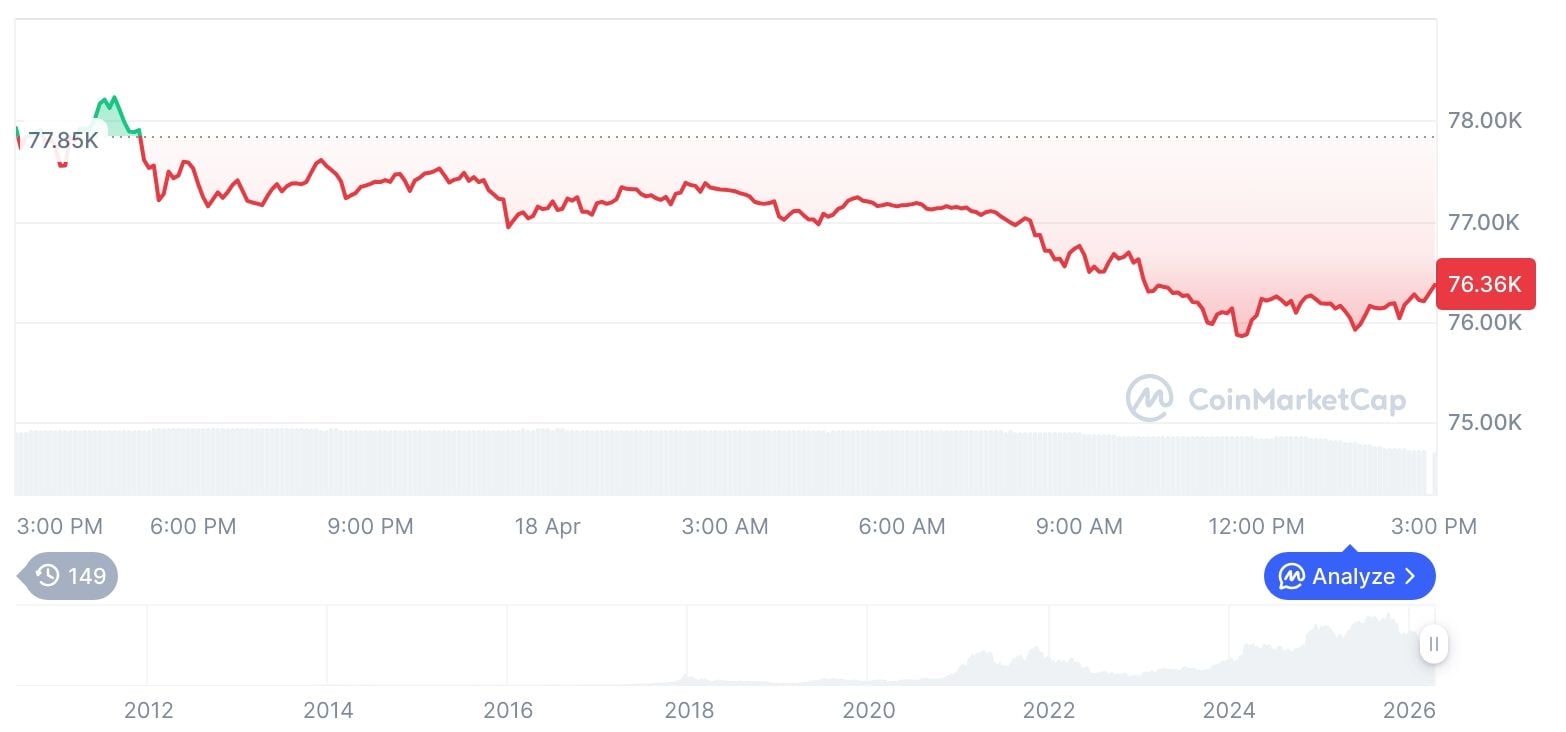
Iran’s closure of the Strait of Hormuz reversed a Bitcoin surge to $78,000 within 1.5 days. After the Strait was reopened briefly, Iran closed it again amid escalated tensions, triggering a sharp market drop.
The Strait’s reopening proved short-lived, and Bitcoin plummeted following the renewed closure. The April 19 market is now at 99.9% YES, indicating traders expect further downward pressure. The April 20 market is priced similarly, reflecting continued skepticism about a recovery.
Trading volume in the past 24 hours totaled $105,585 in actual USDC against a $107,670 face value. The largest single price move was a slight dip from 100% to 99.9%.
Traders are pricing in geopolitical risk tied to the Strait’s closure and its potential impact on global oil supply chains.
The Strait of Hormuz closure appears to be a temporary shock rather than a fundamental change in Bitcoin’s broader trajectory. Still, it highlights how quickly geopolitical events outside crypto can affect these markets.
At 99.9¢, a YES share pays $1 if Bitcoin dips to $60,000 in April, implying a 1.00x return. The outcome of the bet depends on whether tensions persist.
Market participants are likely to focus on announcements from US or Iranian officials regarding the Strait’s status. Signals of reopening could stabilize—or potentially reverse—Bitcoin’s dip. Developments in US-Iran negotiations or any military actions in the region would also be expected to move these markets.







Premium gym chains are entering a “golden era” that is ending or already in decline, as rising operating costs collide with shifting consumer preferences toward more flexible, community-based ways to exercise. Long-term memberships are shrinking, margins are pressured by higher rents and facility expenses, and competition from smaller, more personalized…