•
•
•
•
•
•
•
•
•
•
•
•
•
•
•
•
•
•
•
•
•
•
•
•
•
•
•
•
•
•
•
•
•


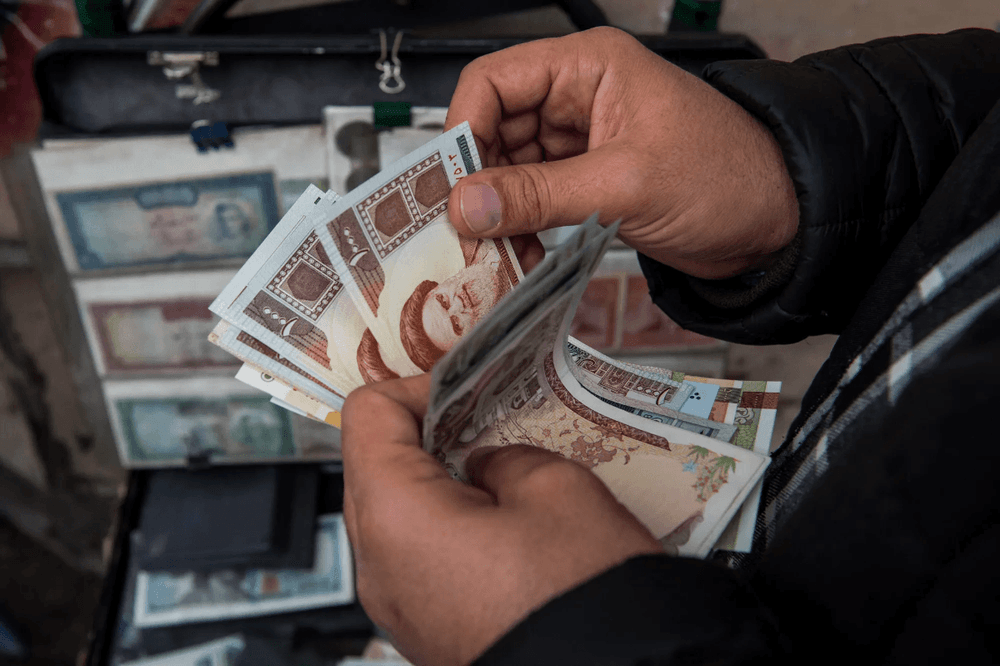
In peace negotiations recently held in Pakistan, one of Iran’s demands to the United States was the release of Tehran’s frozen assets abroad. However, because the two sides still have substantial differences on multiple issues, including frozen assets, the talks did not produce a peace agreement.
According to Euronews, there is no specific statistical data on the amount of Iran’s assets that are frozen, but estimates place the figure at more than $100 billion.
Iran previously opened foreign-currency accounts at major global banks to maintain reserves supporting the rial’s exchange rate. Successive sanctions later reduced Iran’s access to those accounts, contributing to sharp depreciation of the rial and making it harder for Iranian importers to obtain foreign currencies such as the USD, euro, and yen to buy goods abroad.
In a February hearing before the US Congress, Treasury Secretary Scott Bessent said the United States deliberately created a shortage of foreign currency in Iran to pressure the Tehran administration. He cited December 2025 as a turning point, when one of Iran’s largest banks collapsed after massive public withdrawals, prompting the Central Bank of Iran to print money, leading to a plummeting exchange rate and a surge in inflation.
Before the war broke out, Iran was already in a comprehensive economic crisis. Data published by the Iran Statistics Center (SCI) showed annual inflation of 68.1% in February, the highest since World War II. Separately, the Central Bank of Iran (CBI) reported inflation at 62.2%.
Against this backdrop, frozen assets remain a central and contentious issue in negotiations between Iran and the US.
The US has used sanctions to prevent Iran from accessing foreign-exchange reserves. At times, however, Iran has been able to regain partial access. After a temporary nuclear agreement in 2014, Iran was brought back about $4.2 billion of its reserves abroad, with involvement from the UK, China, France, Germany, and Russia.
In 2015, those countries approved the Comprehensive Plan of Action (JCPOA). Under the JCPOA, Iran agreed to major reductions in its nuclear program and allowed international inspectors to visit its nuclear facilities, while Iran was allowed access to its frozen assets abroad.
In 2018, President Trump withdrew the US from the JCPOA and reimposed broad economic sanctions, freezing Iran’s overseas assets again.
After the US reimposed sanctions, Iran pursued bilateral negotiations with the countries holding its frozen accounts to persuade them to release the assets.
The most recent release occurred in September 2024, when about $6 billion in oil sale proceeds—frozen in Korean banks in 2019—were transferred to accounts in Qatar. The transfer followed a US temporary easing of sanctions tied to a prisoner exchange.
That release came with restrictions: Iran could use the funds only to purchase humanitarian goods such as food and medicines, under strict US supervision.
Iran’s overseas assets were later frozen again after Hamas, a militant group backed by Iran, attacked Israel in October 2023.





Premium gym chains are entering a “golden era” that is ending or already in decline, as rising operating costs collide with shifting consumer preferences toward more flexible, community-based ways to exercise. Long-term memberships are shrinking, margins are pressured by higher rents and facility expenses, and competition from smaller, more personalized…




