•
•
•
•
•
•
•
•
•
•
•
•
•
•
•
•
•
•
•
•
•
•
•
•
•
•
•
•
•
•
•
•
•


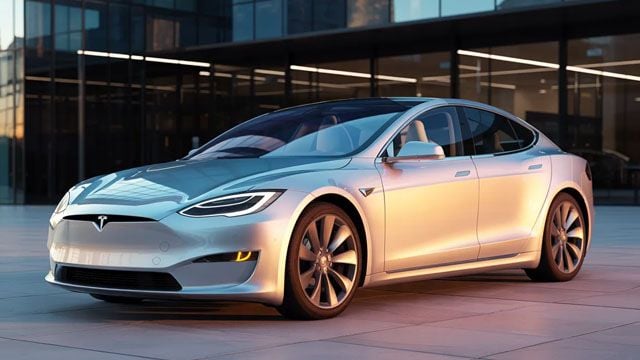
Tesla is scheduled to report first-quarter 2026 earnings this week, on April 22, prompting investors to ask whether the stock is a buy ahead of the results. The company’s shares have continued to trade at a very high valuation, with the price-to-earnings ratio in the hundreds, reflecting elevated expectations for the Elon Musk-led business.
While Tesla has not yet released the full first-quarter financial picture, it has reported delivery volumes. Earlier this month, the company said it delivered 358,023 vehicles in the first quarter of 2026. That total was down 14% sequentially and missed Wall Street’s consensus expectation of about 370,000 deliveries.
There is also a notable gap between production and sales. Tesla produced 408,386 vehicles, a nearly 13% year-over-year increase, while deliveries rose only about 6% versus the year-ago period. The difference implies the company added roughly 50,000 vehicles to inventory, suggesting demand may not be keeping pace with manufacturing capacity.
Supporters of Tesla’s outlook argue that the bull case extends beyond near-term vehicle deliveries. Tesla is positioning itself around artificial intelligence and autonomous driving, with investors focused on the rollout of its autonomous ride-sharing network, Robotaxi, and the production ramp of the Cybercab, a purpose-built vehicle for autonomy. Tesla expects the Cybercab to come to market this year.
Musk also said last week that Tesla successfully taped out its next-generation AI5 self-driving chip. He stated that the new silicon will power its Optimus humanoid robot and supercomputer clusters. Musk further claimed that the existing AI4 chip is already capable enough for Tesla’s Full Self-Driving software to outperform human safety benchmarks.
If Tesla can scale a fully autonomous fleet, the company could potentially shift toward a higher-margin, software-driven model.
However, turning these initiatives into a commercial reality is likely to require substantial investment. Tesla’s management has indicated that capital expenditures for 2026 are expected to exceed $20 billion, up from about $8.5 billion in 2025. The spending is intended to fund new factories and AI compute infrastructure.
Even with strong strategic momentum, it remains uncertain how quickly these efforts can ramp to the scale needed to become meaningful cash generators.
The central challenge for investors is that the stock’s valuation is difficult to justify based on current fundamentals. As of this writing, Tesla shares trade at a price-to-earnings ratio hovering near 370. At that level, the market appears to be pricing in a future in which Tesla executes flawlessly on its autonomous and robotics ambitions while producing substantial profits.
That setup leaves investors exposed to risks, including potential delays in regulatory approvals for autonomous vehicles or weaker-than-expected economics for operating a ride-hailing network.
Despite acknowledging Tesla’s ambitious work, the article’s author argues the stock is too expensive at present. The combination of slowing delivery growth, rising capital expenditures, and an extremely high valuation is described as an unattractive entry point.
The author also notes that there is no certainty about what Tesla will report on April 22 or how the market will react. Still, based on the information available so far, the stock is not viewed as attractive at its current valuation.
Premium gym chains are entering a “golden era” that is ending or already in decline, as rising operating costs collide with shifting consumer preferences toward more flexible, community-based ways to exercise. Long-term memberships are shrinking, margins are pressured by higher rents and facility expenses, and competition from smaller, more personalized…