There are times when a company looks solid in its reports: KPIs are met, revenue is growing, and meetings go smoothly. But in day-to-day operations, the CEO begins to notice different signals: meeting rooms with fewer dissenting voices, issues discussed more in hallways, middle managers cautious about raising risk, teams completing tasks but offering few ideas.
For Vietnamese companies, many firms have moved past the era of moving fast, doing more, and operating with a founder mindset. As scale increases, more layers of management and greater market pressure reveal the limits of the old operating model. What once helped a company run fast can become a bottleneck in the next stage.
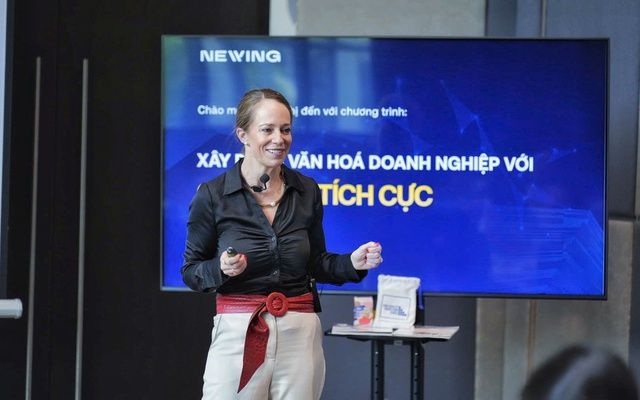
In the workshop Building Corporate Culture with Positive Emotions, organized by Newing in collaboration with Professor Olivia Mandy O’Neill, leaders examine culture through scenarios close to real life: meetings with diverse voices; people raising concerns are heard or dismissed as trouble; pressure to drive motivation or cause people to withdraw.
Culture is not just a backdrop after success. Culture can be the reason for results because it directly affects how people work, how decisions are made, how innovation happens, how safety is maintained, how loyalty is built, and whether employees stay or leave.
Culture truly lies under the iceberg. The workshop began with a quick exercise: each leader chose 3–5 words to describe their company’s current culture. This is not the official value set in corporate materials, but the lived reality of the organization: how people meet, speak, respond, coordinate, and solve problems.
Culture as an iceberg: the visible part includes rituals, internal stories, communication, how meetings are run and decisions are made. The submerged part carries stronger influence: real values and implicit assumptions.
According to the Gallup State of the Global Workplace 2025, global employee engagement fell from 23 percent to 21 percent; the share of managers fell from 30 percent to 27 percent, contributing to about 438 billion USD in lost productivity.
Amazon provides a clear example: strong culture shapes how people are selected, challenged, and developed. In Amazon, principles like customer obsession, ownership, candid feedback, and speed of execution become the criteria by which people are hired, evaluated, and expected to deliver results.
Culture is not only a matter of internal mood; it directly impacts performance and outcomes. When culture constrains speaking up or slows the flow of critical information, important information may arrive late, potentially affecting decisions and results.
Putting international knowledge into the Vietnamese context, leaders note that many important things are not said because people do not yet feel it is safe or appropriate to voice them.
In Vietnamese culture, before an idea is expressed, the speaker places themselves within a relationship such as boss and subordinate, or supervisor and staff. This nuance helps maintain harmony and shows concern for each other’s feelings. In practice, politeness can slow down necessary conversations.
Therefore, changing culture in Vietnamese companies requires more than a call to be frank. Leaders must create a way of talking that is clear, respectful, and oriented toward common goals. Sometimes change begins with small questions: replace ‘Who has questions?’ with ‘What am I missing?’; publicly thank those who raise issues; go down to the team to listen to the truth before it becomes a bigger problem.
That is why Newing brought Mandy O’Neill to Vietnam to translate international knowledge into real, practical questions for Vietnamese leaders. Is the organization operating on trust or on caution? Are teams silent because they agree or because they do not feel safe to speak up? Is the current culture energizing people to deliver results or quietly shrinking them?