•
•
•
•
•
•
•
•
•
•
•
•
•
•
•
•
•
•
•
•
•
•
•
•
•
•
•
•
•
•
•
•
•
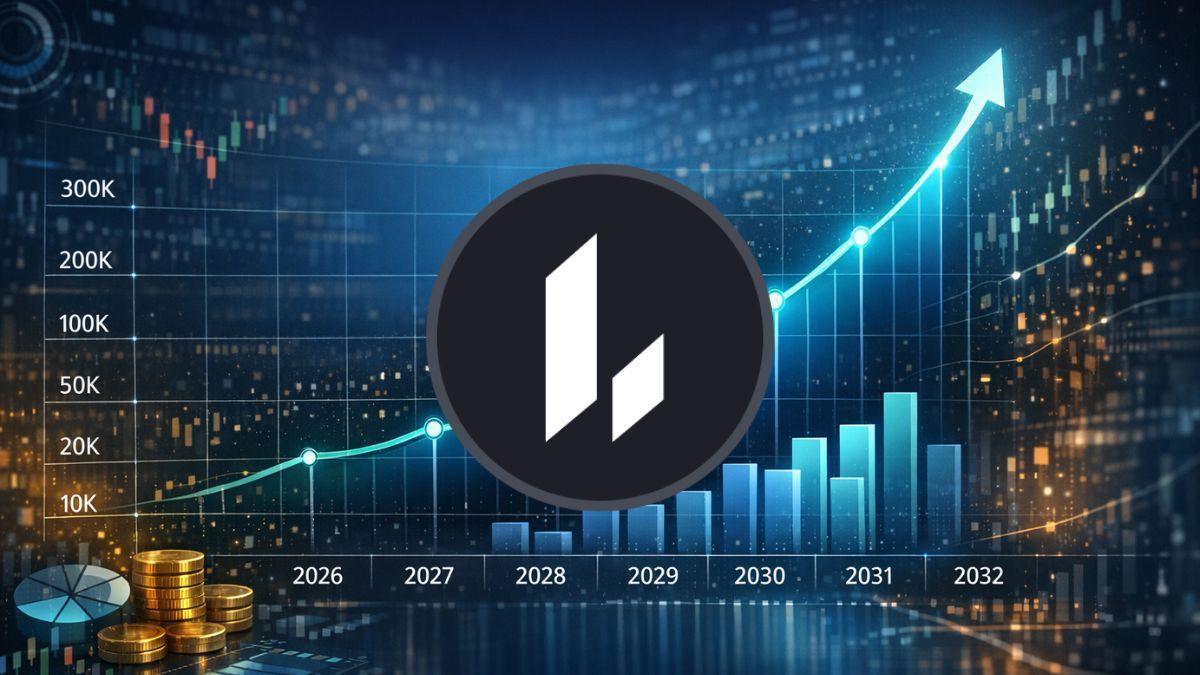
Lighter is a decentralized perpetual futures exchange built on a custom zero-knowledge rollup secured by Ethereum. It aims to deliver centralized-exchange speed while maintaining on-chain transparency and verifiable risk management. According to the article, every order match, funding payment, risk check, and liquidation is verified using zero-knowledge proofs, enabling traders to confirm that the matching engine follows protocol rules rather than operating as a black box.
The exchange uses an order book model, positioned as different from automated market maker perpetual platforms. The model is described as optimized for deep liquidity and low-latency execution. The article also highlights “zero-fee trading for most accounts,” with monetization focused on specialized order flow and participants. It states that as volumes, open interest, and market depth change over time, these metrics could become key inputs for assessing where LIT may trade in future cycles.
LIT is described as the native infrastructure token of the Lighter ecosystem. The article says it is intended to align users, builders, and long-term stakeholders with protocol growth. It underpins governance, incentive programs, and value distribution mechanisms tied to revenues from the core DEX and future products. Token holders are described as able to participate in decisions related to incentives, listings, and roadmap priorities, and to benefit from buybacks or growth allocations determined on-chain. The article notes that these revenue and allocation flows are often treated as variables when modeling potential price paths over a 2026–2032 window.
One 2026 projection cited by the article comes from CoinDataFlow, estimating an average price between $0.321453 and $0.926562. It adds that reaching the upper bound would represent a potential 4.51% move relative to “today’s levels.”
A second 2026 outlook cited in the article projects a minimum near $0.80747957, an average around $0.87885674, and a potential peak close to $0.9502339. The article notes that this peak is below the current price, implying a scenario where LIT trades within a tighter band as supply dynamics and user activity evolve.
CoinCodex’s 2027 outlook is described as a wider trading band, with estimates ranging from $0.8443 to $2.43 and an average near $1.57. The article states that if LIT reached that midpoint, it would imply a potential 169.72% return.
Another 2027 view presented in the article is more cautious, suggesting a bearish broader crypto backdrop could push LIT toward $1.08, with a potential move to $2.47 if the market steadies.
DigitalCoinPrice’s 2028 outlook is described as steady upward movement, with the token opening near $0.82 and trading around $1.34 as the year progresses. The article frames this as an improvement versus the prior cycle and a sign of firmer footing as the ecosystem matures.
A separate 2028 forecast in the article is more restrained, projecting a potential low near $0.79 and an upper boundary around $0.96.
CoinDataFlow’s experimental simulations cited by the article suggest a sharp expansion in the trading range if conditions align. The model indicates a potential move of 620.43%, with LIT possibly reaching $6.38. The projected band is $1.40 to $6.38.
In contrast, the article also includes a more conservative month-by-month breakdown, starting near $0.86, with a maximum around $1, a minimum close to $0.81, and a monthly average near $0.90. It reports a year-end estimate of $0.93, described as a modest 4.43% change.
One 2030 outlook cited in the article places LIT in a channel between $1.22 and $3.76, with an average annualized level near $1.99. It states that reaching the midpoint would imply a potential 317.67% return from current prices.
Another set of projections in the article is more aggressive, suggesting LIT could swing between $8.99 and $15.87 if conditions align, with the rationale tied to the possibility of exponential growth if market cycles, user activity, and protocol incentives trend positively.
Experimental simulations for 2031 cited by the article suggest a potential 207.31% increase, with LIT possibly reaching $2.85 under ideal circumstances. The projected trading range is $1.19 to $2.85.
A second 2031 prediction in the article is more restrained, with a potential high near $1.1805369 and an average around $1.1170016. It also lists a minimum close to $1.1923013 and notes commentary related to supply dynamics.
Early projections for 2032 cited in the article suggest a steady climb, with technical analysis indicating the token could reach around $3.23 at both the start and end of the year. The article also notes a potential move toward $3.09, describing 2032 as a period where the asset may hold a relatively stable range while still showing signs of long-term growth.
An optimistic simulation included in the article projects a 512.78% rise in 2032 if conditions align. Under that scenario, LIT might reach $5.70, with a trading range expected to fall between $1.75 and $5.70.
The article concludes that Lighter LIT’s long-term outlook includes both steady-range scenarios and high-volatility cases, with forecasts spanning modest yearly gains to sharp multi-year expansions. It attributes potential outcomes to factors such as liquidity, market cycles, and ecosystem growth.
The article also states that the price predictions are based on estimates by industry professionals and are not investment recommendations, and that readers should conduct their own analysis before investing.