•
•
•
•
•
•
•
•
•
•
•
•
•
•
•
•
•
•
•
•
•
•
•
•
•
•
•
•
•
•
•
•
•


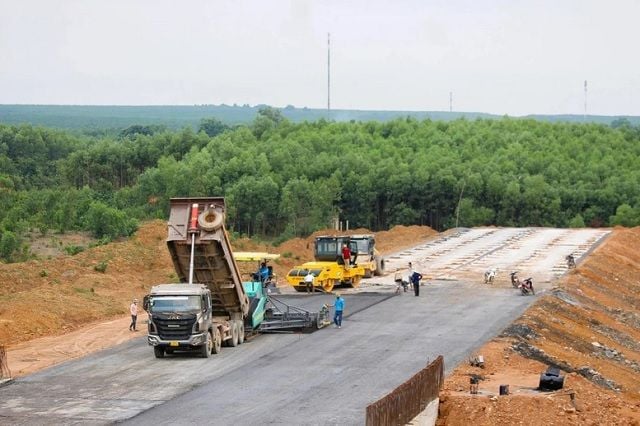
Localities are proposing measures to help contractors and investors cope with a sharp rise in construction materials prices, as fuel and input-cost fluctuations increasingly disrupt project schedules.
To address difficulties caused by fluctuations in fuel and materials, the Departments of Construction have proposed that competent authorities allow adjustments to construction contracts where fuel and construction-material price volatility is treated as a force majeure event or where contract performance circumstances have changed significantly.
In periods of large price fluctuations, contractors’ costs for contract performance can rise sharply, leading to projects being slowed or halted.
According to reports from Can Tho City People’s Committee and Hai Phong City Department of Construction, by the end of March 2026 fuel-price increases had pushed up production and transport costs of most construction materials compared with February 2026. Cement rose by more than 7%, steel by more than 2%, and ceramic tiles by nearly 5%. Sand, stone, and bricks increased by 13.5%–23.3%, while asphalt surged by nearly 32%.
A report by the Ministry of Construction on the impact of fuel and material price fluctuations notes that some materials, such as sand and stone, must be transported from other provinces, and fuel-price fluctuations can influence the overall price level of building materials.
In local construction activities, three main contract types are typically used: lump-sum contracts, fixed-price contracts, and price-adjustment contracts. When materials and fuel become volatile far beyond contractors’ forecasts and there is no immediate adjustment mechanism, contractors may delay work, affecting project progress.
For price-adjustment contracts, even where price-adjustment methods exist, publicly published price indices (monthly or quarterly) may not track actual movements closely enough and may not compensate promptly when fuel prices rise quickly, delaying project progress.
Hai Phong’s Department of Construction also said contract prices are generally not adjustable for ordinary reasons, meaning contractors bear the full risk from input-price fluctuations. In the current environment of large and extreme price swings, contract costs have risen sharply, causing work to slow or stop. For price-adjustment contracts, adjustments are constrained by the scope of adjustment, parties may not have anticipated price slippage and other factors, and adjustments may not fully compensate for the degree of volatility.
Hai Phong’s Department of Construction said the mid-term public-investment plan for 2026–2030 is expected to include 190 project categories with total investment of over 166,000 trillion dong. It is estimated that projects affected by fuel and material price fluctuations will increase by more than 19,000 trillion dong, about 11% above the plan.
For transport projects, total capital would increase by more than 14,800 trillion dong, excluding projects funded from other sources outside the budget.
To address difficulties from fuel and material fluctuations, Hai Phong’s Department of Construction has proposed that the Ministry of Construction issue guidance authorizing price adjustments for construction contracts affected by fuel and material price fluctuations as a force majeure case or as a fundamental change in contract performance.
For lump-sum or fixed-price contracts, the proposal is to allow switching to price-adjusted contracts by directly offsetting the price difference in fuels, materials, and equipment costs versus the original contract from March 2026 until prices stabilize.
For price-adjusted contracts currently using the price-index method, the proposal is to allow adjustments by directly offsetting the difference in fuel, material, and equipment costs versus the original contract from March 2026 until prices stabilize.
Hai Phong’s view also acknowledges that price fluctuations caused by objective and extraordinary factors—such as international geopolitical conflicts—are beyond what can be forecast at the time of contract signing.
Under Decree 37/2015, local authorities may request the Ministry to report to the Prime Minister for approval of recognizing fuel and material price fluctuations caused by regional conflicts as force majeure, beyond the control of the investor and contractor.
The Ministry is expected to study and issue a circular guiding price adjustments and construction contracts affected by price fluctuations beyond the control of the investor and contractor, apply to packages already implemented under lump-sum or fixed-price formats, and allow conversion to price-adjusted contracts.
Hai Phong’s Department of Construction also proposes that the Ministry report to the competent authority to consider tax relief or reductions for essential building materials (sand, stone, cement, steel, asphalt) to stabilize prices, and allow VAT relief or reduction for contractors.
The proposal also includes allowing investors to adjust the progress of affected items, but not beyond the project timeline.
Earlier, the Ministry of Construction urged provincial authorities to strengthen compliance checks and enforcement of price regulations to proactively monitor and forecast material-price movements and stabilize the market. The Ministry called for preventing hoarding, price manipulation, or dissemination of false information that distorts market conditions, and for ensuring supply for priority national projects and civil works.
Provinces are also asked to compile demand for building materials, ensure supply for key national projects and urgent civil works, review mineral reserves to accelerate mining, and implement measures to stabilize building-material prices.
In addition, the Ministry and authorities are expected to consistently collect and process price information and update price indices in a timely manner to reflect market conditions, while avoiding delays or misrepresentations that could distort market prices.
The article cites authorities and government information sources for attribution.
Premium gym chains are entering a “golden era” that is ending or already in decline, as rising operating costs collide with shifting consumer preferences toward more flexible, community-based ways to exercise. Long-term memberships are shrinking, margins are pressured by higher rents and facility expenses, and competition from smaller, more personalized…