•
•
•
•
•
•
•
•
•
•
•
•
•
•
•
•
•
•
•
•
•
•
•
•
•
•
•
•
•
•
•
•
•
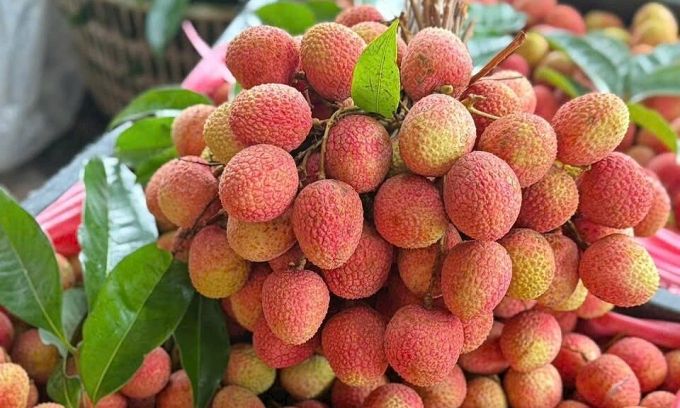
This year’s lychee production across multiple regions has fallen sharply—by as much as 50% in some areas—prompting expectations that prices will stay high even during the main harvest. The Department of Plant Protection (Ministry of Agriculture and Environment) said the 2026 output declined mainly due to unfavorable weather that affected flowering and fruit set.
Across the country, lychee covers about 55,000 hectares, mainly in northern provinces. Bac Ninh (the former Bac Giang area) has the largest cultivation area with nearly 29,800 hectares. This year’s output there is estimated at about 95,000 tons, equivalent to roughly 59.5% of the plan and down sharply from 215,000 tons in 2025.
Professional agencies noted the Bac Ninh figure is based on current flowering status; actual production at harvest could change and may be higher.
In Hai Phong (the former Hai Duong area), lychee area is about 9,345 hectares, with production estimated at 55,000 tons, lower than last year. Other localities include Hung Yen and Dak Lak, with more modest areas of about 1,860 hectares and 2,000 hectares, respectively.
Early-season lychee production this year reached only about 85,000–90,000 tons, down 35–50% compared with the same period. With supply shortfalls, early-season lychee prices have risen quickly.
Farm-gate prices range from 50,000 to 95,000 VND per kg, reported as the highest on record. In retail markets, early-ripe lychees are commonly sold at 140,000–180,000 VND per kg, while some high-quality batches or air-freighted shipments reach about 195,000–210,000 VND per kg.
According to the Department of Plant Protection, the main cause is unfavorable weather in late 2025 and early 2026. The winter was not cold enough, with early-year temperatures about 0.5–1°C above the multi-year average. This was accompanied by drizzly rain and fog lasting from late February to March, disrupting flowering bud differentiation.
The department said this led to uneven blooming, including a “mixed flowering” phenomenon that reduced fruit set. High humidity during flowering also affected pollination, fertilization, and the retention of young fruits. In addition, rising input costs and a low flowering rate led some growers to reduce care investments, further weighing on yields.
Lychee supply in China is also showing declines. Media reports indicate major growing regions such as Guangdong and Hainan have less abundant flowering due to a warm winter and rainfall that was mistimed.
After a bumper year, lychee trees typically enter a downturn cycle, which can reduce production and push prices higher earlier. This dynamic is contributing to a market shift compared with 2025, as supply tightness emerges sooner.








Bitcoin (BTC) investors who use steady dollar-cost averaging (DCA) may be underperforming versus strategies that adjust exposure to the market’s cycle, according to new research arguing that Bitcoin’s behavior differs from traditional long-duration assets.
In a report cited by Markus Thielen of 10x Research, Bitcoin’s market…