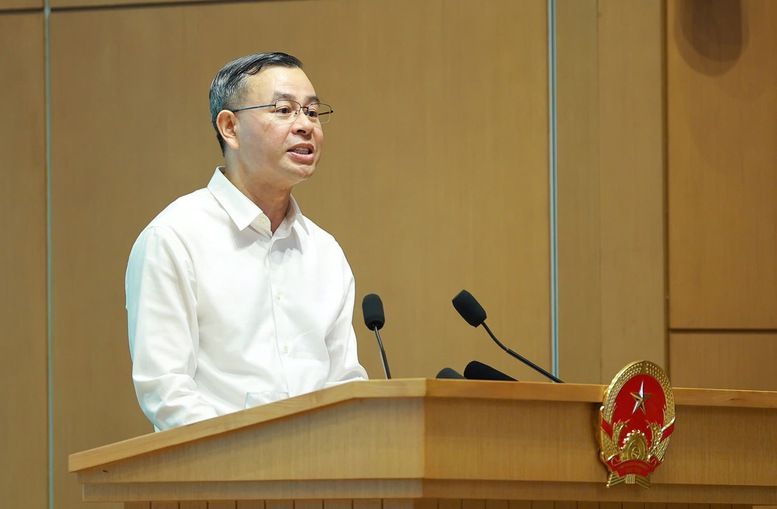
Vietnam's socio-economic performance in Q2 and the first six months of 2026 showed continued growth momentum across most sectors, helped by ongoing governance reforms, infrastructure development, and investment attraction, according to Finance Minister Ngo Van Tuan at the government’s regular June 2026 meeting and an online conference on July 4, 2026.
In a challenging global environment, authorities highlighted ongoing governance and law improvements, infrastructure development, and efforts to attract investment across all economic sectors as priorities to sustain growth. A policy framework has been largely issued to remove bottlenecks and simplify administrative procedures and business conditions.
Finance Minister Ngo Van Tuan reported that nine localities posted two-digit growth; Hanoi and Ho Chi Minh City grew more positively than in May. The number of enterprises entering the market reached 169,800, up 11.2%, with more entrants than withdrawals. On the demand side, Q2 consumption rose 13.9% year-on-year, and six-month consumption grew 12.9%. International visitors reached a record 12.25 million, up nearly 14.9%. Total social investment exceeded 1.8 quadrillion VND, up about 13%. Registered FDI exceeded USD 34.6 billion, up 61%, while realized FDI reached nearly USD 13.03 billion, up 11.2%. Exports and imports were estimated at USD 549.6 billion, up 27.1% year-on-year, with exports at USD 266.5 billion, up 21% — the highest rise since 2022.
Macro-economic fundamentals remained stable, inflation was controlled, and energy security was guaranteed. CPI in June declined 0.39% month-on-month, while the six-month average rose 4.38% year-on-year, within the year's target. Fuel supply was secure; state budget revenue in six months was nearly 1.57 quadrillion VND (about 62% of the estimate), up 17.2%, with tax exemptions and reductions around 89 trillion VND. Public investment disbursement improved, with June disbursement near 137.6 trillion VND and a six-month total of about 357 trillion VND (35.5% of the plan), higher by 38.4 trillion VND than the same period last year. Monetary policy was conducted proactively and flexibly; money and foreign exchange markets and the base exchange rate remained stable.
Despite these positives, challenges remained. Six-month GDP growth, though the highest on record, was 1.52 percentage points below the target. Domestic consumption grew more slowly than in the same period. Public investment disbursement did not meet expectations, especially for science and technology projects. June's trade deficit slowed, but the six-month deficit stayed at USD 16.65 billion. High-skilled labor resources remained insufficient, and localities faced imbalances in labor supply. Some people’s living standards remained difficult, particularly in remote areas, and natural disasters and extreme weather occurred.
The Finance Ministry outlined priority directions for the remaining six months. In fiscal policy management, it will pursue a prudent expansionary policy with focus, deepen the stock market, and ensure 100% disbursement of public investment plans, while aggressively saving recurrent spending and reserving funds for investment and social welfare. The Ministry of Construction should coordinate with other ministries and localities to establish inter-regional coordination mechanisms for construction materials supply, ensuring public investment, especially for national key projects.
On monetary policy management, the State Bank of Vietnam will implement measures to stabilize interest rates and exchange rates and ensure liquidity for the economy. Credit should be directed to priority sectors; improve bad debt resolution and restructuring of banking institutions.
On price, market, and energy-security management, agencies should strengthen price and market oversight; proactively manage electricity, fuel, healthcare, and education pricing to control inflation; strictly address speculation, manipulation, and improper price increases as domestic gasoline and oil prices have declined.
On production and business, imports and exports, the Ministry of Industry and Trade should coordinate with associations, large enterprises, and localities to promptly address difficulties for enterprises and projects, particularly investment and operations, expansion, and to build new production capacity. It should also support enterprises with market information, leverage FTAs, and implement the program “Vietnamese people use Vietnamese goods” aligned with upgrading industries.
The Ministry of Culture, Sports and Tourism and localities should focus on attracting international visitors and promoting domestic tourism to stimulate domestic demand. The Ministry of Agriculture and Environment and localities should boost production, consumption, and export of agricultural, forestry, and fishery products; accelerate granting planting-area codes and packaging facilities, reducing compliance time and costs for people and businesses.
For institutional and investment climate improvements, the Ministry of Justice and related agencies should conduct a comprehensive review of the legal system; ensure timely and high-quality submission of draft laws to the National Assembly; harmonize standards and technical regulations; standardize rules on investment, business, science, technology, and innovation; continue simplifying administrative procedures and reducing logistics costs in the economy. Authorities should promote science, technology, innovation, digital transformation, and the linking of the National Data Center. The Ministry of Education and Training and localities should prepare for the 2026-2027 school year; ensure completion of 100 schools in border areas to be operational in the new school year. The Ministry of Health and localities should ensure the 2026 target: universal health screening and the establishment of electronic health records; The Ministry of Home Affairs and localities should implement policies for those who contributed to the nation’s development; continue implementing wage reforms. The Ministry of Agriculture and Environment and localities should monitor weather conditions and update all disaster scenarios for 2026 and proactively implement measures.
Simultaneously, governance should be improved, the government apparatus streamlined, obstacles in two-level local governance removed, national defense and security strengthened, corruption, waste, and negativity curbed; expand international relations and effectively implement international agreements.