•
•
•
•
•
•
•
•
•
•
•
•
•
•
•
•
•
•
•
•
•
•
•
•
•
•
•
•
•
•
•
•
•
Inflation is expected to ease soon after a period of geopolitical tensions, while Vietnam’s stock market upgrade to an international benchmark, along with upcoming IPO waves and privatizations, is viewed as a catalyst for foreign net buying. Following the upgrade, the State Securities Commission held a working session with a FTSE Russell delegation on operational measures to make it easier for foreign investors to participate in Vietnam’s market.
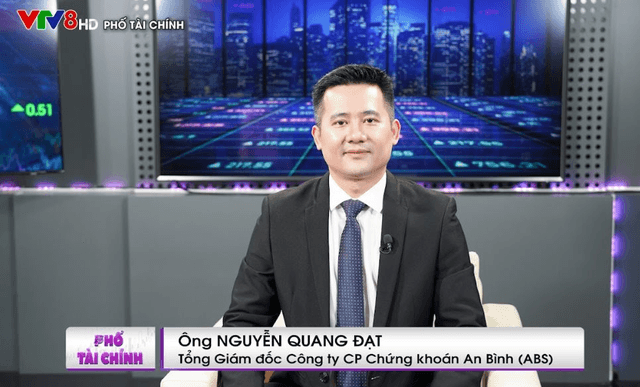
In a discussion on VTV8’s “The Finance Street Talk,” Nguyen Quang Dat, General Director of An Bình Securities JSC (ABS), said Vietnam’s stock market has officially moved into a new phase after being upgraded to FTSE’s secondary emerging market tier. He linked the upgrade to the government’s goal of double-digit growth in 2026–2030, saying it increases the capital market’s role in supporting that target and reducing pressure on the banking system.
Dat also said the upgrade strengthens confidence among regulators and investors, supporting the path toward higher FTSE and MSCI ratings in the future.
Dat noted that foreign investors have been net sellers since 2022, with the largest net selling occurring from 2025 to the present, totaling more than USD 6 billion. He said this has reduced the foreign ownership ratio by market capitalization from about 22% in 2019 to 12% currently.
He cited several drivers behind the net selling, including:
Looking ahead, Dat said he expects foreign investors to pause net selling from mid-2026 and gradually return to net buying. The expected catalysts include cooling inflation after geopolitical tensions, the market upgrade, and potential IPO waves or privatizations.
On potential capital flows, Dat said estimated net inflows from passive funds around the time of the upgrade are in the range of USD 1–1.5 billion. He added that active funds are typically 4–5 times the passive level, though he said the investment process will be divided into four stages.
He also pointed to a potential “bright spot” where Vietnam’s market share could rise above these estimates due to global geopolitical risks creating opportunities. Dat cited that the market capitalization of Middle Eastern markets has fallen sharply by 35–40% recently, which could increase the weight of other markets in the emerging-market basket and create an opportunity for Vietnam.
To attract more capital, Dat said Vietnam needs additional measures to raise its weight within the emerging-market group, including:
Dat said the market upgrade has surpassed FTSE’s technical conditions, but market participants must maintain and enhance capabilities. He highlighted technology and operational readiness as a priority, including:
He added that securities firms should strengthen advisory capacity and shift more toward asset-management models, noting that deeper integration could squeeze traditional brokerage margins toward zero, referencing a similar period in Korea.
Dat also emphasized transparency and high security as key issues for securities companies going forward. At ABS, he said the company has built a strategy to adapt to the upgrade by increasing charter capital to VND 3,000 billion in Q2, expanding owners’ equity to over VND 3,500 billion. He said the capital increase is intended to support more solutions for domestic investors and prepare for cooperation with international organizations in high-value transactions, while refining services and high-end asset-management solutions aimed at sustainable profit growth.
Dat said upgrading the market is expected to spur growth of Vietnam’s stock market (TTCK) in the short and medium term. In the long term, he said growth will depend on multiple factors, but market upgrading is also expected to stimulate foreign capital and improve access to larger funds compared with frontier markets.
He added that the ownership share of institutional investors is expected to rise, which could help reduce volatility and support enterprise capital needs. He said this may also reinforce the ability to upgrade Vietnam’s sovereign rating, potentially lowering the cost of capital for firms.
Dat also described Vietnam’s capital market as undergoing a strong transformation toward greater transparency and green finance. He said regulators are accelerating efforts to complete carbon-credit trading operations and build a legal framework for crypto assets. He added that the government is enforcing mechanisms to support capital for startups to diversify financial tools, raise market capitalization, and promote sustainable development.
On strategy for investors, Dat said market upgrading is not a blanket buy signal but a selective reallocation of capital. He said large-cap, highly liquid stocks with room for foreign ownership may benefit directly and could be re-valued. He also suggested that investing through ETFs focused on large-cap stocks could be an option.
He cautioned that deeper integration may make Vietnam’s market more sensitive to global volatility. At ABS, he said investment performance is used as a measure of quality, and the firm plans to diversify solutions, remain flexible in services, and build tools and teams with performance as the main metric.

Bitcoin (BTC) investors who use steady dollar-cost averaging (DCA) may be underperforming versus strategies that adjust exposure to the market’s cycle, according to new research arguing that Bitcoin’s behavior differs from traditional long-duration assets.
In a report cited by Markus Thielen of 10x Research, Bitcoin’s market…