•
•
•
•
•
•
•
•
•
•
•
•
•
•
•
•
•
•
•
•
•
•
•
•
•
•
•
•
•
•
•
•
•


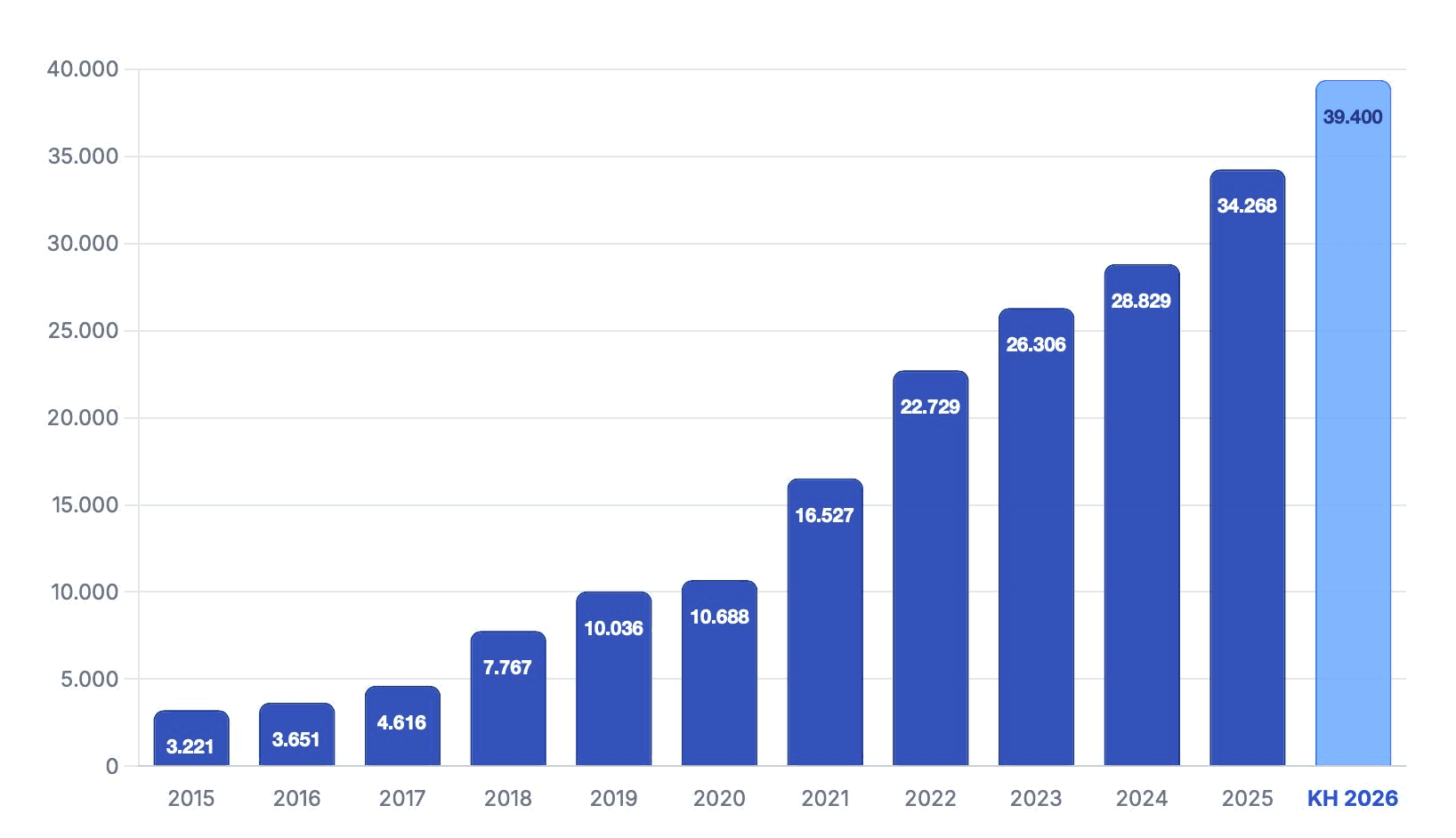
Military Commercial Joint Stock Bank (MB, ticker: MBB) held its 2026 annual general meeting (AGM) on April 18, 2026, at the National Convention Center in Hanoi. Attendance fell sharply to just over 2,000 shareholders, down from more than 4,700 at the 2025 AGM.
MB said it would not provide travel or lunch subsidies for shareholders due to high registration volumes. The bank noted that, in prior years, attendees historically received 500,000 VND per person.
MB presented 2026 targets including pretax profit growth of around 15% and total assets expected to exceed 2 quadrillion VND. The bank projected assets to rise about 28%, mobilization to increase about 30%, and credit growth of around 30%, aligned with central bank limits.
On asset quality, MB set a bad debt ratio target of no more than 1.5%. Efficiency targets include return on equity (ROE) of 20–21%, return on assets (ROA) of 2%, and a cost-to-income ratio (CIR) of 28% or lower.
In 2025, MB reported pretax profit of 34,268 billion VND, up 18.9% year over year. Total assets surpassed 1.6 quadrillion VND, up 43.1%, placing the bank among the Big Five in asset growth.
MB also outlined a plan to raise charter capital to more than 102,687 billion VND. The plan includes three components:
MB stated that 62 million shares were approved in the 2025 AGM under a previous plan, with an additional 138 million shares to be added. The issue price would not be lower than MB’s book value per its latest standalone financial statements before the board approval.
MB proposed a cash dividend of 10%. For 2025 profit distribution, the bank planned to use 12,082 billion VND for stock dividends and pay 8,055 billion VND as cash dividends (10%), bringing total dividend payout to 25% or about 20,137 billion VND.
During the discussion, shareholders asked about dividend plans, share issuance details, funding costs, and MB’s subsidiaries including MCredit, MBS, and MB Capital.
One shareholder suggested that the 10% cash and 15% stock dividend plan should be complemented by an option to sell 10% at 10,000 VND per share to raise additional capital. Chairman Lưu Trung Thái said MB has more than 207,000 shareholders and preferences vary, adding that the approach is intended to balance investor demand for cash versus stock.
Shareholders asked about MCredit’s legal form change to a single-member limited liability company and whether MB planned to sell the consumer finance business. The chairman said MCredit has three shareholders and that MB has an internal plan to explore ownership restructuring for a future IPO, while noting that foreign ownership limits may apply.
On MBS and MB Capital, the chairman emphasized that MBS plays a significant role and that the group intends to pursue investment banking initiatives. He said the year’s targets for MBS and MB Capital are large.
MB stated it would not increase the foreign ownership “room” at this time. The bank said it is seeking strategic investors and expects potentially higher pricing for any future issuance.
On credit growth, MB said its 2025 expansion was robust at around 36%, compared with industry growth of about 19%. Deposits were around 1 quadrillion VND. MB also outlined liquidity management strategies, including maintaining a loan-to-deposit ratio (LDR) of 79% at year-end 2025, with a maximum of 85%, indicating a balance between funding and lending.
MB’s management said the bank has substantial growth opportunities in the coming years, supported by a plan to reallocate and manage through the OceanBank MBV channel. The bank said the goal is rapid growth while maintaining safety and risk controls.
MB also noted that its non-performing loan (NPL) ratio has improved over the past three years. For the group, the target is 1.5%, and for the parent bank, below 1%.
The AGM concluded with all proposed motions approved.


Premium gym chains are entering a “golden era” that is ending or already in decline, as rising operating costs collide with shifting consumer preferences toward more flexible, community-based ways to exercise. Long-term memberships are shrinking, margins are pressured by higher rents and facility expenses, and competition from smaller, more personalized…




