•
•
•
•
•
•
•
•
•
•
•
•
•
•
•
•
•
•
•
•
•
•
•
•
•
•
•
•
•
•
•
•
•


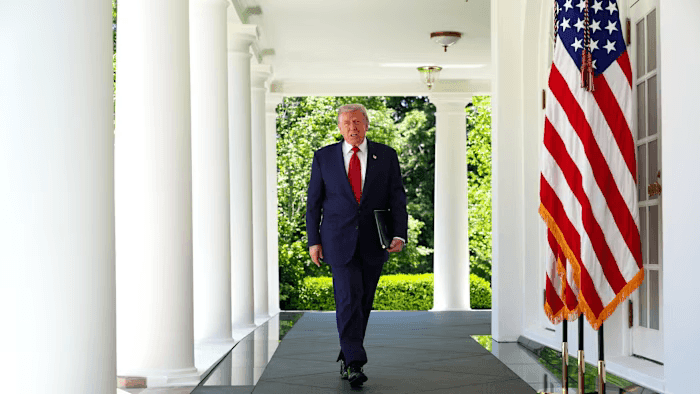
More than half of American voters are dissatisfied with how President Donald Trump is handling inflation and the broader economy, according to a Financial Times survey conducted by Focaldata ahead of the November midterm elections.
The nationwide survey, carried out last week, found that inflation and the cost of living are the two issues voters are most concerned about as the midterms approach, a vote that will determine control of both the House and the Senate.
Nearly 58% of registered voters said they were “very dissatisfied” or “somewhat dissatisfied” with Trump’s handling of inflation and the cost of living.
More than 50% of voters were also dissatisfied with how he is handling jobs and the economy.
On trade policy, 55% of voters said Trump’s tariffs have harmed the U.S. economy, while only about a quarter believe the tariffs benefit the economy.
Analysts said the survey results arrive at a sensitive time for the Trump administration, with about six months left until the midterms. They pointed to the Iran conflict, which has pushed up gasoline prices and many consumer goods in the U.S., and has contributed to rifts within MAGA voters.
In recent days, Trump has said gasoline prices have “fallen very sharply.” However, the national average price of gasoline in the prior week remained around $4.60 per gallon—roughly 50% higher than when the Iran conflict began.
The U.S. and Israel launched the first airstrikes against Iran in late February. The conflict lasted more than two months and disrupted shipping through the Hormuz Strait, raising concerns about global oil supplies.
Analysts said that although a ceasefire between the U.S. and Iran remains in place, Trump is seeking a deal with Tehran to end the fighting and avoid inflationary spikes ahead of the midterm elections.
In the same survey, nearly 54% of voters said they were “very dissatisfied” or “somewhat dissatisfied” with how Trump is handling the Iran conflict, while satisfaction was below one-third. Among Republican voters, about one in five were dissatisfied with his handling of the issue.
Negative assessments of Trump’s management of the economy and the Iran conflict also weighed on his overall approval rating. The survey found that more than 54% of American voters are dissatisfied with his performance as president, while more than 39% express approval.
Among independent voters, more than 58% have a negative view of his leadership.
The FT survey showed the Democratic Party leading the Republican Party by eight percentage points among registered voters ahead of the midterm. The gap was larger among independent voters.
A White House spokesperson, Kush Desai, said tax cuts, deregulation, and the energy agenda will help the U.S. maintain “a solid economic trajectory.” Desai added that as energy disruptions from the Iran war subside, Americans will experience “gas prices fall sharply, real wages rise, inflation fall, and trillions of dollars of investment continuing to flow into the U.S.”
Focaldata said it will conduct monthly surveys of U.S. voters for the Financial Times to monitor sentiment on the economy, foreign policy, and other issues leading up to the November election.
The FT/Focaldata survey was conducted online from May 1 to May 5, 2026, with 3,167 registered voters. The margin of error was 2.1 percentage points.
Premium gym chains are entering a “golden era” that is ending or already in decline, as rising operating costs collide with shifting consumer preferences toward more flexible, community-based ways to exercise. Long-term memberships are shrinking, margins are pressured by higher rents and facility expenses, and competition from smaller, more personalized…