•
•
•
•
•
•
•
•
•
•
•
•
•
•
•
•
•
•
•
•
•
•
•
•
•
•
•
•
•
•
•
•
•


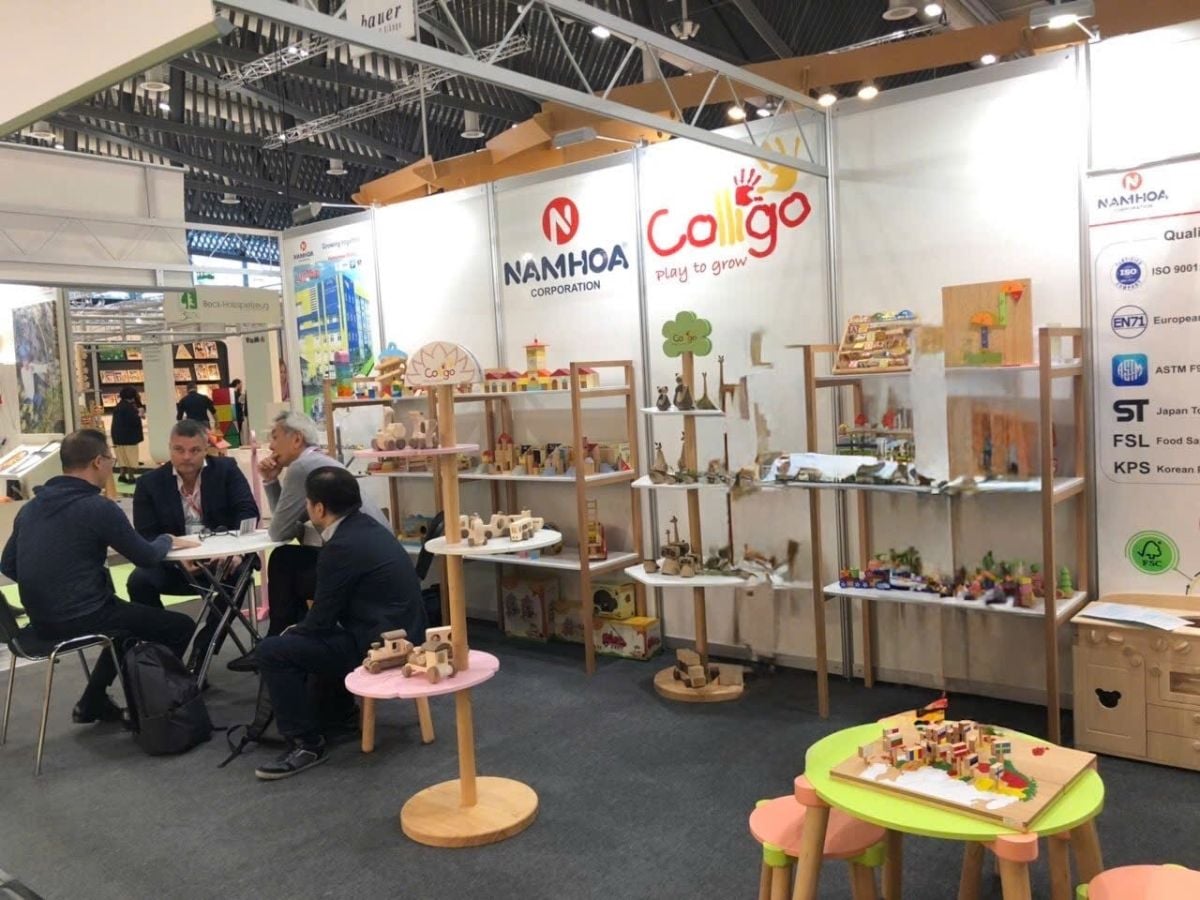
Nam Hoa’s board of directors has approved a cash dividend of 30% for 2025, equivalent to 3,000 VND per share. The ex-rights date is May 25, 2026, and the payment date is expected to be June 11, 2026.
Despite a challenging global environment marked by persistent inflation, geopolitical tensions that disrupt supply chains, and higher logistics costs, Nam Hoa has maintained a high dividend without pressuring liquidity. The company attributes this resilience to the effectiveness of its new business model following a rigorous restructuring.
In 2025, Nam Hoa reported consolidated net revenue of 382 billion VND, up 8.5% year-on-year. Net profit after tax exceeded 40 billion VND, up 357% year-on-year.
In Q1 2026, the momentum continued. Revenue reached 52 billion VND (about 10% growth), while net profit after tax was nearly 8.3 billion VND, up 180% year-on-year.
Management said the healthier financial structure was supported by efficient cash management and operational improvements. The company generated nearly 160 billion VND from selling the Nam Hoa Cu Chi plant, which it used to fund industrial park and residential real estate investments.
Nam Hoa also cited higher productivity, fewer production errors, optimized material usage, and reduced inventories of raw materials and work-in-progress as key drivers of improved performance. A stronger, less capital-intensive balance sheet has helped the company withstand economic shocks and provides a platform to invest in new business areas and capture growth opportunities in the next cycle.
Nam Hoa’s near-term business plan centers on strengthening core capabilities. The company expects long-term growth in wooden toys, décor, and lifestyle segments in key markets including the United States, Japan, and Northern Europe.
The company pointed to demand trends such as green consumption, Montessori education, and efforts to reduce plastic waste as opportunities for safe, high-quality wooden products. It also expects a shift toward Nordic minimalist décor to support better margins than traditional interior products.
Nam Hoa faces industry-wide challenges including slower global demand recovery and increased competition from Chinese rivals. To maintain its position, the company is addressing technical barriers, particularly ESG standards and carbon traceability, and plans to invest in technology and process standardization to meet international requirements and enhance competitiveness.
Nam Hoa projects average core growth of about 15% per year while targeting a reasonable margin of around 20% of revenue.
A major milestone in the restructuring process has been the transformation of subsidiary Miền Quê into an industrial real estate business. After exiting the loss-making interior-export segment in 2023–2024, Miền Quê pivoted to industrial real estate.
The unit currently operates 85,000 square meters of land and factory space for rent, generating about 50 billion VND in annual cash flow. By the end of 2026, accumulated losses are expected to be fully resolved, enabling Miền Quê to contribute 30–35 billion VND in annual profit for Nam Hoa from 2027.
Nam Hoa is also professionalizing this growth engine through Nam Hoa Land. The company aims to raise leased area from 55,000 m2 to 100,000 m2 using high-rise factory buildings, while exploring land-use conversions to residential housing and co-investments in key industrial parks such as Tay Ninh and Hai Phong.
Management said this diversification is expected to establish a solid financial base and mitigate cyclic risks for the company’s export-focused operations.
“We are restructuring not just to survive, but to build a new position. By leanly aligning resources and diversifying the Nam Hoa ecosystem with Nam Hoa Land, we are creating a solid foundation to navigate cyclical risks and seize new business opportunities,” said Doan Huong Son, Chairman of Nam Hoa.
Premium gym chains are entering a “golden era” that is ending or already in decline, as rising operating costs collide with shifting consumer preferences toward more flexible, community-based ways to exercise. Long-term memberships are shrinking, margins are pressured by higher rents and facility expenses, and competition from smaller, more personalized…