•
•
•
•
•
•
•
•
•
•
•
•
•
•
•
•
•
•
•
•
•
•
•
•
•
•
•
•
•
•
•
•
•


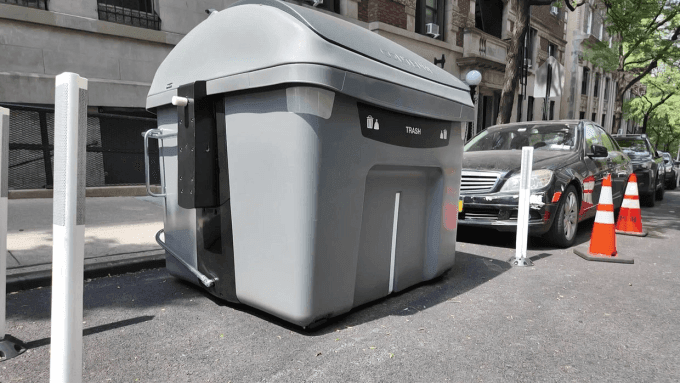
New York will install high-tech garbage bins to replace thousands of parking spaces. Beginning next year, apartment buildings with more than 30 units must use 4 m3 capacity bins instead of leaving trash bags on sidewalks. Lower-density neighborhoods can choose these bins or a mid-sized wheeled version.
The large, sealed bins are European-made and are designed to serve a single building. Access is activated by RFID card and pedal operation, and the bins auto-lock after trash is loaded. The RFID card is reserved for sanitation workers or building managers.
Residents are asked to dispose only household waste, not food scraps, recyclables, or bulky items.
In this expansion phase, New York will provide bins to more than 3,500 buildings. Because of their size, the bins will take the place of 6,500 car parking spaces. The city aims to collect waste using these bins within five years, which would bring 10,000 additional bins into service.
New York is investing $15 million in the FY2026 budget and $35.5 million in the following two years to implement the rapid deployment. The project is planned to be completed by 2031 and requires a synchronized fleet of dedicated trucks to operate, intended to reduce heavy lifting for workers. The program is described as the first collaboration between North American and European manufacturers to produce these vehicles.
In New York, residents typically put trash in black trash bags on sidewalks near their homes, contributing to street filth and safety hazards. The advanced-bin program was piloted in West Harlem with 1,100 bins.
Officials said that after 10 months, streets were cleaner and more open. They reported traffic accidents down 15%, pedestrian accidents down 9%, and rodent numbers down 25%.
Council member Christopher Marte praised the system for creating a more livable street environment designed for people, rather than rats.
Some residents raised concerns about space. West Harlem resident Aarie Thomas said, “The worst part is they take parking spaces we need.” Another resident supported the advanced bins to curb the rodent problem.


Premium gym chains are entering a “golden era” that is ending or already in decline, as rising operating costs collide with shifting consumer preferences toward more flexible, community-based ways to exercise. Long-term memberships are shrinking, margins are pressured by higher rents and facility expenses, and competition from smaller, more personalized…




