•
•
•
•
•
•
•
•
•
•
•
•
•
•
•
•
•
•
•
•
•
•
•
•
•
•
•
•
•
•
•
•
•


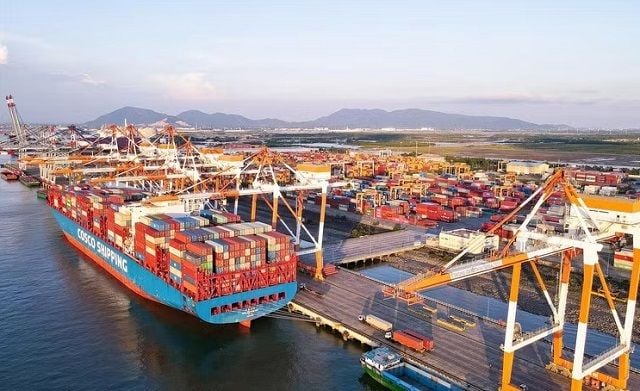
With a target GDP growth rate of 10% or higher this year and a commitment to maintain two-digit growth on average during 2026-2030, Vietnam is entering a new development phase that requires higher quality and sustainability. Experts say the focus is shifting from setting targets to strengthening execution capacity—an element that determines whether growth translates into tangible outcomes.
During the National Assembly’s discussion on the economic and social situation on April 21, Deputy Prime Minister Nguyen Van Thang said the upcoming 3rd Central Committee will draft a resolution on renewing the growth model. The resolution will adopt a comprehensive approach covering the new growth model, its tasks, and implementation solutions. The announcement has drawn attention ahead of the goal of two-digit growth this year and for the 2026-2030 period.
In an interview, Dr. Nguyen Van Loc, Director of the Business Administration Training Program at Phenikaa University, said the 2026-2030 period represents a shift in development thinking—from policy orientation to measurable action, and from targets to accountable execution.
He noted that growth is no longer treated as a slogan alone. The National Assembly has set a target for GDP growth in 2026 of 10% or higher, with inflation controlled at an average around 4.5% to help ensure major macroeconomic balances. For 2026-2030, maintaining two-digit growth on average each year is described as a core political task tied to the country’s strategic milestones.
Dr. Loc also highlighted a more holistic approach reflected in recent documents: growth is assessed not only by the GDP figure, but also in relation to macroeconomic stability, social equity, and efficient resource use. He said senior leaders have repeatedly emphasized that growth must be substantive, stability must be maintained, inflation must be controlled, and resource use must be efficient—while growth outcomes should improve people’s lives.
According to Dr. Loc, Vietnam should not trade stability for several years of “hot growth.” He pointed to past experience where high growth driven by loose credit and expansive public spending led to higher inflation, rising bad debts, and subsequent macroeconomic instability.
Dr. Loc said the key challenge is not simply how much capital to mobilize, but how to use resources more efficiently. He added that the next phase requires solving two tasks simultaneously: achieving growth above 10% while maintaining stability amid volatile global conditions, including monetary policy shifts in major economies, geopolitical risks, and climate change.
Associate Professor Nguyen Van Phuong of the University of Economics, Vietnam National University Hanoi, said that to achieve high growth, the total social capital required for 2026-2030 is estimated at about 38.5 million billion dong. However, he emphasized that the central issue is not the scale of capital, but the efficiency of allocation and use.
Phuong said the bottleneck is not a lack of resources, but legal barriers that increase compliance costs and cause project delays. He argued that reform must target specific procedures with clear accountability, rather than focusing only on textual amendments.
He noted that small and medium-sized enterprises still face constraints in technology, management, and integration into value chains. Policy, he said, should shift from incentives to substantive support, including training, technology transfer, and building an innovation ecosystem.
Phuong said the 10% growth target alongside inflation around 4.5% requires close coordination among monetary policy, fiscal policy, and price management. He added that external risks—such as global economic fluctuations and climate change—should be monitored and addressed promptly.
Phuong said that mega-growth targets can be achievable if pursued sustainably, but the remaining issue is implementation capacity: the willingness to prioritize, take responsibility, and change how work is done. If this is addressed, he said, achieving two-digit growth on a sustainable basis is not unattainable.






Premium gym chains are entering a “golden era” that is ending or already in decline, as rising operating costs collide with shifting consumer preferences toward more flexible, community-based ways to exercise. Long-term memberships are shrinking, margins are pressured by higher rents and facility expenses, and competition from smaller, more personalized…