•
•
•
•
•
•
•
•
•
•
•
•
•
•
•
•
•
•
•
•
•
•
•
•
•
•
•
•
•
•
•
•
•


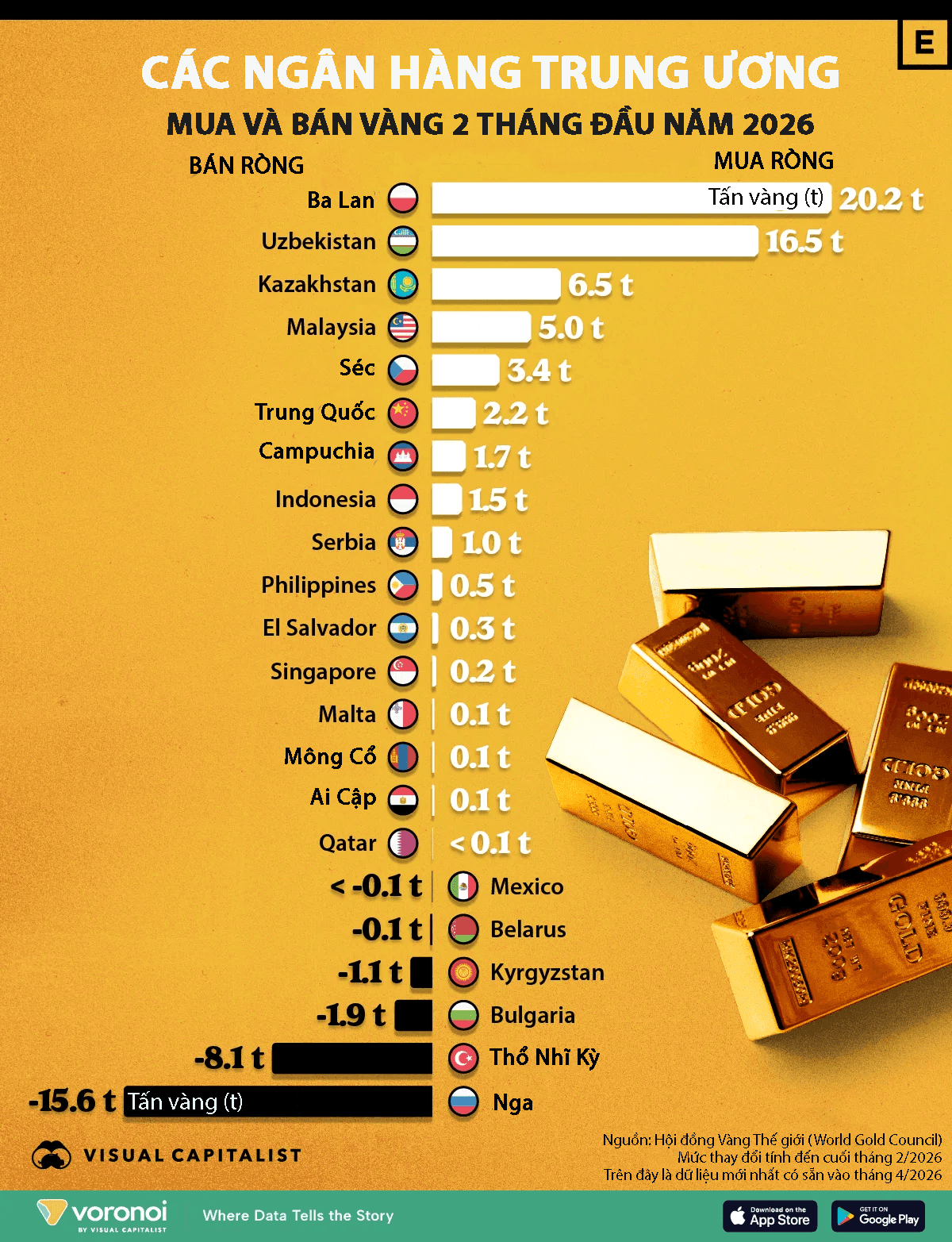
These divergent movements highlight gold’s dual role as both a hedge against geopolitical risk and a source of liquidity when needed. Data from the World Gold Council (WGC) shows net changes in central-bank gold reserves as of the end of February 2026.
Poland was the world’s largest net buyer of gold in the first two months of the year, with net purchases of more than 20 tonnes. The move aligns with the National Bank of Poland’s (NBP) multi-year plan to raise total gold holdings to 700 tonnes, amid rising security concerns in Eastern Europe, a region that includes many NATO member states.
Uzbekistan and Kazakhstan followed Poland, indicating a continued trend of rising gold holdings in Central Asian economies.
The trend comes as reserve-management strategies have shifted significantly following the freezing in 2022 of roughly $300 billion of assets of the Russian central bank (CBR). Since then, China and several Central Asian economies have accelerated gold purchases, viewing gold as a reserve asset less exposed to decisions by foreign governments.
Unlike foreign exchange reserves, gold is not subject to foreign jurisdiction, which can make it more attractive in a geopolitically fragmented environment.
Smaller buyers such as Cambodia and Serbia are also gradually increasing the share of gold in their reserves, reinforcing the broader pattern of central banks adding gold.
Russia and Turkey were the two largest net sellers of gold in the first two months of 2026.
In Russia, the reduction reflects mounting fiscal pressure as the costs of the war in Ukraine and Western sanctions continue to weigh on the government budget.
In Turkey, the decline in gold reserves mainly reflects domestic policy aims, including stabilizing the lira and controlling domestic gold demand.






Premium gym chains are entering a “golden era” that is ending or already in decline, as rising operating costs collide with shifting consumer preferences toward more flexible, community-based ways to exercise. Long-term memberships are shrinking, margins are pressured by higher rents and facility expenses, and competition from smaller, more personalized…