•
•
•
•
•
•
•
•
•
•
•
•
•
•
•
•
•
•
•
•
•
•
•
•
•
•
•
•
•
•
•
•
•


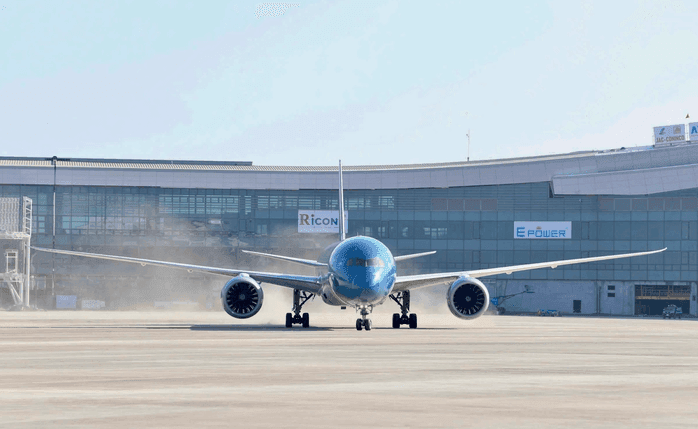
On April 25, 2026, Người Lao Động continued to collect opinions around ACV’s proposal to transfer operations between Tan Son Nhat and Long Thanh in a two-step plan. Under ACV’s proposal, from the summer of 2027 to the end of 2030, all remaining international flights would be moved to Long Thanh, except routes under 1,000 km operated by Vietnamese carriers. If approved, Long Thanh could handle more than 90% of international passengers in the Ho Chi Minh City area in 2027.
From a tourism perspective, TS Duong Duc Minh, Deputy Director of the Institute for Economic and Tourism Development, said international travelers can adapt to the change, but it is not yet “natural.” He argued that the key bottleneck is not whether Long Thanh is a new airport, but the entire experience after arrival—how quickly passengers can exit the terminal, the clarity and availability of onward transport, the forecasted time to reach the city center, transparent costs, and whether the journey to the final destination is organized professionally.
The article notes that if the transfer is well organized, Long Thanh could improve perceptions through new infrastructure, a modern terminal space, high capacity, and reduced congestion at Tan Son Nhat. The decisive factor, according to TS Duong Duc Minh, is to treat the distance from the airport to the destination as part of the travel service rather than a “broken link” in the traveler’s experience.
The proposal’s impact will vary across traveler segments. The article highlights three groups that may adapt more easily: long-haul international travelers, travelers on tours, and government and MICE (meetings, incentives, conferences, exhibitions) delegations. These groups, the article says, are more accustomed to international airports located farther from city centers, citing examples such as Incheon, Narita, Suvarnabhumi, and Kuala Lumpur.
By contrast, independent travelers, short-stay visitors, and those with dense itineraries in Ho Chi Minh City are expected to be more sensitive to time and cost. The group requiring special attention is international and domestic layovers; if there are no fast, clear, on-time connections between Long Thanh and Tan Son Nhat, the overall experience could be significantly affected.
The article proposes measuring traveler readiness using the question: “Has Ho Chi Minh City and the Southeast region organized a well-functioning ecosystem to access Long Thanh?” It describes this ecosystem as including high-quality airport buses, price-controlled taxis and ride-hailing, multilingual information counters, pre-booked transfer tickets, clear signage, and routes to the city center as well as satellite destinations such as Vung Tau and Ho Tram.
Ho Chi Minh City is also considering opening 13 direct bus routes to Long Thanh. The article says this is positive, but standards must be aligned with international service expectations.
According to TS Dương Đức Minh, Long Thanh will not diminish Ho Chi Minh City’s appeal if travel times are forecast clearly, costs are transparent, transfer options are convenient, and information is provided in international languages. Conversely, if travelers have to “fend for themselves” after landing, the 50-km distance could become a psychological barrier rather than a purely geographic one.
During the transition, the article says emphasis should be placed on transfer and short-stay traveler groups, which are described as the most sensitive to delays. It calls for a joint coordination mechanism among aviation, tourism, transportation, and local authorities.
It also notes that international experience shows many modern airports fail not because the terminal is weak, but because there is no centralized traveler-journey coordination hub. For Long Thanh’s initial phase, the article highlights the need for a rapid-response mechanism to handle congestion, pricing, support for international travelers, real-time information, and crisis communications. It adds that in the social media era, a few videos showing chaotic movement or difficult layovers can quickly affect a destination’s image.
Reported by Thái Phương. [Người Lao Động] 04/25/2026 06:28 (GMT +7)

Premium gym chains are entering a “golden era” that is ending or already in decline, as rising operating costs collide with shifting consumer preferences toward more flexible, community-based ways to exercise. Long-term memberships are shrinking, margins are pressured by higher rents and facility expenses, and competition from smaller, more personalized…