•
•
•
•
•
•
•
•
•
•
•
•
•
•
•
•
•
•
•
•
•
•
•
•
•
•
•
•
•
•
•
•
•



Pliant Therapeutics, Inc. (Nasdaq: PLRX) said it presented updated data from its Phase 1 trial of PLN-101095 in combination with pembrolizumab in patients with immune checkpoint inhibitor (ICI)-refractory advanced or metastatic solid tumors. The oral presentation was delivered at the Clinical Trials Mini Symposium of the American Association for Cancer Research (AACR) 2026 Annual Meeting.
Timothy A. Yap, MBBS, Ph.D., of the University of Texas MD Anderson Cancer Center, presented results from the dose-escalation portion of the ongoing Phase 1a/1b trial, with data as of February 27, 2026. In the heavily pretreated ICI-secondary refractory subgroup, twice-daily (BID) PLN-101095 at the highest doses combined with pembrolizumab showed antitumor activity.
The company reported:
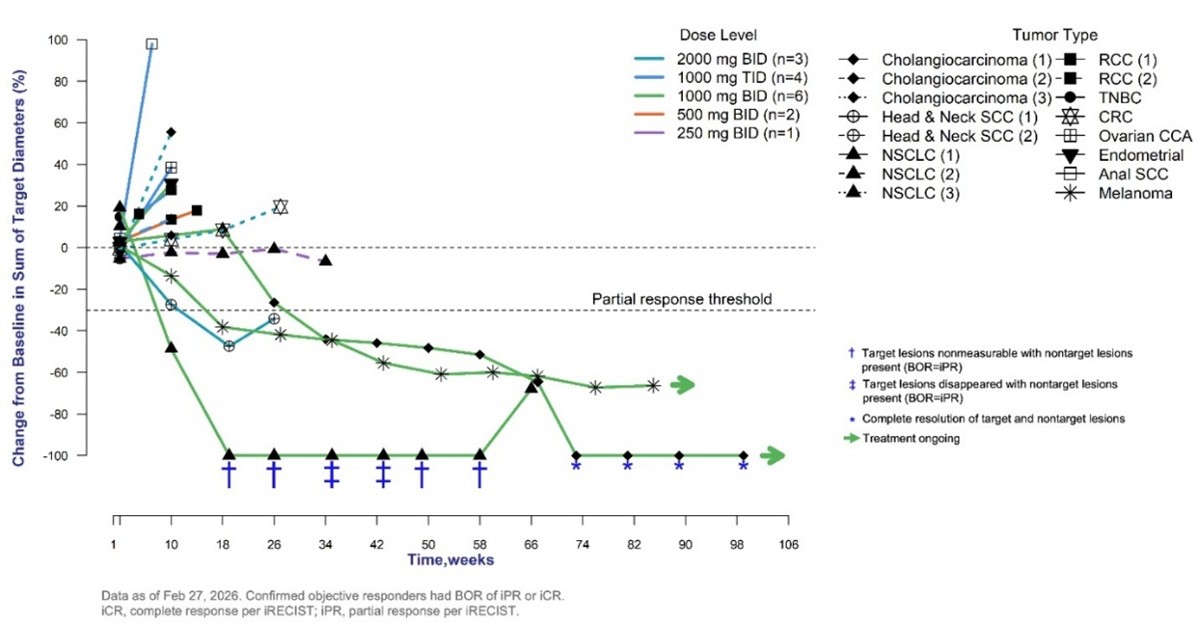
Responses were reported across cholangiocarcinoma, non-small cell lung cancer (NSCLC), melanoma, and head and neck squamous cell carcinoma.
As of the data cutoff, the median time on treatment for the three confirmed responders was 19 months. Those responders experienced an average baseline target tumor reduction of 89%.
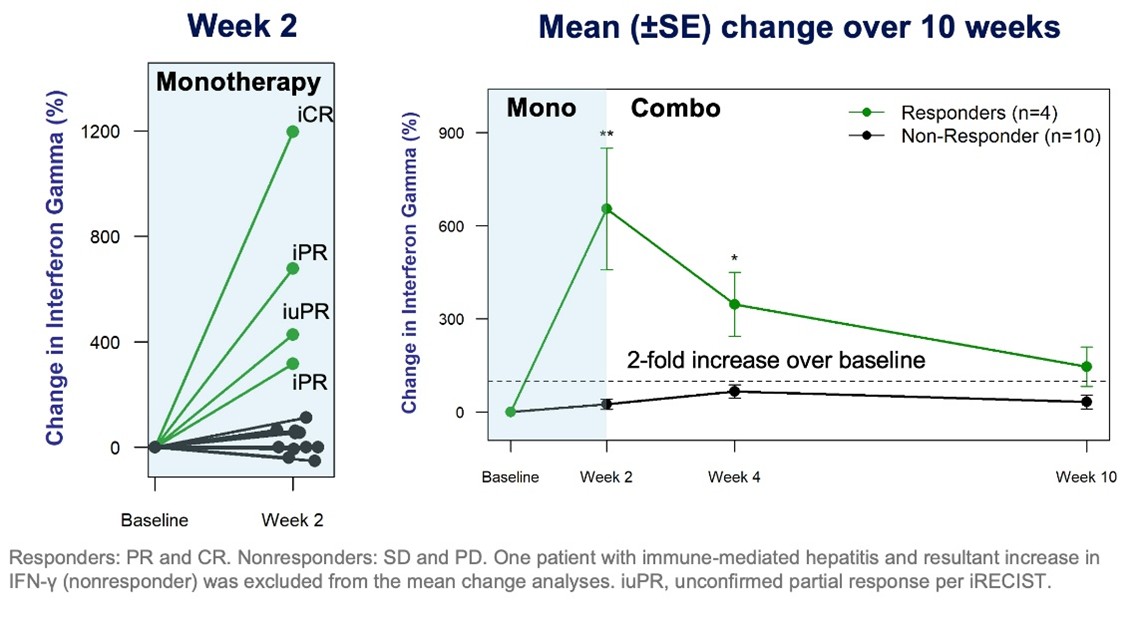
All responding patients showed large increases in plasma interferon gamma (IFN-γ) after a 14-day run-in period of PLN-101095 monotherapy. The increases ranged from 4- to 13-fold versus baseline. At Week 10, all responders maintained more than a 2-fold increase in IFN-γ. No non-responders showed meaningful increases in IFN-γ.
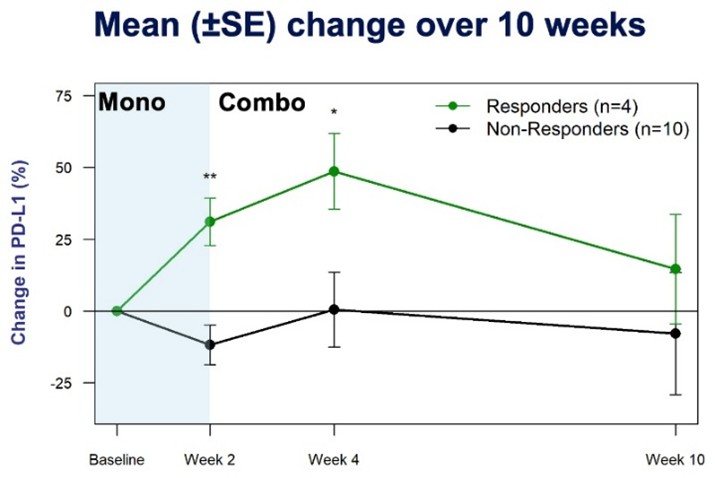
In addition, all responding patients showed elevated plasma PD-L1 levels. The company said PD-L1 increases are known to be induced by IFN-γ and are associated with improved ICI response. Pliant said IFN-γ increases may serve as a biomarker of TGF-β inhibition and an early indicator of PLN-101095 anti-tumor activity, and it plans further biomarker study in Phase 1b expansion cohorts.
Pliant said PLN-101095 was generally well tolerated across all evaluated doses. Discontinuations due to adverse events were limited (n=2). Rash was the most common treatment-related adverse event (TRAE), reported as Grade 1 or 2, with most events occurring within the first two days of the initial pembrolizumab dose. One Grade 3 TRAE was observed.
The company reported dose-ordered exposure at Day 14. Doses of at least 1,000 mg BID achieved sustained IC90 coverage, and all participants dosed at at least 1,000 mg BID maintained IC75 coverage over 24 hours. Pliant said these results support consistent target engagement of PLN-101095.
Sixteen patients with 10 different tumor types—including both primary and secondary refractory patients—were enrolled in five dose cohorts. Patients received PLN-101095 monotherapy orally for 14 days at the following doses: 250 mg BID (n=1), 500 mg BID (n=2), 1,000 mg BID (n=6), 1,000 mg three times a day (TID) (n=4), or 2,000 mg BID (n=3). Pembrolizumab was then added at 200 mg intravenously every three weeks until disease progression.
Scans were conducted at baseline, Day 14, Week 10, and every eight weeks thereafter.
Dr. Yap said: “One of the ways that the tumor microenvironment can suppress responses to immune checkpoint inhibitors is through a process that is activated by integrins to upregulate TGF-β. PLN-101095 is designed to inhibit the integrins before they can ever do that, which gives it significant potential to stimulate or reinvigorate the immune response to cancer. These clinical trial data, for the combination of PLN-101095 and pembrolizumab in patients with secondary immune checkpoint inhibitor resistance, show the potential to meet a high unmet therapeutic need.”
Bernard Coulie, M.D., PhD., Chief Executive Officer of Pliant, added: “These encouraging results show a deepening of baseline tumor reductions in confirmed responders and an increased median time on treatment with PLN-101095 in patients with difficult-to-treat ICI refractory tumors. We have initiated the Phase 1b trial to expand this novel combination therapy in specific tumor types to address patients in need and deliver value to our investors.”
Pliant said it has initiated a Phase 1b open-label indication expansion trial enrolling three cohorts of patients with NSCLC, tumors with high tumor mutational burden, or clear cell renal cell carcinoma. Patients will be treated for 14 days with PLN-101095 at 1,000 mg twice daily as monotherapy, after which pembrolizumab will be added as combination therapy. Enrollment is underway, with interim data expected in 2027.
Pliant said PLN-101095 is an oral, small molecule inhibitor of integrins αvβ8 and αvβ1. The company said activated transforming growth factor-β (TGF-β) fosters an immunosuppressive tumor microenvironment that contributes to ICI resistance and treatment failure. Pliant said blocking integrins αvβ8 and αvβ1 prevents TGF-β activation and is expected to stimulate immune activation by increasing immune cell infiltration into the tumor microenvironment.
The company also said PLN-101095 in combination with an anti-PD-1 monoclonal antibody produced dose-dependent reductions in tumor volume and increased CD8+ T cell tumor infiltration compared with anti-PD-1 therapy alone, and that preclinical studies showed monotherapy activity including reduced tumor volume and increased CD8+ T cell infiltration.
Premium gym chains are entering a “golden era” that is ending or already in decline, as rising operating costs collide with shifting consumer preferences toward more flexible, community-based ways to exercise. Long-term memberships are shrinking, margins are pressured by higher rents and facility expenses, and competition from smaller, more personalized…




