•
•
•
•
•
•
•
•
•
•
•
•
•
•
•
•
•
•
•
•
•
•
•
•
•
•
•
•
•
•
•
•
•


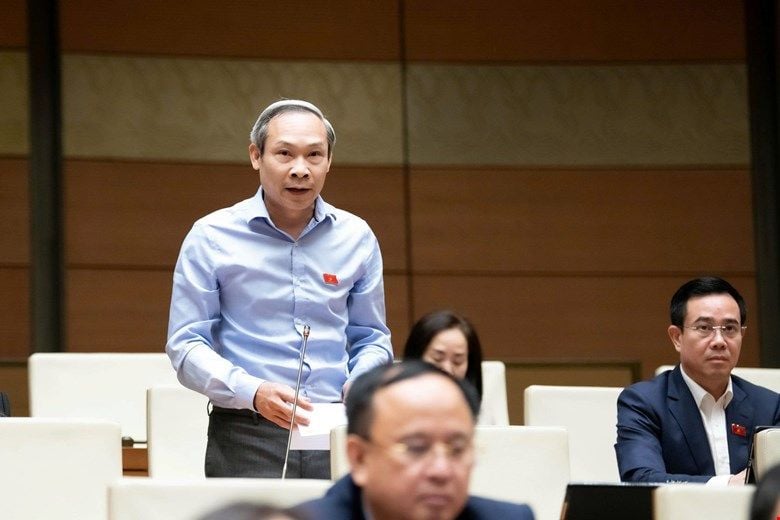
On April 23, continuing the first session of the 16th National Assembly, the Parliament discussed the draft amendments to several articles of the Personal Income Tax Law, the Value Added Tax Law, the Corporate Income Tax Law, and the Special Consumption Tax Law. Deputy Phan Duc Hieu. The content of interest to the delegates is that the government proposed not to set a rigid tax exemption threshold for individuals and households in law, but to leave the details to the government to specify. The current tax exemption threshold for individuals and households is 500 million dong per year. Deputy Phan Duc Hieu (Hung Yen Province) proposed that the draft law should clearly define the framework for tax exemption thresholds for individuals and households, instead of leaving it entirely to the government for detailed regulations. Specifically, the law should define a minimum and maximum threshold to provide a stable legal basis and transparency for enforcement. He proposed that Parliament consider setting the tax exemption framework to range from 1 to 3 billion dong per year. Within this framework, the government would determine specific levels based on economic and social conditions at different times, ensuring flexibility in governance. The Hung Yen delegation emphasized that this design would both safeguard Parliament's role in deciding broad principles and give the government room to adjust in line with practicality. At the same time, this approach would improve policy predictability and stability, reducing abrupt changes that affect people's production and business activities. Deputy Hieu also analyzed that if the tax exemption threshold is too low, compliance costs for individuals and households would rise, and management costs for government agencies would increase. Conversely, if the exemption threshold is too high, households would not want to grow into a business enterprise. Therefore, adjusting upward the threshold while designing a flexible framework would help reduce compliance burdens for household businesses, encourage them to formalize, and expand the tax base to sustain budget revenue. Expressing support for the government to set the threshold, Deputy Nguyen Thi Viet Nga (Hai Phong) suggested clarifying the implementation control mechanism. According to Nga, the issue is not only which agency sets the rule, but also how to ensure compliance after it is prescribed. If the threshold is used as a basis to exempt personal income tax or value-added tax, it could easily lead to splitting household businesses, splitting cash flows, splitting selling points, or registering multiple people under the threshold, Nga warned. Thus, Nga proposed in the detailed regulation to design principles to prevent artificial income splitting; and to implement periodic reporting to ensure the threshold adjustment truly serves the intended objective of support and does not create loopholes that reduce budget collection.





Premium gym chains are entering a “golden era” that is ending or already in decline, as rising operating costs collide with shifting consumer preferences toward more flexible, community-based ways to exercise. Long-term memberships are shrinking, margins are pressured by higher rents and facility expenses, and competition from smaller, more personalized…




