•
•
•
•
•
•
•
•
•
•
•
•
•
•
•
•
•
•
•
•
•
•
•
•
•
•
•
•
•
•
•
•
•


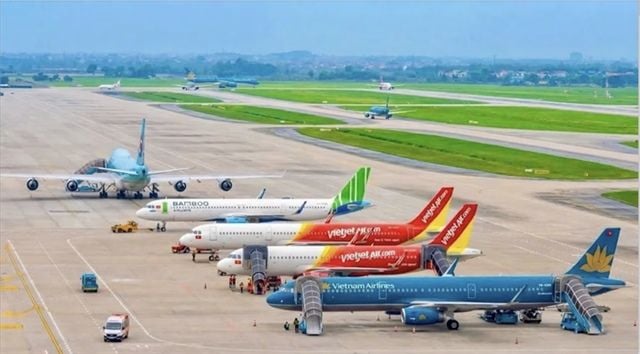
The Civil Aviation Authority of Vietnam (CAAV) has proposed reductions to domestic aviation charges, alongside a fuel-surcharge mechanism for domestic ticket sales, aiming to support airlines amid cost pressures.
Under the proposal, the CAAV would cut landing and navigation charges for domestic flights by 15% and reduce takeoff and landing fees by 20% for domestic routes through 30 June 2026.
The CAAV said the plan is based on the fact that aviation service providers are already benefiting from a 50% reduction in concession fees for airport and terminal operations from 1 July 2025 through the end of 2026.
The CAAV estimated that if the fee reductions are applied for three months, revenue would decline as follows:
According to ACV’s figures, during 2023-2025 the cost-to-revenue ratio in aviation infrastructure operations averaged about 52%, with annual net contributions to the state budget of about 1,353 billion dong. On that basis, the CAAV said the proposed fee reductions would not materially affect the financial balance.
Stakeholders expressed differing views on whether the reductions should be implemented immediately and at what level.
VATM argued against reducing flight-operation fees right away, citing that April–May is a low season and that fuel-price effects are not yet fully reflected.
SAC, operator of Phu Quoc airport, proposed a smaller 10% cut in takeoff and landing charges for three months from 15 April to 15 July 2026, which is lower than the CAAV’s 20% proposal.
Vietnam Airlines and Vietravel Airlines argued for larger reductions, seeking up to 50% cuts in takeoff, landing, and flight-operation charges on domestic routes. Vietravel also proposed an additional 30% reduction for international flights.
In addition to fee reductions, the CAAV proposed allowing a fuel-surcharge mechanism for domestic-ticket purchases.
The CAAV cited that Jet A-1 prices in Asia have risen by more than 100% within two weeks after the Middle East conflict intensified from late February. It provided the following reference prices:
The CAAV said current fuel prices are at a “peak” and show no signs of cooling, and noted that fuel accounts for 35-40% of the cost per flight.
Under the proposal, the fuel surcharge would apply when Jet A-1 is priced at USD 100 per barrel or higher, with surcharge bands increasing by USD 10 per barrel. The surcharge would be calculated on a 50/50 cost-sharing basis between airlines and passengers.
The CAAV set the base price at USD 90 per barrel, described as the two-year average and a threshold that carriers can meet in their operations. The surcharge would be implemented for three months.
For the Hanoi–Ho Chi Minh City route, the proposed surcharge would be about 311,000 dong per leg when fuel prices are high. The CAAV said this is substantially lower than international norms, citing Japan as an example: for a roughly two-hour flight on a similar route, the surcharge difference between fuel prices of USD 90 and USD 180 per barrel is about USD 40, or roughly 1.1 million dong.
In carriers’ reports, Vietnam Airlines estimated that fuel-related costs this year would rise by 11,000 to 27,000 billion dong, while current tax-exemption policies are expected to reduce about 105 billion dong.
VietJet said that in April, fuel-related costs rose by about 24 million USD, while tax exemptions reduce only about 4 million USD, equivalent to 16% of the increased cost.
The CAAV assessed that the fuel-surcharge option offers advantages in flexibility, quicker implementation, and easier adjustment to market dynamics compared with raising the fare cap, which would require more time to revise and could have longer-term CPI effects.
The agency also noted that the surcharge excludes VAT. It said the impact on CPI is not expected to be large because aviation fuel is a small share of the consumer price index and the surcharge would be short-term.






Premium gym chains are entering a “golden era” that is ending or already in decline, as rising operating costs collide with shifting consumer preferences toward more flexible, community-based ways to exercise. Long-term memberships are shrinking, margins are pressured by higher rents and facility expenses, and competition from smaller, more personalized…