•
•
•
•
•
•
•
•
•
•
•
•
•
•
•
•
•
•
•
•
•
•
•
•
•
•
•
•
•
•
•
•
•


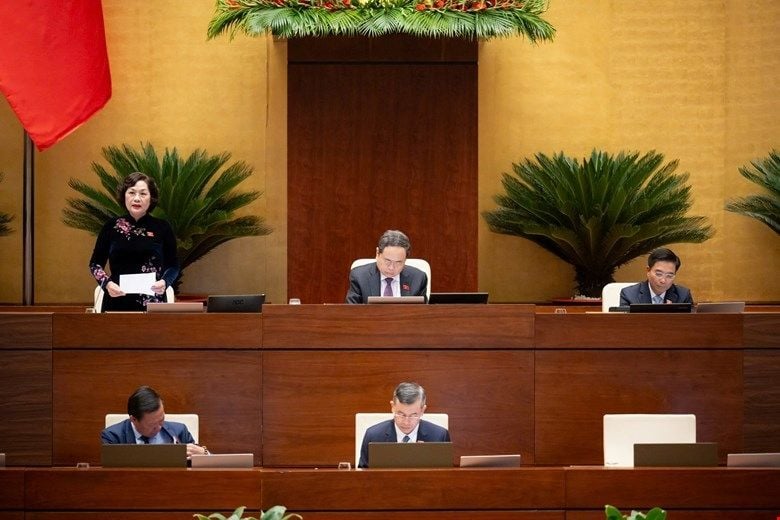
On the afternoon of April 21, Vietnam’s National Assembly continued its discussion in the chamber on the five-year national budget plan for 2026–2030 and the borrowing/public debt repayment plan for 2026–2030. Deputies focused on how to secure financial resources to support two-digit growth while improving fiscal discipline, investment efficiency, and market confidence.
Deputy Pham Thúy Chinh (Hai Phong) said that securing resources for the two-digit growth goal must be handled in an overarching, long-term, and coordinated manner. She noted that total social investment is expected to be around 40% of GDP, while public investment accounts for only about 20%, with the remainder largely dependent on the private sector and foreign capital.
To attract and mobilize these sources, the deputy argued that improving the investment environment is key. She recommended that the Government quantify institutional reform targets using specific indicators and clearly assign responsibilities among ministries for simplifying administrative procedures and reducing compliance costs for businesses. She also called for a dedicated reporting mechanism to track improvements in the investment climate for periodic National Assembly oversight.
“If we do not simultaneously address three issues—fiscal discipline, investment efficiency, and market confidence—no matter how much resource mobilization we undertake, sustainable growth will be hard to achieve. Therefore, in the 2026–2030 period there must be a strong shift from expanding investment to raising investment efficiency, from managing expenditure to modernizing public financial management.”
Deputies also discussed tax policy reform aimed at broadening the tax base, including in new areas such as the digital economy and assets. Resources should be prioritized for strategically important infrastructure projects, including high-speed rail, digital infrastructure, and renewable energy.
Another focus was the development of the capital market. Deputies called for a stronger legal framework for the corporate bond market, improved transparency and discipline, and the promotion of new financial channels such as green finance and carbon markets to reduce reliance on bank credit.
For localities—especially major urban areas such as Hanoi, Ho Chi Minh City, Hai Phong, and Da Nang—deputies proposed allowing more flexible use of modern financial tools. Examples included the TOD (transit-oriented development) model linked to public transport and the issuance of local government bonds to better mobilize local resources.
Deputy Tran Hoang Ngan (Ho Chi Minh City) highlighted progress from the previous period, saying public debt fell from about 43% of GDP to around 34% of GDP, creating room for development. However, he cautioned that the coming period’s goal of over 10% growth and higher GDP must be paired with principles including substantive growth, alignment with macroeconomic stability, improved mobilization and efficient use of resources, and investment aimed at raising people’s living standards.
He warned that budget balance pressures could intensify as both revenue and expenditure are projected to rise, potentially pushing the budget deficit above safe limits. Tight control was therefore urged to avoid breaching thresholds, with priority given to key projects, disadvantaged localities, and sectors with spillover effects.
With a central budget of about 3.8 quadrillion dong, deputies proposed prioritizing: (1) capital for ongoing constructions; (2) support for difficult localities to ensure social security and national defense-security; and (3) nationally important projects with regional spillovers, especially in information technology infrastructure and digital infrastructure.
Deputy Nguyen Truc Son (Vinh Long) said that if tax policies lead to revenue shortfalls, flexible adjustment mechanisms should be available. He proposed enabling localities to mobilize other lawful resources to maintain budget balance and support sustainable development.
On ODA projects, Deputy Nguyen Truc Son noted that demand for foreign borrowing in the next period is expected to increase seven to nine times compared with the past, particularly for large-scale infrastructure projects. To improve efficiency, he pointed to ODA disbursement of about 52.7% in the previous period and urged continued streamlining of investment procedures between domestic authorities and donor counterparts to prevent cases where a project faces two investment procedures, causing delays.
Deputy Tran Anh Tuan (Ho Chi Minh City) emphasized that the borrowing plan must be aligned with project progress to ensure funds are used for their intended purposes, avoid dispersion, and raise public investment efficiency. The aim, he said, is to ensure borrowed funds reach the right targets, maximize effectiveness for key projects, and prevent waste.
“Thus, the borrowing plan should ensure that funds are directed to the right places, enhancing the effectiveness of state investment,” Deputy Tran Anh Tuan added.
The proposal also suggests granting the Prime Minister authority to adjust and extend ODA loan terms.







Premium gym chains are entering a “golden era” that is ending or already in decline, as rising operating costs collide with shifting consumer preferences toward more flexible, community-based ways to exercise. Long-term memberships are shrinking, margins are pressured by higher rents and facility expenses, and competition from smaller, more personalized…