•
•
•
•
•
•
•
•
•
•
•
•
•
•
•
•
•
•
•
•
•
•
•
•
•
•
•
•
•
•
•
•
•


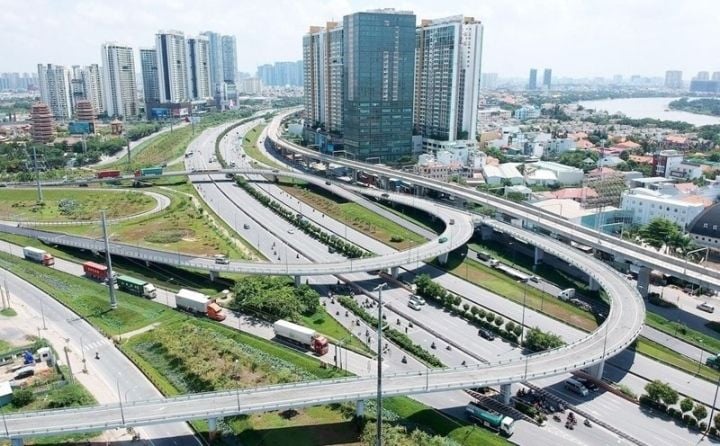
The disbursement of public investment capital continues to show bottlenecks, with 28 central agencies and 18 localities reporting disbursement below the national average. The Ministry of Finance said the situation underscores the need to remove obstacles and strengthen implementation discipline to meet the 2026 disbursement target.
In its latest report on the allocation and disbursement of state-budget-funded public investment up to April 15, 2026, the ministry stated that total disbursed public investment reached 127,390.6 trillion VND, equivalent to 12.6% of the Prime Minister-assigned plan.
Among the units, seven ministries/agencies at the central level and 16 localities recorded disbursement at or above the national average.
Notable units mentioned in the report include the Ministries of National Defense, Industry and Trade, and Public Security, along with localities such as Hanoi, Hai Phong, Quang Ninh, Thai Nguyen, and Ha Tinh.
Conversely, 28 ministries and central agencies and 18 localities did not reach the national average. Several units recorded almost no disbursement or very low rates (below 1%), including the Ministry of Foreign Affairs, the Ministry of Education and Training, the State Bank of Vietnam, the Government Inspectorate, the State Audit, and Vietnam Television.
Speaking at a conference on accelerating public investment disbursement on April 24, Deputy Finance Minister Tran Quoc Phuong said slow progress is driven by both objective and subjective factors.
The Deputy Minister cited that the total public investment from the state budget allocated was 1,013,443.4 billion VND, including 363,216.8 billion VND from the central budget and 650,226.6 billion VND from local budgets. Compared with the initial plan, the central budget was supplemented by 18,095.4 billion VND.
Objective factors affecting construction progress include fluctuations in material prices, regulatory bottlenecks, difficulties in site clearance, and weather conditions.
However, the Deputy Minister said internal causes remain dominant. These include planning not aligned with reality, dispersed capital allocations, and cases where projects received funding before required procedures were completed. He also pointed to non-decisive site clearance, ineffective coordination among units, and some staff avoiding responsibility, all of which have weighed on overall implementation.
In addition, the Deputy Minister said the supply of construction materials has not kept pace with demand, particularly because many projects were implemented simultaneously.
To improve disbursement performance, the Ministry of Finance recommended that ministries, sectors, and localities accelerate the detailed allocation of capital plans and proactively adjust funding between projects to prioritize those with better disbursement prospects. Units that have not completed central allocations before May 15, 2026 must submit their proposed handling method to the Ministry of Finance by May 20, 2026.
The ministry also called for applying improved investment efficiency across the full cycle, from preparation to operation. It emphasized tightened inspection and supervision to ensure financial discipline and curb losses and waste.
Regarding the mid-term public investment plan for 2026–2030, the Ministry of Finance said it has submitted to the Government a directive on managing and using capital linked to assessing economic and social efficiency. After the directive is issued, ministries, sectors, and localities must strictly select project lists based on efficiency and submit their plans to the Ministry of Finance by May 6, 2026 for consolidation and submission to the Government.
For site clearance, localities were urged to focus on resolving bottlenecks and intensify public outreach to build consensus. The Ministry of Finance also recommended tightening price controls for construction materials to prevent speculation and unreasonable price increases, and publishing material prices and construction price indices monthly or when needed.
For national priority projects, especially transport infrastructure, the requirement is to capitalize on favorable weather to accelerate construction and to promptly prepare investments for major projects such as the North-South high-speed railway and the Vietnam-China rail links.
In addition to immediate measures, the Ministry of Finance said it will continue to refine institutions, policies, and administrative procedures to be simplified and more transparent, with the aim of shortening implementation time and improving public investment efficiency in the near term.
Premium gym chains are entering a “golden era” that is ending or already in decline, as rising operating costs collide with shifting consumer preferences toward more flexible, community-based ways to exercise. Long-term memberships are shrinking, margins are pressured by higher rents and facility expenses, and competition from smaller, more personalized…