•
•
•
•
•
•
•
•
•
•
•
•
•
•
•
•
•
•
•
•
•
•
•
•
•
•
•
•
•
•
•
•
•


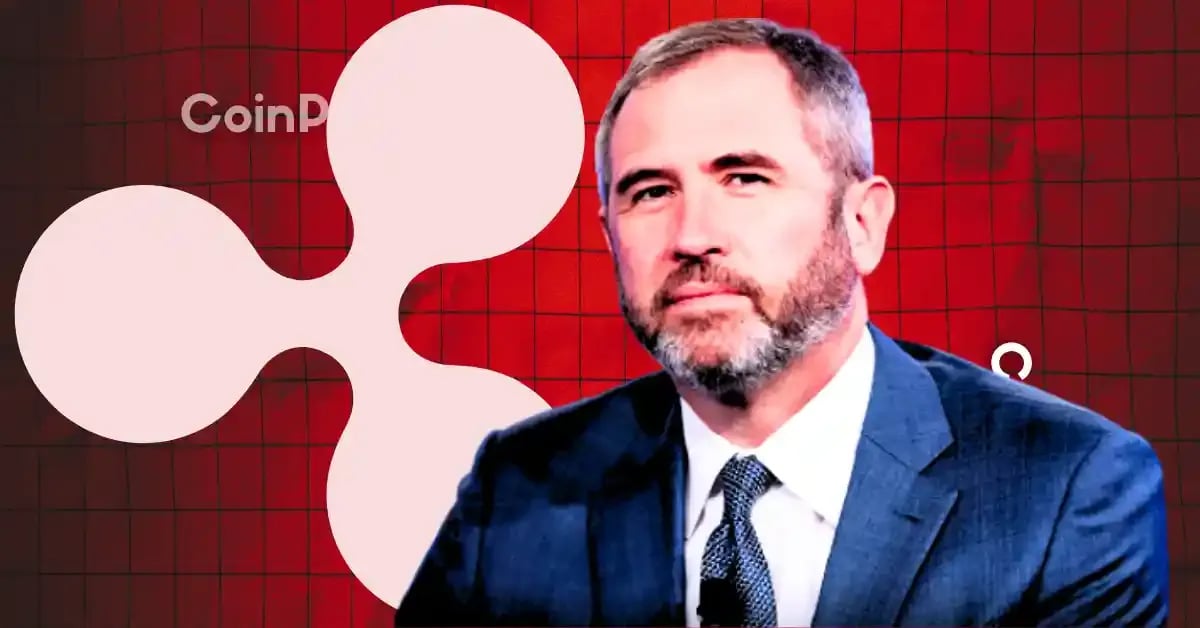
Speaking at the fourth annual XRP Las Vegas event, Ripple CEO Brad Garlinghouse addressed a question that frequently comes up in the XRP community: how committed Ripple is to XRP itself, given the company’s expanding focus on institutional and enterprise clients.
Garlinghouse’s response was direct. “Ripple is still the largest holder of XRP on the planet,” he said. “We are the most interested party in seeing XRP be successful. We will continue to be the most interested party in seeing XRP be successful.”
Garlinghouse said he finds skepticism about Ripple’s commitment to XRP puzzling, arguing it does not align with the company’s position as the largest XRP holder. “Whenever I read people questioning that, I just think it doesn’t make sense logically,” he said. “It’s obviously not what I’ve said publicly.”
He added that a company holding more XRP than any other entity has a clear financial incentive to maximize the asset’s value, utility, and adoption. In his view, Ripple’s institutional business is not separate from its XRP commitment, but rather the mechanism through which that commitment is expressed.
Garlinghouse outlined three objectives that guide Ripple’s approach to XRP: making XRP the most useful digital asset, the most liquid digital asset, and the most trusted digital asset.
He said these goals are pursued through products and services sold to financial institutions and capital markets, with Ripple Prime and Ripple Treasury identified as key vehicles. Garlinghouse also said Ripple Treasury has been performing strongly.
To illustrate recent activity, he referenced advertising on the Las Vegas Strip aimed at attendees of a competing treasury conference. “The main competitor to Ripple Treasury is called Kyibba and they were doing their customer conference here the last few days,” Garlinghouse said with a laugh. “We had some wrapped buses that said Ripple Treasury picking people up from the Kyibba conference.”
The XRP Las Vegas event provided context for the remarks. Organisers said the gathering is now in its fourth year and larger than ever. Garlinghouse noted that the turnout reflected a community that has maintained cohesion through years of legal uncertainty and market volatility.
Premium gym chains are entering a “golden era” that is ending or already in decline, as rising operating costs collide with shifting consumer preferences toward more flexible, community-based ways to exercise. Long-term memberships are shrinking, margins are pressured by higher rents and facility expenses, and competition from smaller, more personalized…