•
•
•
•
•
•
•
•
•
•
•
•
•
•
•
•
•
•
•
•
•
•
•
•
•
•
•
•
•
•
•
•
•


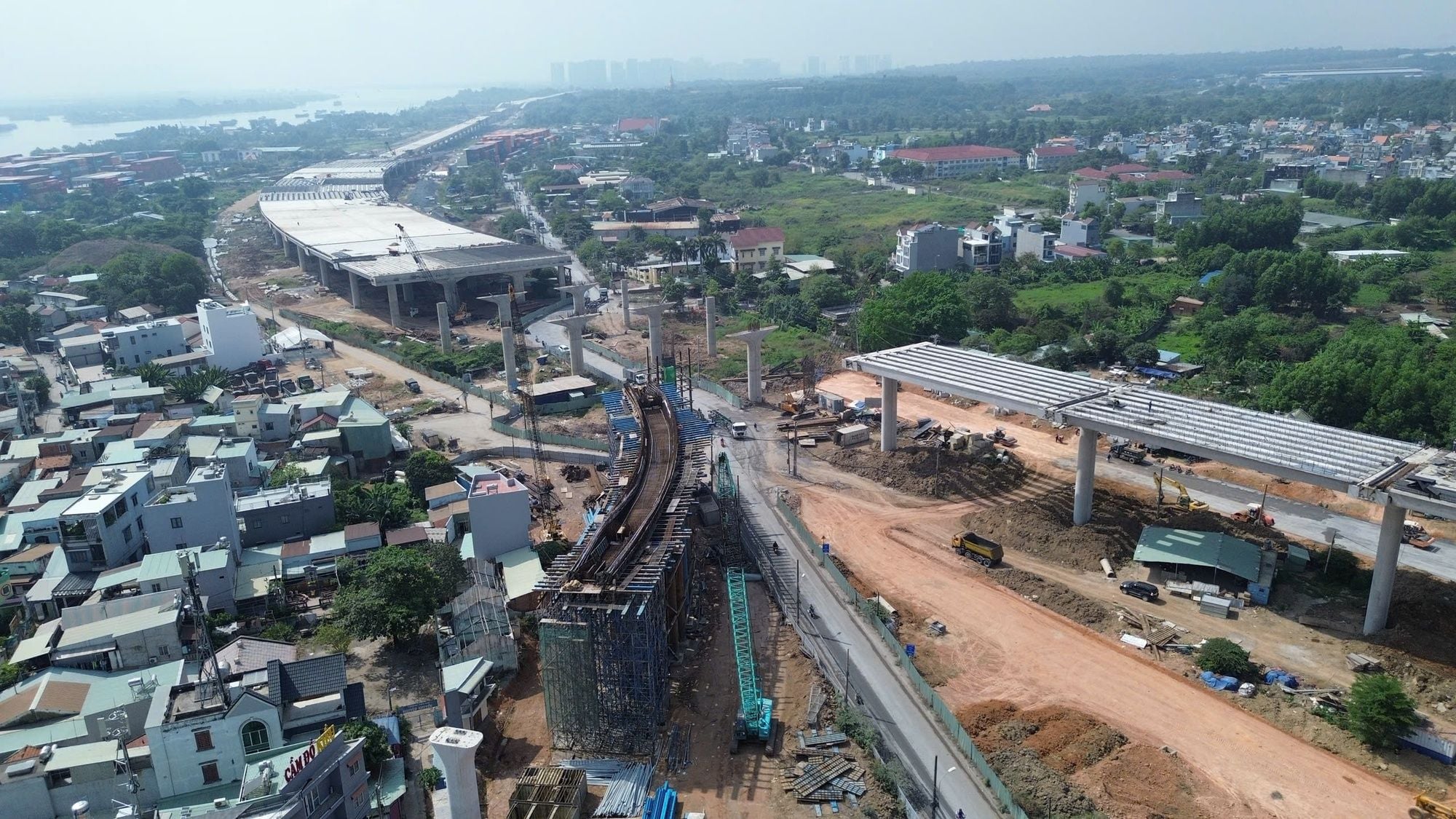
Fuel and material prices have risen sharply, creating pressure for the Ring Road 3 project in Ho Chi Minh City, which is currently about 76% complete in construction progress. The Ho Chi Minh City Traffic Management Authority said the total value of work executed across the project’s packages is around 76%.
According to the Authority, packages in Thu Duc City (formerly) are about 83% complete. Packages in Cu Chi, Hoc Mon, and Binh Chanh (formerly) are around 68% complete.
The Authority identified the sharp rise in fuel prices as the biggest current challenge, pushing up input costs across the board. Diesel prices increased from 19,570 VND per liter on Feb 28, 2026 to 44,980 VND per liter on Apr 3, 2026, before falling to 33,730 VND per liter on Apr 15 and standing at 28,170 VND per liter on May 7, 2026.
Fuel price fluctuations also affect construction materials such as sand and stone because higher extraction and production costs feed through to market prices. Transportation costs for moving materials from mines to the site, along with equipment operation and labor costs, have also increased, adding significant pressure on contractors.
In addition, shortages of imported asphalt binder and asphalt concrete have noticeably affected project progress.
To address these difficulties, the investor has coordinated closely with material suppliers—especially rock materials—to allocate volumes to each contractor based on real needs and to bring materials to the site as early as possible.
In response to abnormal fuel price movements, the Traffic Management Authority has repeatedly urged relevant authorities to promptly adjust published construction material prices and construction price indices to reflect market conditions. The Authority said these adjustments provide a basis for contractors to update prices and mitigate financial pressure amid volatility.
The Authority also stated that price adjustments due to market fluctuations remain within the project contingency and have not led to cost overruns beyond the total investment.
The Authority forecasts that if fuel prices stabilize in May 2026, supplies of materials such as sand and stone and imported asphalt will improve, helping offset recent losses in output.
Despite the challenges, the investor and contractors are continuing to mobilize maximum resources to complete the entire project in 2026, in line with National Assembly Resolution 57/2022/QH15.
Beyond the main components, auxiliary packages—including traffic safety systems, lighting, landscaping, intelligent transport systems (ITS), and automatic weighing stations—are being implemented in parallel, with completion targeted for late 2026.
Premium gym chains are entering a “golden era” that is ending or already in decline, as rising operating costs collide with shifting consumer preferences toward more flexible, community-based ways to exercise. Long-term memberships are shrinking, margins are pressured by higher rents and facility expenses, and competition from smaller, more personalized…