•
•
•
•
•
•
•
•
•
•
•
•
•
•
•
•
•
•
•
•
•
•
•
•
•
•
•
•
•
•
•
•
•


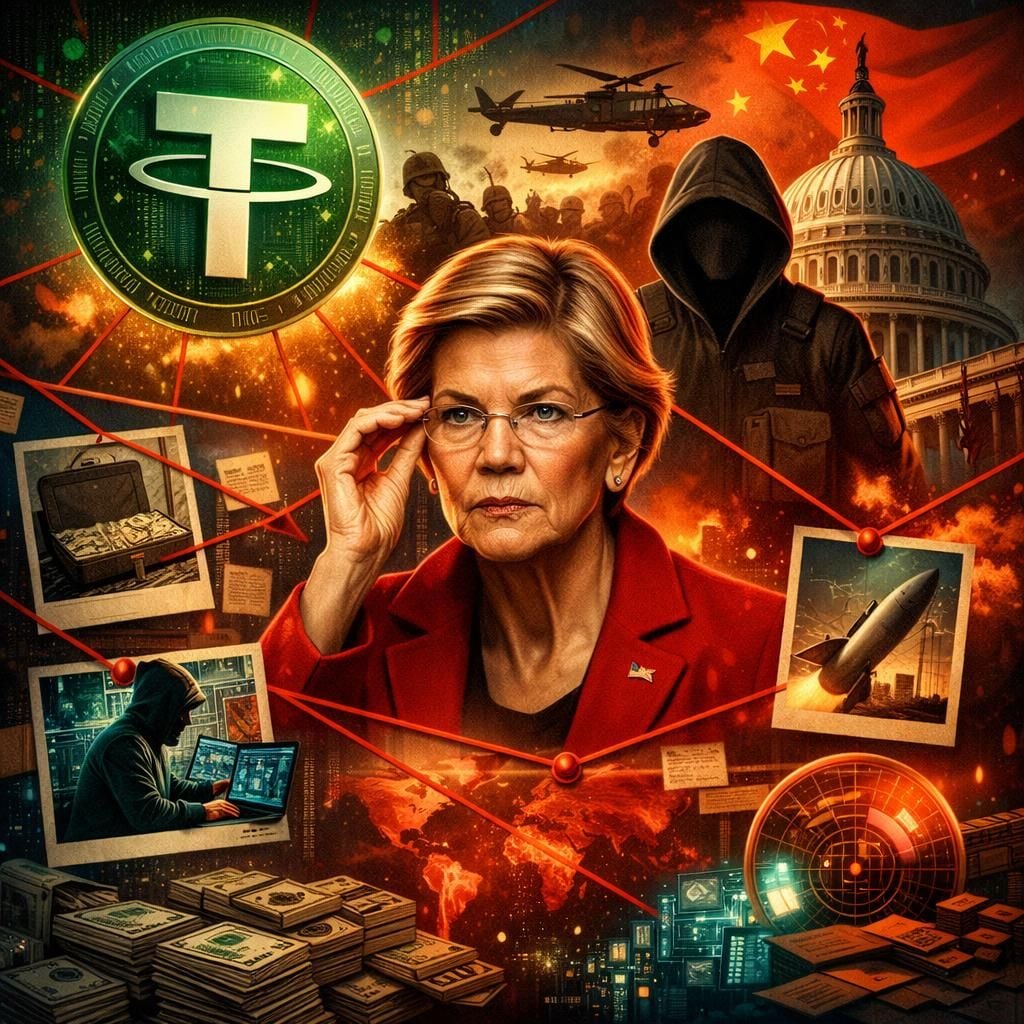
Senator Elizabeth Warren, a leading crypto skeptic in Washington, has launched a new probe into Tether and Commerce Secretary Howard Lutnick, seeking answers on alleged national security concerns. Warren and Senator Ron Wyden asked Lutnick to respond to reports that Tether provided a loan connected to a foreign stablecoin arrangement involving a trust that benefits Lutnick’s four children.
The lawmakers’ concerns, based on Bloomberg reporting and the text of their letter, focus on the timing of Lutnick’s Cantor Fitzgerald divestiture and a subsequent credit filing in New York.
According to the letter, Bloomberg reported that Lutnick sold his Cantor Fitzgerald stake to his children the day after divesting it, following what was described as his prior ownership of a “multi-billion dollar position.”
One day later, on October 7, 2025, a credit document was filed in New York indicating that Tether lent an undisclosed amount to a trust called “Dynasty Trust A.” The letter states that Lutnick’s four children are the beneficiaries of that trust.
Warren and Wyden argue that, if the reported arrangement is accurate, it would raise serious questions about the relationship between Lutnick and Tether and about whether Tether could have influenced policy decisions made by a Cabinet secretary.
The senators say they want to ensure Tether did not seek to bribe, exert control, or influence Lutnick. They also suggest the reported loan may have helped provide capital for Lutnick’s sons to purchase his Cantor Fitzgerald stake, while Tether, in return, gained an interest in assets held by the children through the trust.
The letter also links the issue to broader scrutiny of Tether. It describes Tether as being viewed by critics as a “dream currency” for money laundering and says the Department of Justice (DOJ) was reportedly investigating Tether over possible violations of sanctions and anti-money laundering rules.
Against that backdrop, the lawmakers say the reported loan is even more troubling given Lutnick’s close relationship with Tether before his nomination and what the letter calls the “favorable treatment” Tether received in the GENIUS Act, described as the country’s first stablecoin bill signed by President Trump last July.
In seeking answers, the senators asked Lutnick to respond to eight specific questions by May 13. Among them, they ask whether he was aware that Tether provided a loan to Dynasty Trust A for the benefit of his four children, and, if so, to explain his role in procuring, soliciting, and/or negotiating the loan.
The senators also ask whether the loan financed the divestiture of his Cantor Fitzgerald stake, and to provide the size and terms of the loan, along with a copy of the credit document.
They further ask whether Lutnick agreed—explicitly or implicitly—to use his position as Commerce Secretary to benefit Tether in exchange for a loan that facilitated his children’s acquisition of his Cantor stake.
Finally, they request information about other sources of financing for the divestiture, including what other funding provided capital to Dynasty Trust A or any related legal entities involved in the divestiture, aside from Tether.

Premium gym chains are entering a “golden era” that is ending or already in decline, as rising operating costs collide with shifting consumer preferences toward more flexible, community-based ways to exercise. Long-term memberships are shrinking, margins are pressured by higher rents and facility expenses, and competition from smaller, more personalized…