•
•
•
•
•
•
•
•
•
•
•
•
•
•
•
•
•
•
•
•
•
•
•
•
•
•
•
•
•
•
•
•
•


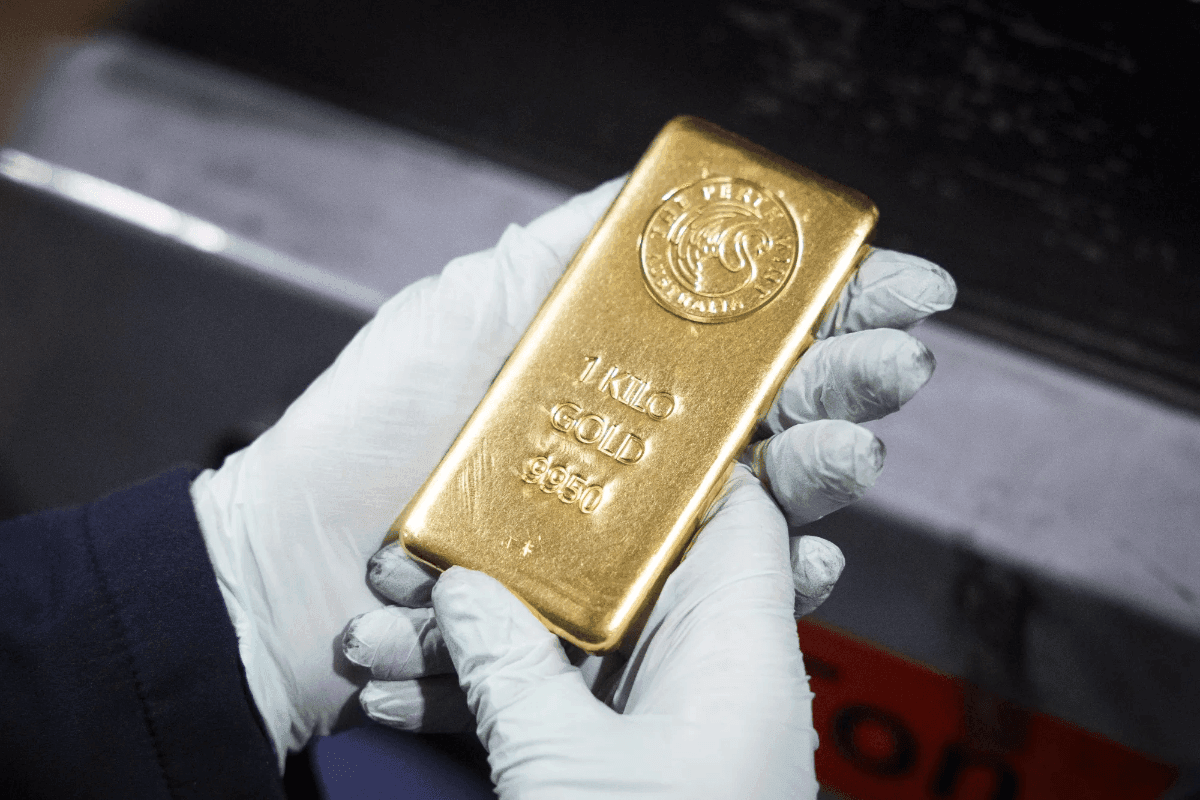
Gold prices worldwide fell for a second consecutive week as the energy crisis triggered by the US-Iran conflict intensified inflation concerns, prompting central banks to shift from easing to a wait-and-see approach. Analysts said that as long as the Gulf conflict persists, gold is likely to face sustained downside pressure.
Last week, four major central banks—the U.S. Federal Reserve, the European Central Bank, the Bank of England, and the Bank of Japan—kept interest rates unchanged and signaled a more hawkish stance. That stance added downward pressure on gold, with prices down about 2% for the week, marking a second weekly decline. Spot gold in New York closed the week just above $4,615 per ounce.
In an interview with Kitco News, Lukman Otunuga, senior strategist at FXTM, said gold could continue to face downside pressure this week because the US-Iran conflict shows no sign of ending and the Hormuz Strait remains closed.
“Although uncertainty persists and the market has grown tired, gold could get stuck in a downtrend because oil remains in triple digits,” Otunuga said.
Analysts said the main influence on gold remains the Middle East crisis and movements in oil prices. Phillip Streible, chief market strategist at Blue Line Futures, said that until the Hormuz Strait opens and crude flows resume, attention will stay on inflation and central banks will have limited room to act.
“Until the Hormuz Strait opens and crude flows resume, focus will remain on inflation. Central banks cannot do much until they know whether inflation will be a long-lasting issue or temporary. That means gold will stay stuck,” Streible said.
A key set of US data is scheduled for release this week: the April nonfarm payrolls, expected to be published by the Bureau of Labor Statistics on Friday. The report is widely viewed as an important indicator of US economic health and could affect expectations for Fed policy.
Michael Brown, a senior analyst at Pepperstone, said he does not expect April’s nonfarm payrolls to change the Fed’s policy outlook. However, he said he views declines in gold as potential buying opportunities.
“Right now, the focus is on the impact of high energy prices… but I still think there could be one to two rate cuts this year if the next Fed chair Warsh can persuade colleagues that productivity gains from AI, weakness in the labor market, or inflation being temporary justify easing, and/or if Warsh succeeds in shrinking the Fed’s balance sheet and shortening the maturities of the securities the Fed holds,” Brown said.
“This pullback in gold, in my view, is a buying opportunity. Gold still has many longer-term supports, including rising risk appetite and central banks in emerging economies continuing to buy gold,” he emphasized.
Otunuga said 4,600 per ounce remains an important support level. If that level fails, gold could fall to a range of $4,450–$4,320 per ounce. He added that if the week closes above $4,600 per ounce, gold could move toward the 21-day moving average around $4,710 per ounce and the 100-day moving average around $4,750 per ounce.
Ole Hansen, chief strategist at Saxo Bank, said the next major support level is $4,500 per ounce. He also noted that gold would need to break above $4,670 per ounce to regain upside momentum.
“The Middle East crisis must ease to allow the market to focus again on data and inflation risks. Investors are also drawn to equities,” Hansen said.
Hansen said he remains cautiously optimistic, arguing that near-term upside potential may exceed downside risk, but added that the upcoming Fed chair Warsh “will have a lot to do” in making the case for rate cuts.
As Asia markets opened, gold and silver rose modestly. At 6:45 a.m. Vietnam time, spot gold was up 0.06% from the US close, trading just above $4,618 per ounce. Silver rose about 0.6% to $75.9 per ounce.
The USD value of spot gold translated to roughly VND 146.7 million per tael using Vietcombank’s USD selling rate. Vietcombank’s USD rate stood at 26,108 dong (buy) and 26,368 dong (sell).




Premium gym chains are entering a “golden era” that is ending or already in decline, as rising operating costs collide with shifting consumer preferences toward more flexible, community-based ways to exercise. Long-term memberships are shrinking, margins are pressured by higher rents and facility expenses, and competition from smaller, more personalized…