Global silver supply shortages have stretched into the sixth year as investor demand remains strong, creating conditions that could support another price rally. Silver prices reached record highs late last year and early this year, peaking at $121 per ounce in January, before retreating in volatile trading. The spot price is currently around $80 per ounce on the international market.
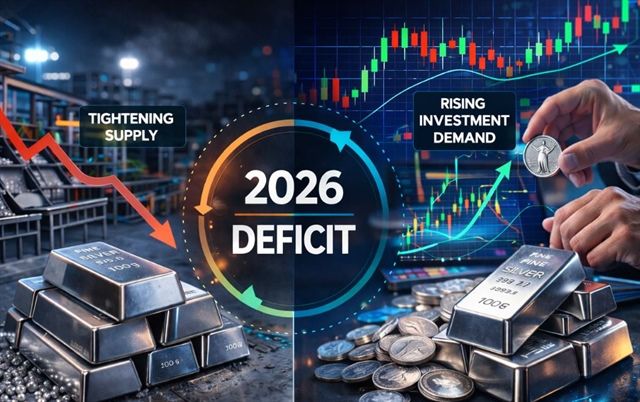
In the World Silver Survey by Metals Focus and the Silver Institute, released on April 15, 2026, the silver market is forecast to be undersupplied by 46 million ounces in 2026. If realized, it would mark the sixth consecutive year of deficit, with demand continuing to outpace supply.
“Conditions for a fresh squeeze in the silver market are clearly converging,” said Philip Newman, senior director at Metals Focus.
In October last year, strong demand from India during the festive season pushed the London silver market into a frenzy, lifting prices above the then-record high of $50 per ounce.
The squeeze was partly linked to dwindling silver stocks in London vaults after years of shortages, alongside heavy ETF silver purchases that reduced market liquidity. As prices rose on tighter supply, investors holding short positions in the futures market were forced to cover, further amplifying the move.
While silver often tracks gold, it behaves differently in key ways. Unlike gold, silver is not held by central banks, which means it does not have a similar price “floor” when prices fall. In addition, more than half of silver demand comes from industrial activity, including solar panels and electronics, making silver particularly sensitive to conditions in those sectors.
Last year, global silver demand fell by 2% as prices rose, weighing on industrial and jewelry demand. Solar energy demand declined by as much as 19% as producers shifted to cheaper metals.
Investment demand, however, outweighed the industrial decline. In 2025, purchases of silver bars and coins rose 14%, while inflows into silver ETFs more than tripled.
On the supply side, silver supply rose 7% due to improvements in mining and recycling, but it was still not enough to meet demand. As a result, global stockpiles fell, even as the deficit narrowed versus previous years.
Metals Focus and the Silver Institute said the tightening of silver supply is not expected to be permanent. However, liquidity is likely to remain thinner, which could make lending rates for silver more volatile and increase the magnitude of price swings.
Metals Focus remains optimistic about the silver market in 2026, but cautioned that global economic uncertainty tied to geopolitical tensions and the Middle East conflict could affect industrial demand.
The report also expects continued pressure on industrial demand due to wild price movements. Forecast demand for solar energy is down about 19% and jewelry demand down about 16% this year.
The World Silver Survey also projects that global demand for silver coins and bullion will rise 18% in 2026 to the highest level since 2022.
In an interview with Kitco News, Philip Newman said the latest survey indicates the silver market is increasingly shaped by investment capital, macroeconomic uncertainty, and tightening liquidity conditions.