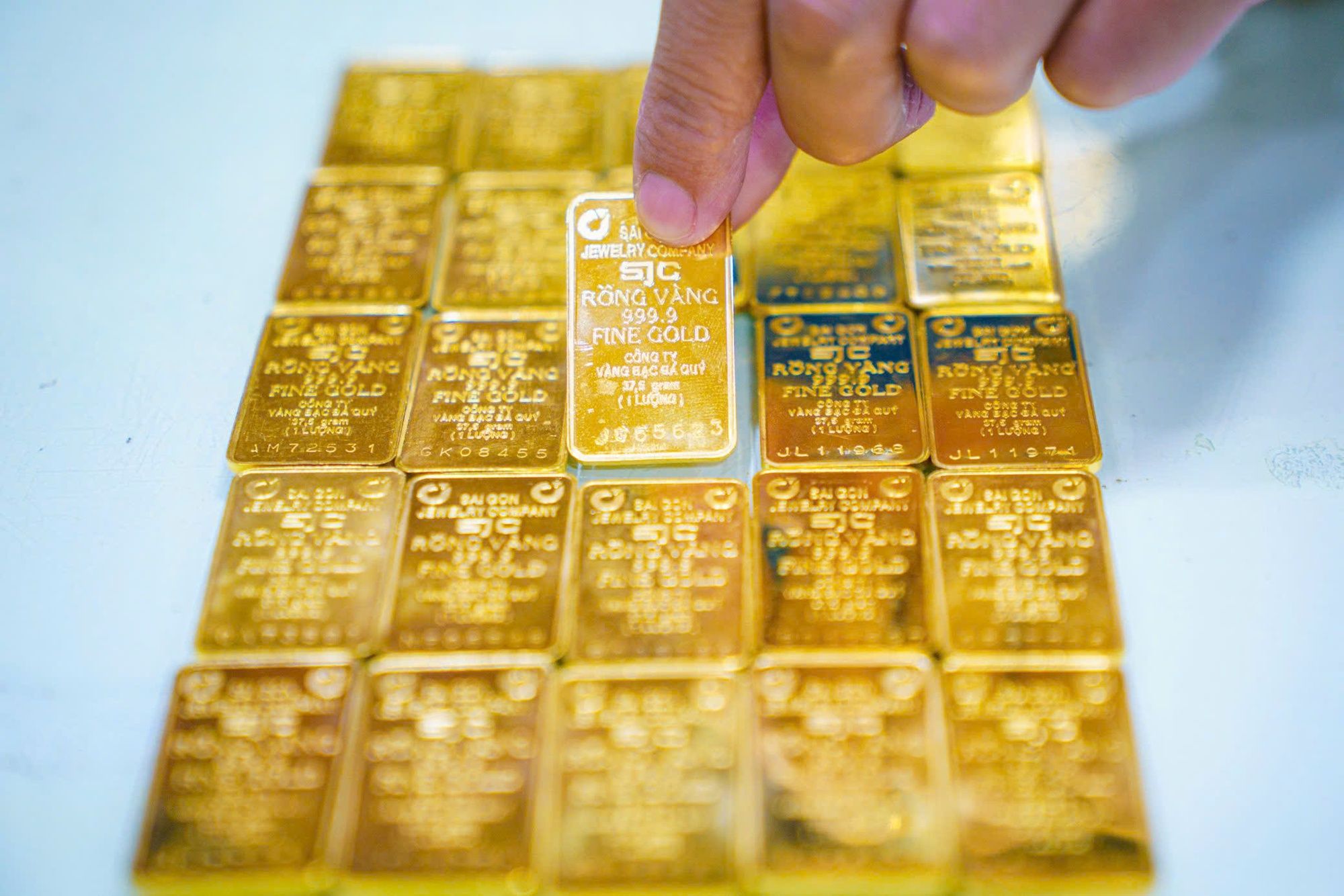
World gold prices surged while SJC gold bars rose more slowly, narrowing the gap between international and domestic quotations.
As of 7 May at 7:00 PM (Vietnam time), world gold was trading at $4,742 per ounce, up about $30 per ounce from the morning session. Over the past three days, world gold has risen by roughly $150 per ounce (about 4.8 million VND per ounce).
The precious metal climbed to its highest level in about two weeks. The dollar index (DXY) was at 97.8 points, the lowest since late February, while Brent crude hovered around $98 per barrel, down 3.18% from the previous session.
Fawad Razaqzada, a market analyst at City Index, said recent gold movements are linked to oil prices. When oil prices fall, inflationary pressures ease, which can reduce expectations that central banks will raise rates. In that context, assets such as gold and silver have been supported and risen strongly.
World gold continued higher into the close.
According to Reuters, U.S. President Donald Trump said he expects the Iran conflict to end soon as Tehran considers a U.S. peace proposal. Sources said the proposal is likely to lead to an end to the conflict, with hopes for a peace agreement potentially reopening the Hormuz Strait.
Such expectations could support international stock markets, moving in tandem with gold and silver.
By the end of the day, SJC bars were traded by major gold traders at around 164.5 million VND per tael for buying and 167.5 million VND per tael for selling, unchanged from the morning session.
Many brands also quoted 99.99% gold rings and jewelry at the same price as SJC bars.
A notable development was that domestic gold prices rose more slowly than world prices, causing the gap to narrow rapidly. At the listed exchange rate, the world price converted to about 150.8 million VND per tael, lower by around 16 million VND per tael than SJC bars—described as the smallest gap in many months.
By Thai Phuong