•
•
•
•
•
•
•
•
•
•
•
•
•
•
•
•
•
•
•
•
•
•
•
•
•
•
•
•
•
•
•
•
•


As of February 16, 2026, Solana (SOL) is trading in a tight consolidation range between $78 and $86. After a volatile start to the year, the token has declined approximately 31% from its January highs. Despite bearish price action, the network’s underlying health points to a potential disconnect between valuation and utility, as traders look for a catalyst.
Solana’s ecosystem recently reached a historic milestone: its Real-World Asset (RWA) sector surpassed $1.66 billion in total tokenized value. Even with that growth, SOL remains under pressure from broader market liquidations and a technical head-and-shoulders pattern that has kept sentiment cautious.
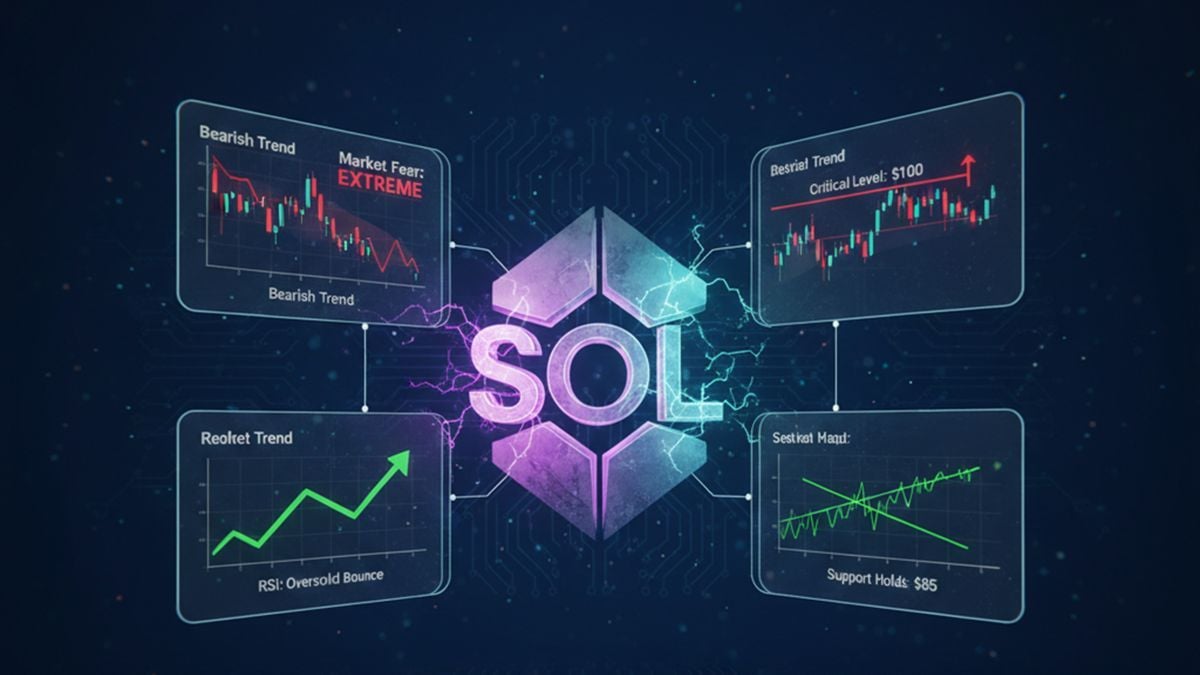
The daily chart for SOL/USD shows a sustained struggle between bulls and bears. After a late-2025 peak, the price has formed a series of lower highs, with temporary support around the $80 psychological level.
Technical commentary in the article notes that SOL is oversold, with the RSI near 28. Historically, such readings have preceded notable bounces. However, negative funding rates have persisted for over 16 days, suggesting the market remains heavily positioned short.
Two major upgrades—Alpenglow and Firedancer—are scheduled to finalize their rollouts this year, which the article frames as potential drivers for renewed momentum.
Firedancer, developed by Jump Crypto, is described as a new validator client. In test environments, it has processed over 1 million transactions per second (TPS). The article states that full mainnet implementation is expected in early 2026, with the goal of eliminating network outages and reducing latency to sub-150 milliseconds. The stated performance target is positioned as important for attracting high-frequency trading firms and global payment providers, with Western Union mentioned as testing stablecoin settlements on-chain.
The article also highlights Solana’s shift toward an “internet capital market.” It cites institutional involvement from firms including Morgan Stanley and WisdomTree, with tokenization activity spanning U.S. Treasuries and money market funds. This “sticky” institutional capital is presented as a potential stabilizer for SOL relative to speculative retail flows.
Based on the article’s current data and projected network growth, potential SOL price scenarios through the remainder of 2026 are outlined as follows:
For long-term investors, the article argues that the current price offers a discount relative to expanding network utility. It also notes that short-term volatility could carry SOL toward the $60 support level, but it points to the technological leap associated with Firedancer and the maturation of the RWA ecosystem as reasons to expect a recovery toward $200 by H2 2026.



Premium gym chains are entering a “golden era” that is ending or already in decline, as rising operating costs collide with shifting consumer preferences toward more flexible, community-based ways to exercise. Long-term memberships are shrinking, margins are pressured by higher rents and facility expenses, and competition from smaller, more personalized…