•
•
•
•
•
•
•
•
•
•
•
•
•
•
•
•
•
•
•
•
•
•
•
•
•
•
•
•
•
•
•
•
•


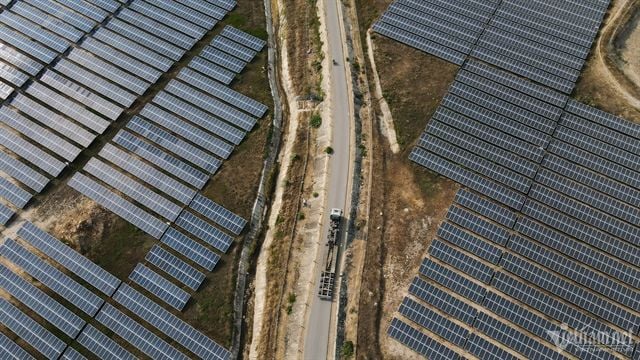
After a period of strong growth, Vietnam’s solar power sector has split into two distinct paths: some companies have reduced debt and improved profitability, while many projects have continued to post losses.
Trung Nam Tra Vinh Solar Power JSC reported net profit after tax of nearly VND208 billion in 2025, up from just over VND160 billion in 2024. The improvement helped narrow accumulated losses to about VND526 billion by end-2025, down from over VND759 billion at end-2024.
The company’s balance sheet also showed stronger liquidity and lower leverage. Equity increased from more than VND750 billion to over VND1,023 billion. Bank borrowings fell sharply from about VND3,126 billion to about VND1,872 billion. Bond debt declined from nearly VND25.5 billion to over VND20.5 billion. Other liabilities decreased from nearly VND737 billion to around VND480 billion.
Key ratios improved as well: the debt-to-equity ratio dropped from 5.55x to 2.49x, while the current ratio rose from 0.52x to 2.06x, indicating reduced financial pressure.
There is still one outstanding bond issue, TVSCH2123001, with an issue value of VND400 billion. The bond matured in late 2023, and the remaining principal is described as negligible.
The Trung Nam Tra Vinh solar project is located in Tra Vinh province. It began operations in January 2019 with capacity of about 140 MW, covering over 171 hectares and using more than 440,000 solar panels. The plant generates around 250 million kWh of clean electricity per year, supported by Tra Vinh’s high solar radiation.
Within Trung Nam Group, the trend is reversed at Trung Nam Thuận Nam Solar Power Co., Ltd. The company posted a loss of more than VND969 billion in 2025, reversing a profit of about VND138 billion in 2024. The result is described as a major shock after signs of recovery.
The new loss increased cumulative losses to more than VND1,818 billion by end-2025. Equity fell from over VND1,562 billion to about VND593 billion. One cited reason is that the project is among 173 renewable-energy projects facing issues with FIT pricing, leaving some electricity output not fully paid.
High capital investment and borrowing costs continue to erode profitability across the sector. Hong Phong 1 Energy reported a net loss of VND180.7 billion in 2025, after a net profit of VND71.3 billion in 2024. The company’s 2025 loss is described as the largest since it began reporting financials and ends a multi-year profit period from 2021–2024.
By end-2025, the group’s equity was about VND1,073 billion, while debt-to-equity rose to 3.2x as total liabilities reached nearly VND3,439 billion. Corporate bond debt exceeds VND2,100 billion, increasing pressure from interest costs and long-term obligations.
In wind power, Hoa Phong 2 Wind Energy posted a loss of over VND97 billion in 2025. Equity fell from over VND1,019 billion to about VND922 billion, while total liabilities rose to over VND1,671 billion.
For Hoa Dong 2 Wind Energy, full-year 2025 results were not yet announced. However, in H1 2025 the company reported a loss of more than VND114 billion, after a loss of over VND120 billion in the prior year period. Cumulatively, it has recorded losses of over VND493 billion, including losses of VND229 billion in 2024 and VND159 billion in 2023.
Some projects, such as Ea Súp 1 and Ea Súp 3, remained profitable in 2025, but profits were only in the tens to hundreds of billions of VND. Given the large capital base, margins are described as relatively thin.
Analysts say the sector’s main challenge is the combination of large capital outlays and limited revenue growth. Most wind and solar projects operate under fixed FIT arrangements with EVN, which restricts revenue growth over much of a project’s life.
At the same time, companies must borrow heavily to fund plant investments, keeping financing costs high. Higher bank deposit rates—around 8–9% per year—are cited as intensifying funding costs, particularly for refinancing or new borrowings.
The 2026–2027 period is viewed as a real test for many renewable-energy firms because a wave of bonds will mature. In a cautious credit environment, companies may face debt restructuring pressure or pre-mature buybacks, which could create significant cash-flow strain.
Regulatory issues also remain unresolved, including matters related to project procedures, grid transmission, and the transitional price mechanism. Transitional electricity prices are typically lower than the former FIT, limiting opportunities for revenue improvement.
With slow revenue growth and high funding costs, many renewable-energy firms are facing increasing cash-flow pressure. While operations continue, their ability to service debt and sustain investment in the coming years is expected to be a key test.
Premium gym chains are entering a “golden era” that is ending or already in decline, as rising operating costs collide with shifting consumer preferences toward more flexible, community-based ways to exercise. Long-term memberships are shrinking, margins are pressured by higher rents and facility expenses, and competition from smaller, more personalized…