•
•
•
•
•
•
•
•
•
•
•
•
•
•
•
•
•
•
•
•
•
•
•
•
•
•
•
•
•
•
•
•
•


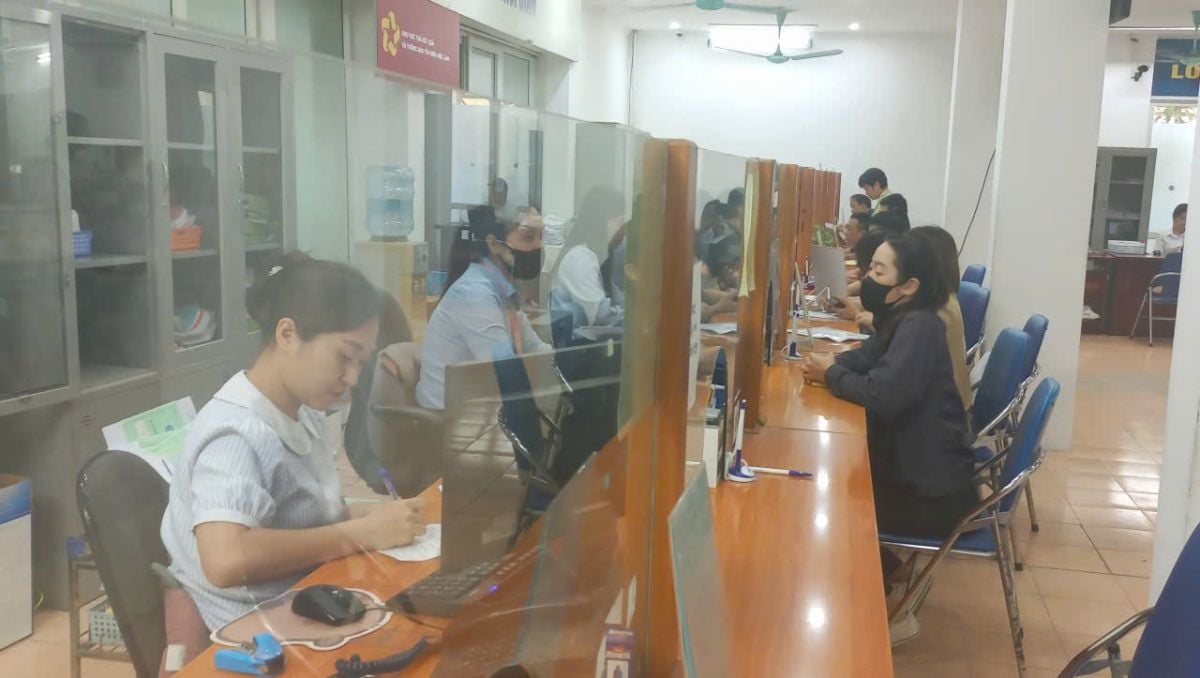
The decree 374/2025/NĐ-CP, which details certain provisions of the Employment Law on unemployment insurance, establishes for the first time an explicit mechanism for state budget support to help maintain reserves for the unemployment insurance fund.
Under the decree, the state budget may support up to 1% of the monthly wage fund contributed to unemployment insurance by workers who are currently enrolled in the scheme. The purpose is to ensure that the fund balance each year is at least twice the total expenditures on unemployment insurance benefits and the costs of organizing and operating the unemployment insurance system in the preceding year.
Ms. Vu Thi Thanh Lieu, Deputy Director of the Hanoi Employment Service Center (under the Department of Home Affairs), said the requirement that the fund balance be no less than twice the previous year’s total benefit and operating costs represents a new financial benchmark.
The reserve standard is intended to strengthen the fund’s stability and long-term sustainability, improving resilience to shocks such as natural disasters, epidemics, or economic crises. During the Covid-19 period, a sufficiently large fund enabled timely and broad-based payments to workers.
Maintaining reserves at this level also helps reduce payout pressure by limiting the risk that benefit demand surges unexpectedly. When the fund consistently holds a sizable reserve, payouts can be handled more proactively and steadily.
Ms. Liễu added that the regulation can increase workers’ confidence in the policy. When workers understand that the fund can cover payments even during difficult periods, they are more likely to feel secure about participating and trusting their rights.
From a management perspective, the standard is also designed to improve transparency and reduce the likelihood of mismanagement or sudden deficits that would require urgent top-ups, thereby limiting adverse impacts on both firms and workers.
“The meaning of the regulation can be viewed as akin to the required reserve mechanism in banking, to safeguard the payment system. Overall, for workers, rights are protected even in crises, helping them be confident they will be paid when laid off,” Deputy Director Liễu emphasized.
For enterprises, the mechanism provides greater stability by partially supporting the fund through the state budget, which can reduce pressure to make sudden additional contributions during difficult times. The state continues to act as the “ultimate guarantor” in the unemployment insurance policy, supporting social welfare.
Mr. Tran Tuan Tu, Head of Unemployment Insurance, Employment Department, said the unemployment insurance fund is designed to function in both the short term and the long term.
In the short term, the scheme operates similarly to other types of insurance such as health insurance or accident insurance: participants contribute at set times, and if no insured event occurs, benefits are not used during that period.
In the long term, workers can participate throughout their working lives. Even if they have not claimed benefits yet, their contribution period is preserved. When unemployment risk arises, benefits are calculated based on their entire participation history.
The unemployment insurance fund is formed from contributions by employees and employers, with government support under certain conditions. The law also provides a mechanism for state budget support when the fund does not maintain a minimum reserve, reflecting the state’s role in safeguarding the system.
Mr. Tu said that, in principle, there is no risk of “fund collapse.” If any risk exists, it would stem from an imbalance between revenue and expenditures, which would be addressed through appropriate policy tools.
He further noted that the reserve requirement helps workers and employers feel secure and ready to receive payments when risks occur. It also gives the state a basis to implement necessary supporting policies proactively when incidents arise.
According to Mr. Tu, participants do not contribute to guarantee immediate eligibility, but to ensure support when risks occur—sharing responsibility with society. As a result, the policy has both short-term and long-term characteristics, and therefore requires rules to safeguard the fund’s ability to pay.
Premium gym chains are entering a “golden era” that is ending or already in decline, as rising operating costs collide with shifting consumer preferences toward more flexible, community-based ways to exercise. Long-term memberships are shrinking, margins are pressured by higher rents and facility expenses, and competition from smaller, more personalized…