•
•
•
•
•
•
•
•
•
•
•
•
•
•
•
•
•
•
•
•
•
•
•
•
•
•
•
•
•
•
•
•
•


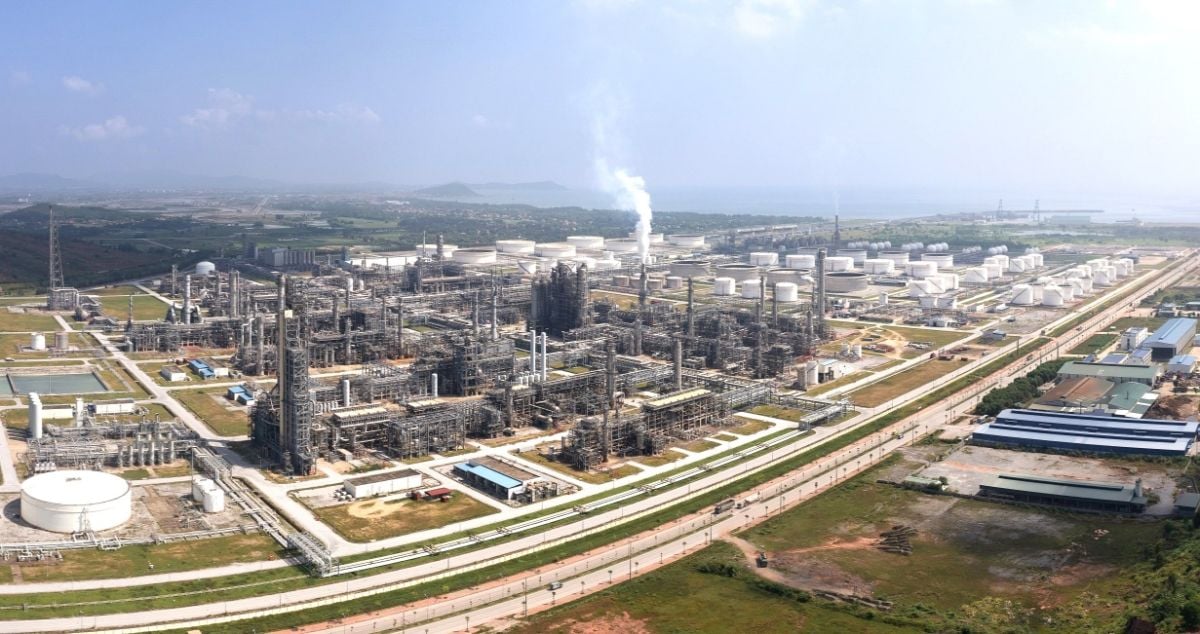
The Nghi Sơn Economic Zone is expected to drive a major shift for Thanh Hóa toward becoming Vietnam’s marine economy hub. Realizing that ambition, however, will require stronger incentives in policy, faster infrastructure delivery, and better resource mobilization to make the marine and industrial sectors more dynamic and competitive.
Located as a gateway to the sea and a key driver of industry, Nghi Sơn has long been viewed as a high-potential site for port and heavy industry development. As early as the 1990s, when Nghi Sơn was part of Tĩnh Gia, Japanese experts pointed to its port and heavy-industry potential. Later assessments by JICA and multiple companies identified Nghi Sơn as an ideal location for a deep-water port that could serve as an industrial center for southern Thanh Hóa and northern Nghệ An.
After being selected by the Prime Minister as one of eight national key coastal economic zones, Nghi Sơn quickly became a core pillar in Thanh Hóa’s development strategy. Across three consecutive terms, the provincial Party Committee has treated the programme as a priority. Resolution 58-NQ/TW dated 5 August 2020 by the Politburo reaffirmed the goal of turning Nghi Sơn into a coastal urban-industrial-services hub of national significance.
Today, the Nghi Sơn Economic Zone covers more than 106,000 hectares, including more than 66,000 hectares in land and island areas. It is planned into three functional zones: an industrial park with 25 subzones, an ecological zone with nine subzones, and an urban zone with 17 subzones.
As of now, the zone has attracted 332 projects, including 25 foreign direct investment (FDI) projects, with registered capital of over VND 159,595 billion and USD 12.8 billion. Large-scale projects have been brought online, adding substantial industrial capacity, including:
Most notably, the Nghi Sơn Refinery and Petrochemical Plant has a total investment of US$9.3 billion and a capacity of 10 million tonnes per year. The plant currently meets up to 40% of the country’s fuel needs, positioning Thanh Hóa as a leading province in refining and petrochemicals.
In addition to contributing VND 23,000 billion to the provincial budget in 2025, the NSRP refinery marked a technical milestone by receiving and processing its first crude oil shipment from Kuwait since commercial operation.
Thanh Hóa’s marine economy potential spans fisheries, coastal tourism, offshore industries, and port infrastructure. While progress is visible in infrastructure and services, the province faces sustainability and competitiveness challenges that call for coordinated action.
A key milestone in the refinery’s operations was the successful handling of a new oil supply mix. Kazutaka Yamato, General Director of NSRP, said that processing the first Kuwaiti crude oil demonstrates technical capability and readiness to accept alternative feedstocks. The company targets approximately 12.5 million tonnes of crude imports and about 9 million tonnes of gasoline/diesel products for domestic use in 2026, while expanding alternate crude sources beyond Kuwait to improve operational flexibility.
According to the Management Board of the Nghi Sơn Economic Zone and Industrial Parks, in 2025 industrial production value in the Nghi Sơn Economic Zone and associated industrial zones exceeded VND 265,430 billion. Budget contribution was about VND 26,845 billion, and export turnover surpassed USD 3.5 billion, up roughly 10.5% year-on-year despite a volatile global and regional environment.
The management board also highlighted measures to strengthen anti-corruption and anti-obstruction efforts, streamline administrative procedures, and support infrastructure projects in industry, power, cement, and oil and gas.
On logistics, the Nghi Sơn port system is gradually strengthening its role as a logistics gateway for the North Central region. In the 2021–2025 period, infrastructure investment followed a “north framework” approach, including upgrading principal transport corridors, developing new industrial parks with coherent infrastructure, and increasing maintenance for roads, lighting, and drainage to improve project absorption capacity.
In late July 2025, the Haiphong–Nghi Sơn coastal container route officially commenced operations. The route provides Thanh Hóa businesses and neighboring areas a direct link to the Haiphong International Transit Port, aiming to reduce costs, improve safety, and lower CO2 emissions in line with global green supply-chain trends. Trần Chí Thanh, Vice-Head of the Management Board, said the initial phase will maintain two weekly container trips, with plans to expand frequency to attract more shipping lines. A dedicated container terminal is expected to become operational in 2026, further enhancing capacity and connectivity.
Despite its role as a growth engine, the Nghi Sơn Economic Zone has faced major bottlenecks. The zone reports more than 100 delayed direct investment projects, most of which stall at land clearance or prolonged legal procedures. Nearly 50 projects remain “idle” even after land allocation, mainly small-scale service-sector investments, which waste land resources and weaken investor confidence.
Some larger initiatives have also been delayed, including the integrated urban development project for the dynamic urban area—Tĩnh Gia; the North–South expressway connection to National Highway 1A to the port; and industrial parks in Đồng Vàng and Zone 3. Delays are attributed primarily to land clearance, and in some cases to limited investor capacity, insufficient capital, or failure to mobilize resources.
To address these barriers, the Project Management Board urged the Thanh Hóa government to issue concrete directives for each project, harmonize land compensation approaches, and consider strict measures, including withdrawing projects from delay-prone contractors, to improve transparency and accountability in investment management.
PGS.TS Phan Thế Công of the University of Commerce said Thanh Hóa should enact exceptional incentives—especially for high-tech industries, logistics, renewable energy, the green economy, and the digital economy—paired with more decisive administrative reform. He also called for accelerating land clearance and mobilizing social resources for infrastructure and a highly skilled workforce aligned with international cooperation.
From the business community, Do Đình Hiệu, Director of VCCI Thanh Hóa–Ninh Bình, argued that spillover effects from large-scale projects have remained limited. He noted that many 2021–2025 development targets have not met expectations, with logistics infrastructure, support services, and human resources still acting as bottlenecks. He also said administrative reforms need stronger implementation to build investor confidence at home and abroad.
The province is also urged to implement tasks consistent with Resolution 36-NQ/TW (22 October 2018) on sustainable development of Vietnam’s marine economy. For the coastal economy, Thanh Hóa should prioritize attracting investments in refining, metal processing, and food processing, while upgrading modern infrastructure to make Nghi Sơn a leading coastal urban-industrial-services hub. Renewable energy projects, including LNG, wind, and solar, should be accelerated.
For the maritime economy, Thanh Hóa should leverage its deep-water port advantage by upgrading Le Mon, Quảng Châu, and Quảng Nham ports; attract container shipping through Nghi Sơn Port; and expand the regional fleet while integrating into global supply chains.
Looking ahead, the zone should prioritize transportation infrastructure, ports, and clean energy; establish a special incentive mechanism to attract multinational corporations; build an ecosystem of supporting industries and modern logistics; and protect the environment while adapting to climate change to support sustainable long-term growth.

Premium gym chains are entering a “golden era” that is ending or already in decline, as rising operating costs collide with shifting consumer preferences toward more flexible, community-based ways to exercise. Long-term memberships are shrinking, margins are pressured by higher rents and facility expenses, and competition from smaller, more personalized…