•
•
•
•
•
•
•
•
•
•
•
•
•
•
•
•
•
•
•
•
•
•
•
•
•
•
•
•
•
•
•
•
•


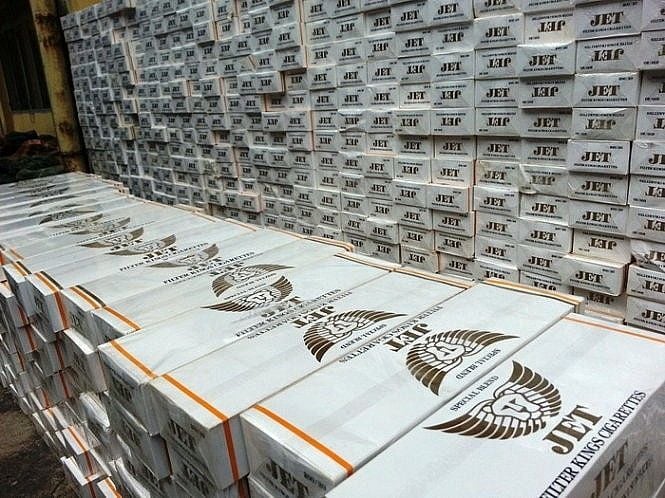
At a seminar titled “Combating cigarette smuggling: Current status and the legal framework in the new context,” held on 22 April 2026 and organized by the People’s Public Security Newspaper, Mr. Dang Van Dung, Deputy Chief of the Standing Office of the national 389 Steering Committee, said that since Directive No. 30/CT-TTg was issued in 2014, efforts to combat cigarette smuggling have achieved significant progress. However, he noted that the situation remains highly complex in key localities, leading to substantial losses for domestic production and budget revenue.
From the frontline, Colonel Nguyen Tien Mao, Deputy Director of the Drug Prevention and Crime Department, Border Guard, said that while thousands of cases have been seized involving millions of packs of contraband cigarettes, offenders are adopting increasingly sophisticated tactics. He said smugglers have shifted from transporting large quantities across border routes to using smaller lots, multi-leg shipments, and exploiting delivery services and e-commerce platforms to move goods.
Speakers also highlighted the growing use of new-generation tobacco products, including electronic cigarettes and heated tobacco products. These products are compact, easier to transport, and more difficult to detect, creating risks for both the economy and long-term social health.
Nguyen Duc Le, Deputy Head of the Market Management Department (Ministry of Industry and Trade), pointed to enforcement difficulties following Resolution No. 173/2025/QH15, which bans electronic cigarettes and heated tobacco. He said market management authorities have launched enforcement, but offenders frequently change methods to evade authorities.
A key legal issue raised was Decree No. 173/2024/ND-CP, effective from 15 February 2025, which removed the classification of “imported contraband cigarettes” from the list of prohibited goods. Delegates said this creates gaps and ambiguities in applying the Penal Code, causing confusion for enforcement agencies when handling seized items.
Nguyen Quoc Viet, a public policy expert from the University of Economics, Vietnam National University, argued that raising the Special Consumption Tax without a harmonized roadmap could unintentionally fuel smuggling. Using the Laffer Curve model, he said that when official prices rise too high due to taxes, consumers may switch to smuggled goods to reduce costs, while profit margins from tax evasion become attractive to criminals.
He cited field surveys in provinces including An Giang, Can Tho, and Da Nang showing that over 90% of sellers know the penalties but continue trading contraband cigarettes due to large market demand and the perception that current penalties are “low” relative to potential profits.
To address the gaps, delegates proposed a package of solutions described as the “three-pronged tripod”: refining the legal framework, strengthening enforcement, and intensifying public awareness campaigns.
Phan Minh Thuy, from the Legal Affairs Department of the Vietnam Chamber of Commerce and Industry (VCCI), proposed revising Decree 98/2020/ND-CP to raise monetary penalties well above current levels. She said penalties should exceed expected profits from contraband shipments. She noted that Vietnam’s current maximum penalty is 100 million VND (about under USD 4,000), which she said is about 0.8 times GDP per capita. By comparison, she cited Singapore at about 2.47 times, Malaysia at about 7.45 times, and Thailand at about 1.88 times.
She also recommended a progressive penalty system, with higher penalties for repeat offenses. In addition, she proposed a mechanism to shift to criminal handling immediately when repeat offenses are serious, regardless of quantity.
Ms. Thuy further suggested building a shared digital data platform among the Public Security, Border Guard, Customs, and Market Management agencies to monitor repeat offenders nationwide.
Nguyen Chi Nhan, Secretary General of the Vietnam Tobacco Association, said member companies are committed to legal compliance and close cooperation in reporting smuggling networks. He urged enforcement agencies to eliminate openly selling contraband cigarettes at retail points and online, and supported continued studies to make penalties for selling, transporting, and storing contraband cigarettes stricter and more commensurate with the offense and illicit profits.
He also called for strict application of measures including confiscation of contraband, confiscation of vehicles, and suspension of business or withdrawal of licenses as appropriate, alongside administrative penalties.
Colonel Nguyen Tien Mao emphasized addressing root causes, including consumer demand, economic incentives, and public awareness. He said development of socioeconomic conditions and sustainable livelihoods in border areas is essential to reduce the likelihood that people become involved in smuggling. He also said communications should move beyond health education alone and focus on the severe legal consequences of participating in illicit supply chains.
Le Thi Duyen Hai, Deputy General Secretary of the Vietnam Tax Advisory Association, noted that under the new Special Consumption Tax law, from 2027 the tax on cigarettes will rise sharply according to a mixed timeline. She warned that without synchronized market-control policies starting now, the market could face shocks and strong infiltration by contraband.
Delegates referenced a series of contraband cigarette seizures, including:
The seminar focused on enforcement effectiveness, legal clarity, and penalty reform, with particular attention to Decree No. 173/2024/ND-CP and the broader framework for combating contraband cigarettes.




Premium gym chains are entering a “golden era” that is ending or already in decline, as rising operating costs collide with shifting consumer preferences toward more flexible, community-based ways to exercise. Long-term memberships are shrinking, margins are pressured by higher rents and facility expenses, and competition from smaller, more personalized…


