•
•
•
•
•
•
•
•
•
•
•
•
•
•
•
•
•
•
•
•
•
•
•
•
•
•
•
•
•
•
•
•
•
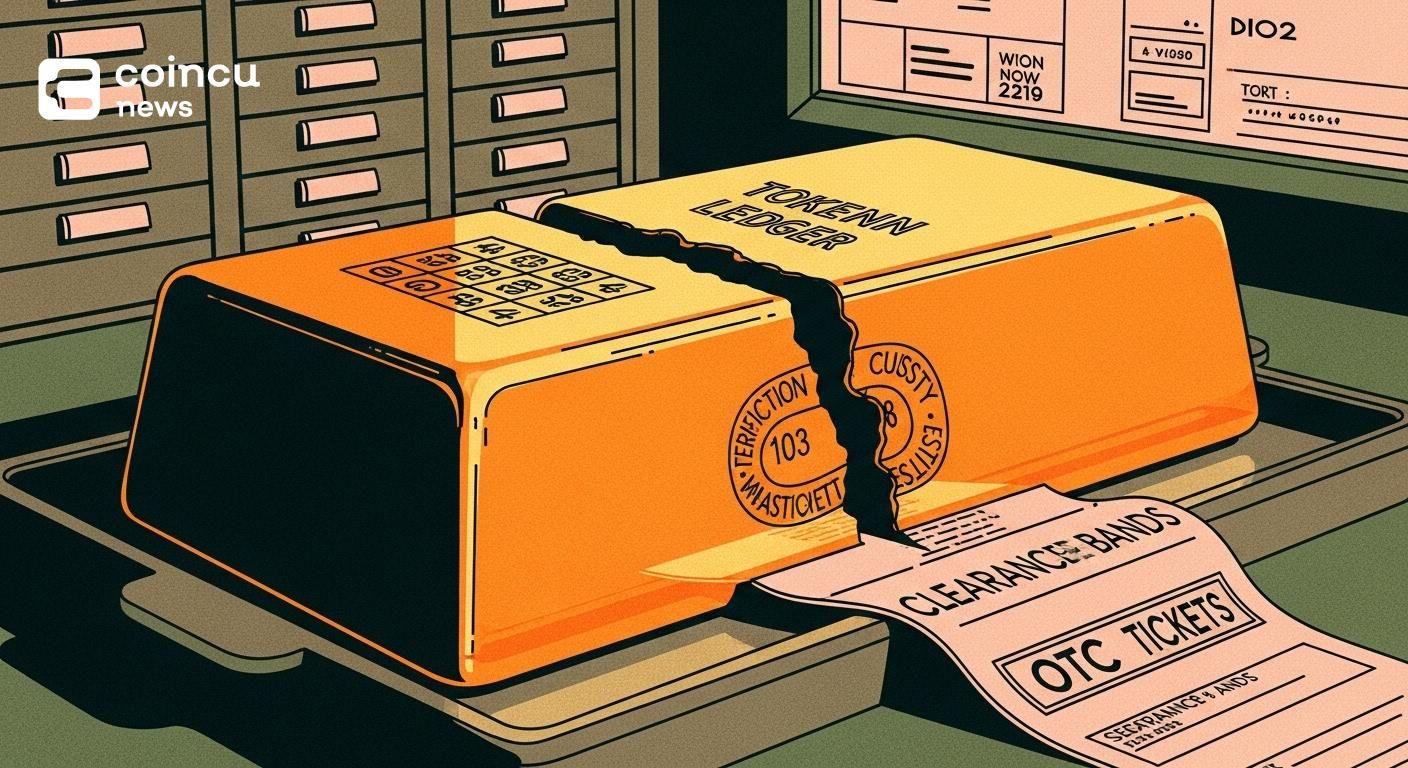
Crypto market maker Wintermute has launched institution-grade over-the-counter (OTC) trading for Pax Gold (PAXG) and Tether Gold (XAUT), according to FinanceFeeds. The service is aimed at professional counterparties seeking large, negotiated block trades in gold-backed tokens while avoiding the need to place orders on public order books.
The OTC offering is structured to improve execution quality by minimizing visible market impact and enabling flexible settlement. Wintermute said access is limited to KYC/AML-screened entities, positioning tokenized commodity trading within established compliance workflows.
OTC venues typically execute blocks through a request-for-quote (RFQ) process, which can reduce slippage versus screen-based trading. The arrangement also allows bilateral credit terms, with settlement potentially handled in fiat, stablecoins, or on-chain tokens, depending on the parties’ operational preferences and custody setups.
Wintermute described on-chain gold as part of a broader modernization of market infrastructure, drawing parallels to how foreign exchange became the world’s largest market. Evgeny Gaevoy, CEO of Wintermute, said: “We’re watching gold undergo the same infrastructure evolution that turned foreign exchange into the world’s largest market … Gold is now following that playbook, and we expect the tokenized gold market to reach 15 [billion in] 2026 as institutional adoption accelerates.”
Tokenized gold fundamentals strengthened through 2025, based on Cointelegraph data cited in the article. Market capitalization increased from roughly $1.6 billion to $4.4 billion, alongside about $178 billion of annual trading volume, with $126 billion recorded in Q4 alone.
The article also states that tokenized gold’s market capitalization surpassed $6 billion by mid-February 2026, citing Tekedia. It adds that additional OTC connectivity could support depth across pairs such as PAXG and XAUT, subject to counterparty onboarding and credit availability.
Off-exchange block liquidity can complement centralized and decentralized venues by absorbing larger trade sizes away from public books. The article notes that improved execution and bespoke settlement may tighten effective spreads and improve routing for institutions that already trade gold exposure.
Industry debate remains active around trust models for gold-backed tokens, according to Yahoo Finance. Supporters highlight portability and 24/7 settlement, while critics emphasize custodial and issuer risk relative to claims of being “on-chain” gold.
In institutional OTC workflows, counterparties submit RFQs for block sizes in PAXG or XAUT, negotiate price bilaterally, and settle via pre-agreed rails. Settlement may involve fiat, stablecoins, or direct token delivery depending on credit terms and operational preferences.
Access is restricted to KYC/AML-vetted institutions, including onboarding, sanctions screening, and trade surveillance. After execution, operations include confirmations, reconciliations, and custody instructions aligned with the institution’s asset-segregation and audit requirements.
The article contrasts tokenized gold with ETFs and futures, which centralize risk in regulated funds or clearinghouses with established margin and disclosure regimes. It notes that tokenized gold emphasizes 24/7 transferability and programmability, but depends on confidence in issuer solvency, custody controls, and redemption procedures.
The article cites strong momentum, including 2025 volumes and a 2026 market cap above $6 billion. It states that reaching $15 billion would likely depend on institutional rails, custody assurance, and regulatory clarity.
The article says both are gold-backed with sponsor-defined custody and redemption. It adds that fee schedules and chain support differ by issuer, while liquidity concentrates in major pairs, with terms set in official documentation.
DISCLAIMER: The information on this website is provided as general market commentary and does not constitute investment advice. We encourage you to do your own research before investing.