•
•
•
•
•
•
•
•
•
•
•
•
•
•
•
•
•
•
•
•
•
•
•
•
•
•
•
•
•
•
•
•
•


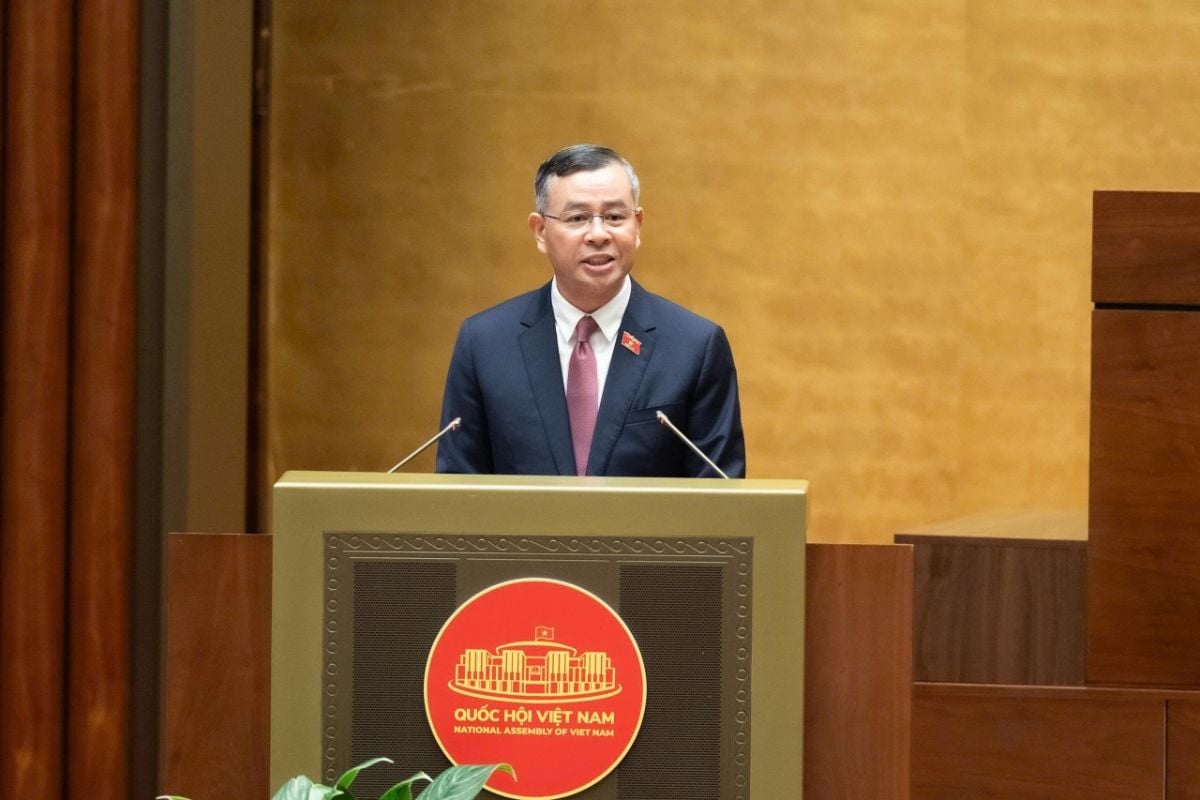
In a report to the National Assembly on the morning of April 21, 2026, Finance Minister Ngo Van Tuan said that achieving two-digit growth is highly challenging but an inevitable path to realizing the country’s development targets by 2030 and 2045.
The minister said that globally, from 1946 to the present, only 13 countries and territories have sustained double-digit growth for more than ten years to move from poor, developing status to developed nations. In Vietnam, over 40 years of renovation, only two years recorded growth above 9%, and the country has never reached two digits.
Aligned with the XIV Party Congress Resolution and the Politburo’s strategic conclusions, especially Conclusion 18-KL/TW of the XIV Central Committee, the Government has defined 59 targets across sectors, 11 groups of tasks, and 92 specific tasks for 2026.
In Q1 2026, the economy posted positive signals with 7.8% growth, exports up 19%, disbursement of public investment up 1.2%, and the number of newly established enterprises up more than 31.7%. However, from Q2, pressures rose due to oil price volatility and international conflicts.
The minister noted that a 10% rise in oil prices could reduce growth by about 0.4 percentage points and increase inflationary pressure. To achieve growth above 10% for the year, the remaining quarters must maintain growth of 10–11%.
Finance Minister Ngo Van Tuan said the Ministry of Finance will advise the Government to review and update growth scenarios, assign concrete growth targets to each ministry, sector, locality, and enterprise, and coordinate fiscal policy with monetary policy to ensure adequate capital supply while maintaining macroeconomic stability.
Fiscal policy will continue to refine tax policy toward tax collection fairness and timely taxation while facilitating enterprises, especially small and medium enterprises.
On public investment, the ministry is actively implementing tasks assigned by the Prime Minister, focusing on removing bottlenecks, especially those related to land.
Preliminary statistics show that about 200,000 hectares of land remain untapped, equivalent to about VND 3.3 quadrillion—three times the planned 2026 public investment capital of VND 1.1 quadrillion. The minister said this resource is a major source to be monitored and unlocked for use in the economy.
Regarding capital needs, total capital demand for the next period must rise 2.2 times compared with the previous period; the Central Budget must rise 3.4 times; and FDI must increase 1.7 times.
The minister warned that if investment efficiency is not improved, as measured by ICOR, to achieve double-digit growth, total social investment may have to reach up to 70% of GDP. Therefore, the objective is to bring ICOR to 4–4.5.
On the capital market, the minister said the economy still relies heavily on bank credit, while the long-term capital market has not fully played its role. In the near future, he said there is a need to develop strongly the bond and stock channels, along with institutional reform, infrastructure, and the formation of professional investment institutions, thereby laying a foundation for a sustainable capital market.






Premium gym chains are entering a “golden era” that is ending or already in decline, as rising operating costs collide with shifting consumer preferences toward more flexible, community-based ways to exercise. Long-term memberships are shrinking, margins are pressured by higher rents and facility expenses, and competition from smaller, more personalized…