•
•
•
•
•
•
•
•
•
•
•
•
•
•
•
•
•
•
•
•
•
•
•
•
•
•
•
•
•
•
•
•
•
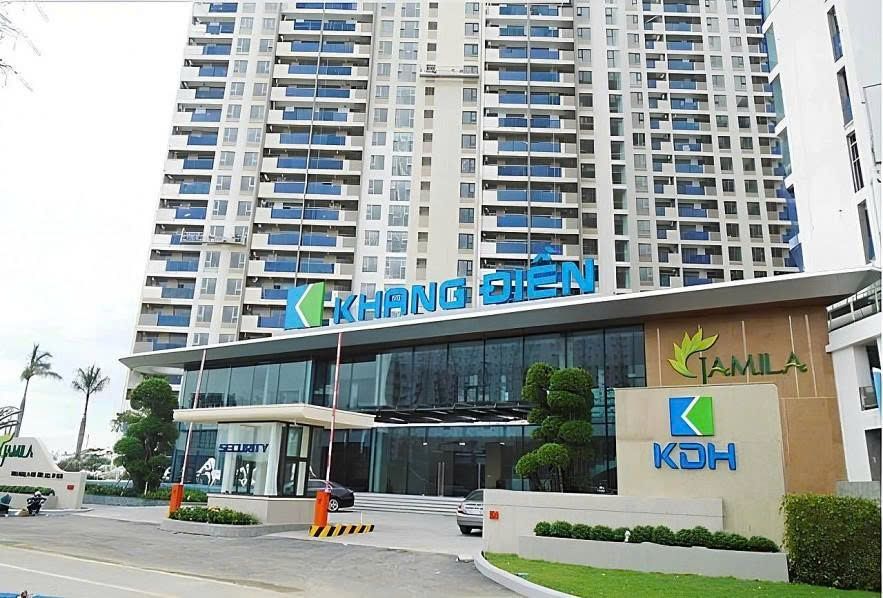
Two VinaCapital funds, VOF Investment Limited and the VinaCapital Market Access Equity Fund, sold a combined total of 900,000 KDH shares in the trading session on April 29, 2026.
VOF Investment Limited sold 500,000 KDH shares, bringing its ownership down from 1.66 million shares (0.1479%) to 1.16 million shares (0.1034%).
In parallel, the VinaCapital Market Access Equity Fund sold 400,000 KDH shares. Before the transaction, the fund held 931,225 shares (0.083%). After the sale, its holding decreased to 531,225 shares (0.0473%).
According to the disclosure, nine other VinaCapital funds collectively own more than 76.4 million KDH shares, equivalent to 6.8114% of Khang Dien House’s charter capital. After the two funds’ sales, the VinaCapital group’s total ownership rises to more than 78.1 million shares, representing 6.9621% of charter capital.
In the consolidated first-quarter 2026 financial report, Khang Dien House Development JSC reported net revenue of nearly VND 281.4 billion, down 60.4% year over year.
During the period, income from financial activities was about VND 7.1 billion, down 63.8%. Other income reached approximately VND 290.5 billion, up 33.4 times compared with the same period last year.
As a result, after tax, Q1 2026 net profit reached over VND 327 billion, up 175.5% year over year.
For 2026, Khang Dien House Development JSC set targets of VND 4,200 billion in revenue and VND 1,500 billion in after-tax profit. By the end of the first quarter, the company achieved 6.7% of the revenue plan and 21.8% of the profit plan.
As of March 31, 2026, total assets of Khang Dien House Development JSC increased 17% from the start of the year to nearly VND 39,861.9 billion.
Inventory stood at over VND 29,125.9 billion, accounting for 73.1% of total assets. Total liabilities were over VND 18,337.7 billion, up 42% from the start of the year.
Short- and long-term borrowings totaled nearly VND 15,348.2 billion, representing 83.7% of total liabilities.




Bitcoin (BTC) investors who use steady dollar-cost averaging (DCA) may be underperforming versus strategies that adjust exposure to the market’s cycle, according to new research arguing that Bitcoin’s behavior differs from traditional long-duration assets.
In a report cited by Markus Thielen of 10x Research, Bitcoin’s market…