•
•
•
•
•
•
•
•
•
•
•
•
•
•
•
•
•
•
•
•
•
•
•
•
•
•
•
•
•
•
•
•
•


UOB expects Vietnam’s economy in early 2026 to sustain positive growth despite challenges from energy volatility and global risks. While momentum may moderate due to seasonality and external factors, UOB points to continued upward movement in core drivers including manufacturing, exports and investment.
In the latest trade data cited by UOB, total exports reached 122.93 billion USD, up 19.1% year-on-year.
Vietnam’s GDP growth in Q1 2026 expanded by 7.83% year-on-year, according to data from the General Statistics Office. This is below the 8.46% pace in Q4 2025, but above earlier forecasts of 7.0% by UOB and 7.60% by Bloomberg.
The report notes that the first quarter is typically affected by shorter working days due to the Tet holiday, a pattern seen across many Asian economies.
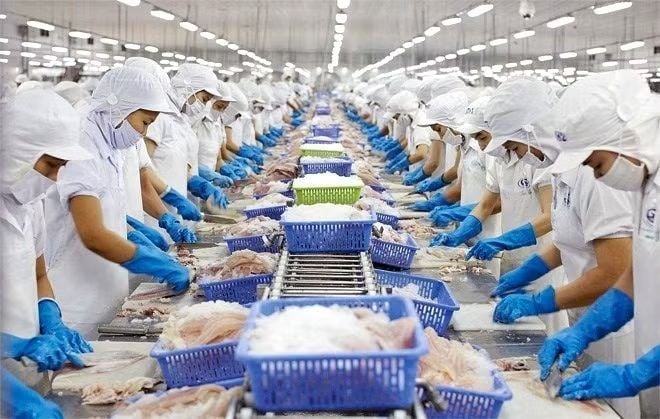
Growth momentum continues to be supported by processing and manufacturing, construction and services. Output in the processing and manufacturing sector rose 9.73% year-on-year, roughly in line with 10.6% in the previous quarter and higher than the same period in 2025, indicating stability in a key economic pillar.
International trade activity remained robust. Total exports reached 122.93 billion USD, up 19.1% year-on-year, while imports rose 27.0% to 126.57 billion USD.
As imports grew faster than exports, the trade balance shifted to a deficit of 3.64 billion USD, reversing the 3.09 billion USD surplus recorded in Q4 2025. UOB said the pattern partly reflects demand for inputs used in expanding production, which could support the outlook for subsequent quarters.
The United States remained Vietnam’s largest export market, with exports of 33.9 billion USD, up 24.2% year-on-year and accounting for about 28% of total exports.
Foreign direct investment (FDI) also grew steadily. In Q1 2026, realized FDI totaled 5.41 billion USD, up 9.1% year-on-year, reflecting international investors’ confidence as global firms diversify supply chains.
UOB highlighted a notable increase in inflation in Q1. The headline consumer price index (CPI) in March 2026 rose 4.65% year-on-year, surpassing the 4.5% target and compared with a 2.94% average in the first two months of the year.
The main driver was higher energy prices and related spillover effects across goods and services. Transportation costs, which account for about 9.7% of the CPI basket, grew 10.8% year-on-year, reversing prior declines.
To address the pressure, the government has implemented measures under Resolution 70-NQ/TW of the Politburo to stabilize the market and ensure energy security. These include using the fuel price stabilization fund to limit volatility and temporarily suspending certain fuel taxes until mid-April 2026 to ease cost burdens.
On supply, the Ministry of Industry and Trade said domestic fuel supply remains adequate for short-term production and consumption needs. However, external shocks—particularly Middle East tensions—remain a risk to monitor.
In the longer term, the same resolution calls for accelerating the energy transition, including encouraging electric vehicles and biofuels to reduce dependency on imported fossil fuel, though UOB noted these steps cannot resolve short-term disruptions immediately.
UOB said the global energy shock is creating significant pressures across economies, including Vietnam. Brent oil prices staying high (around 100–110 USD per barrel) can raise transportation and logistics costs and affect manufacturing sectors. Supply risks may also intensify if major shipping routes face disruption, with the Middle East serving not only as an energy source but also as a supplier of inputs such as petrochemicals, fertilizers, metals and industrial materials.
UOB added that achieving Vietnam’s 2026 growth target of 10% appears challenging, implying the remaining quarters would need to sustain very high growth under current conditions.
As a result, UOB revised down its forecast for 2026 Vietnam GDP growth to 7%, from 7.5% previously. Under this scenario, growth could slow in Q2 and Q3 (about 6.5% and 6.8%, respectively) before improving toward the end of the year.
UOB also flagged potential risks from US trade policy, noting that Vietnam’s export-oriented economy could be affected if trade defense measures are broadened, though it said Vietnam’s adaptability appeared relatively robust based on experience in 2025.
On monetary policy, UOB expects the State Bank of Vietnam to likely hold policy rates steady, including a refinancing rate at 4.5% in 2026. Because inflation is driven mainly by cost-push factors, UOB said tightening monetary policy is not viewed as the optimal solution, with the response expected to rely more on fiscal policy and price-management measures.
UOB cited comments from Suan Teck Kin, Head of Global Market and Economic Research at UOB (Singapore): “In the near term, especially 2026-2027, Vietnam will still face significant challenges that could impede achieving 10%-plus growth. Notably, the risk of US tariffs remains present and could have negative effects. In addition, the Middle East conflict is impacting energy prices and, more importantly, energy supply security. This causes businesses to bear higher energy costs and other inputs, increasing operating costs and posing risks to production and business activities.”
UOB said the government has identified infrastructure as a major bottleneck and is accelerating public investment across areas including transport, logistics, ports and airports, as well as energy, water, digital infrastructure, health, education and workforce training. It also pointed to administrative reforms aimed at improving efficiency and productivity.
For 2026, UOB emphasized that ensuring stable energy supply at a reasonable cost is a priority to support factories, businesses, consumers and logistics operations while maintaining growth and controlling inflation. Measures under Resolution 70-NQ/TW include the goal of building a 90-day fuel reserve.
Specific steps mentioned include suspending fuel and environmental taxes, using the fuel price stabilization fund, strengthening energy diplomacy to secure supply from partners such as Japan, targeting at least 3% electricity savings in 2026, accelerating deployment of biofuel E10 from April 2026, and building additional oil storage in Thanh Hoa province.
UOB also noted that the government is considering allowing fuel retailers to set retail prices in their distribution networks under supervision by the regulatory agency, aiming to help fuel prices reflect supply-demand balance and true product value rather than being distorted by subsidies or price controls.


Premium gym chains are entering a “golden era” that is ending or already in decline, as rising operating costs collide with shifting consumer preferences toward more flexible, community-based ways to exercise. Long-term memberships are shrinking, margins are pressured by higher rents and facility expenses, and competition from smaller, more personalized…




